A campaign clears strategy review, targeting is set, budget is allocated, creative direction is approved, and then it stalls, or launches wrong, or launches late. Nobody planned it badly. It broke in the handoff. Facebook ad campaign management fails less often because of bad strategy and more often because the strategy never fully makes it into Ads Manager the way it was intended.
This piece maps where that breakdown happens, especially in agency and multi-stakeholder setups where the person who plans a campaign is rarely the person who builds it, and what actually closes the gap.
Quick Answer: Facebook campaign management breaks down at four predictable points: briefs that don’t specify build-level detail (so the person launching has to guess), naming and tracking conventions that drift between planning docs and Ads Manager, budget approvals that sit in someone’s inbox while the launch window closes, and QA that happens after a campaign is already live instead of before. Each of these is a process gap, not a talent gap, and each has a specific, fixable cause. Closing them requires standardizing the brief-to-build handoff, enforcing naming at launch (not after), routing approvals with visible timestamps, and pre-launch checklists that catch errors before spend starts.
Why Does Campaign Management Break Down Between Strategy and Execution?
Strategy and execution are treated as one continuous process on a slide deck and as two disconnected jobs in practice. A media planner or account strategist decides audience, budget, and objective; someone else, a trafficker, a junior media buyer, sometimes an outsourced execution team, turns that into actual ad sets, campaigns, and creative assignments inside Ads Manager.
Every point where information crosses from one person’s head into another person’s build is a place where detail gets lost, assumed, or reinterpreted. In agencies running dozens of accounts, that handoff happens dozens of times a week, and it’s rarely audited the way strategy or performance is. Nobody reviews “how well did the brief survive translation into Ads Manager,” they review CPA and ROAS after the fact, by which point the handoff error is already baked into results.
Where Exactly Do Strategy-to-Execution Handoffs Break?
Four failure points show up repeatedly across agency and in-house teams running Facebook campaign management at any volume:
| Failure Point | Symptom | Fix |
|---|---|---|
| Brief doesn’t translate to build spec | Trafficker guesses at ad set structure, audience overlap, or placement settings; campaign built differs from what strategy intended | Brief includes literal build fields (objective, budget per ad set, audience definition, placements, creative-to-ad-set mapping), not just narrative goals |
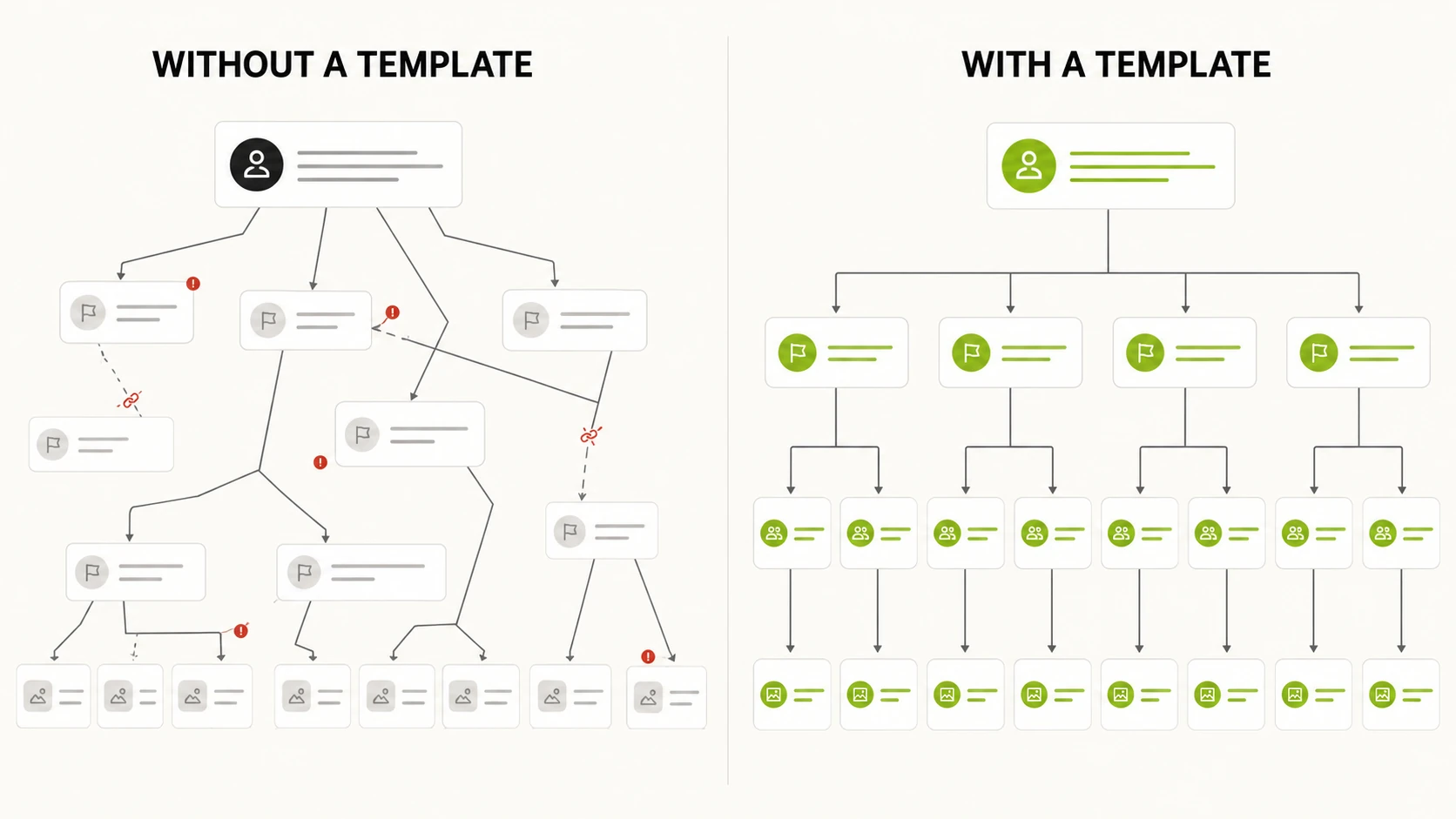
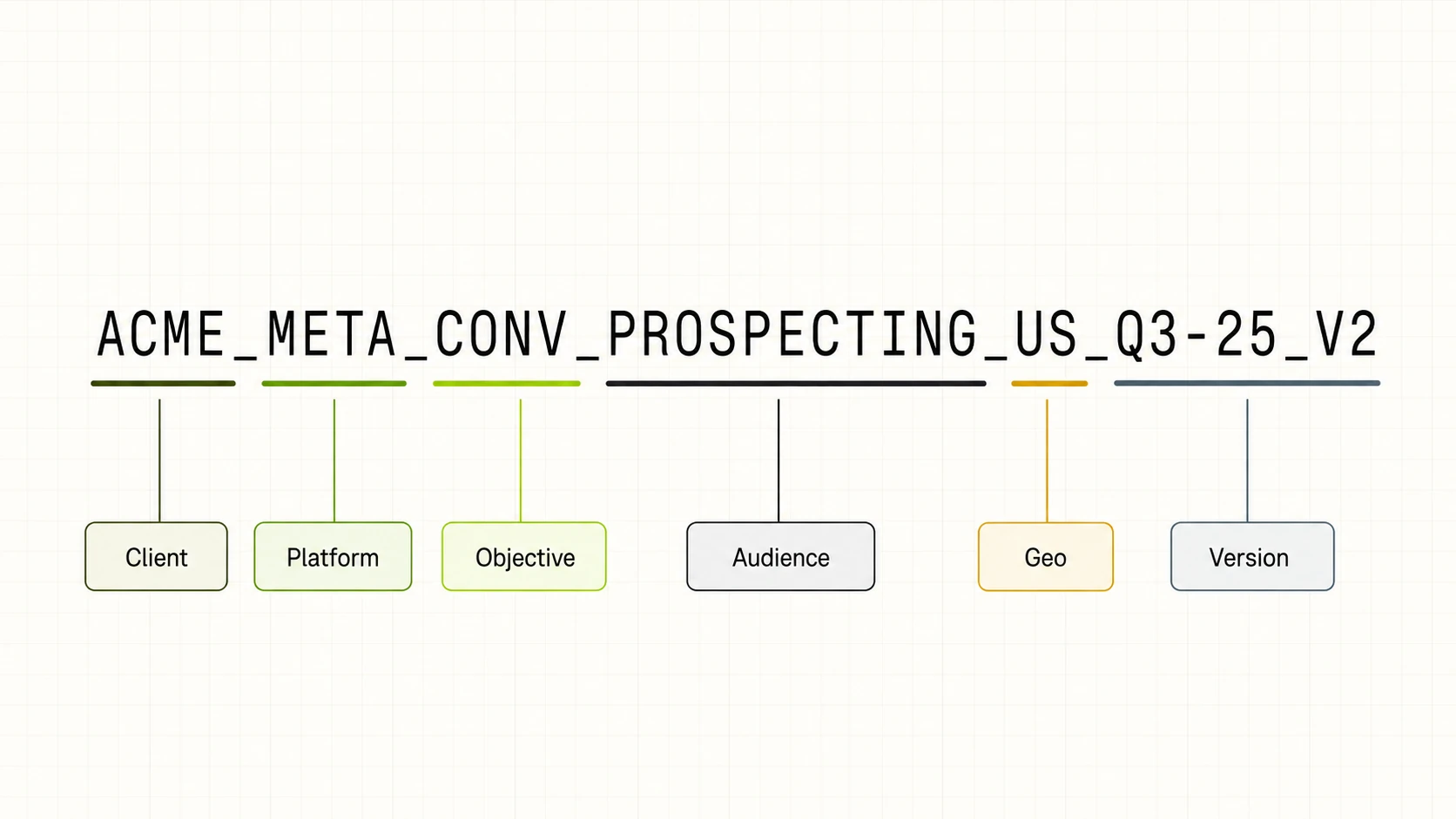
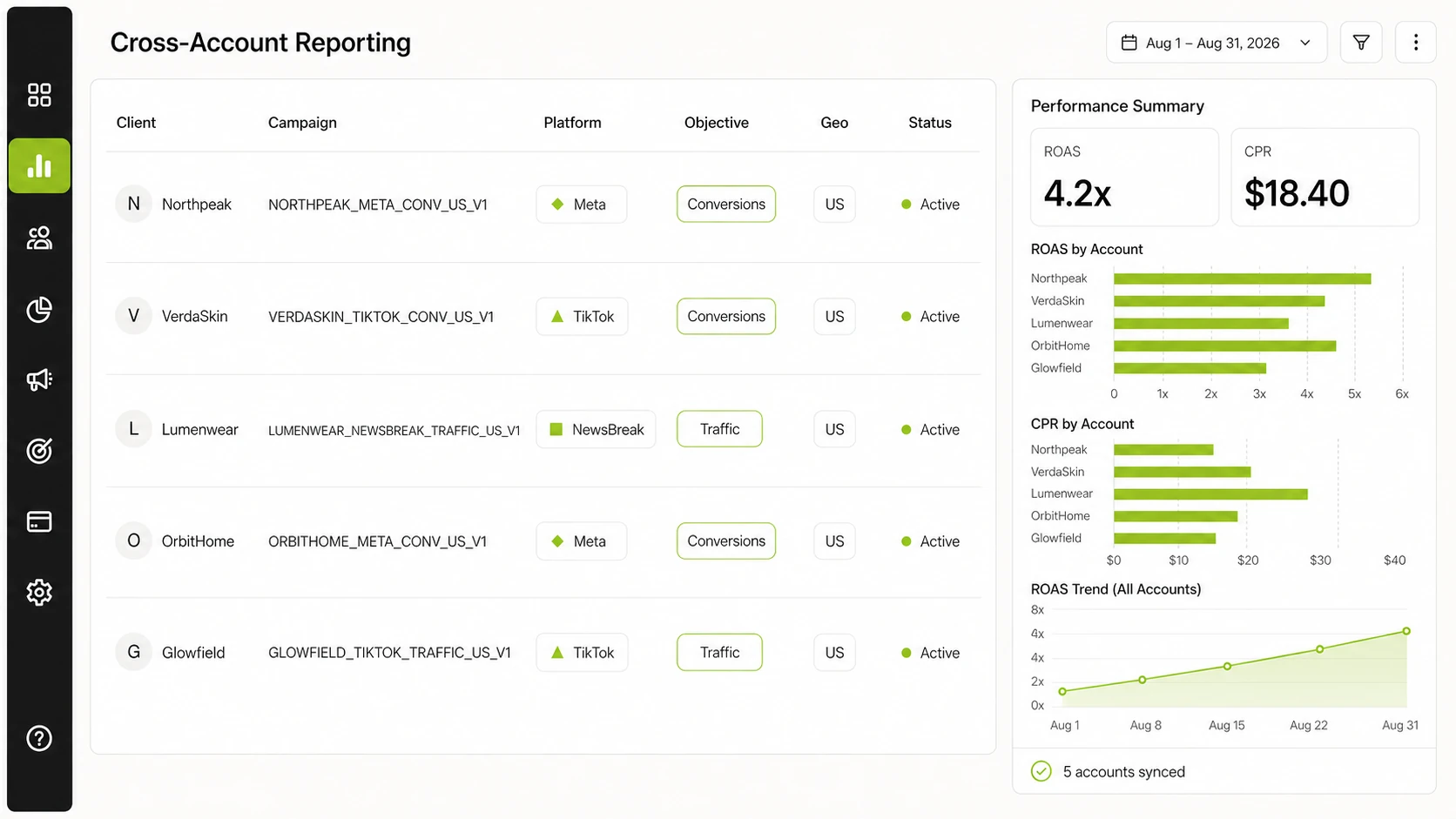
| Naming and tracking inconsistency | Reporting can’t be rolled up across campaignr; UTM parameters missing or malformed; nobody can tell which campaign maps to which line item in the media plan | Naming convention enforced at the point of campaign creation, not corrected after launch or during reporting |
| Budget approval lag | Campaign is built and ready but sits waiting on sign-off; launch window (event, promo, seasonal push) passes or shrinks | Approval routed to a named owner with a visible deadline, separate from the person who can technically hit publish |
| QA gaps before launch | Wrong pixel, expired creative, incorrect budget cap, or mismatched audience discovered after spend has already started | Standardized pre-launch checklist run against every campaign before it goes live, not spot-checked |
These aren’t edge cases, they’re the default failure modes of any campaign management process that treats “planning” and “building” as separate workflows with no shared source of truth between them.
Why Don’t Campaign Briefs Translate Into Build-Ready Specs?
Most briefs are written for the client or for internal alignment, not for the person building the campaign. They describe intent, “prioritize prospecting in the Northeast, retarget cart abandoners aggressively, keep CPA under $40,” without specifying how that intent becomes ad sets, budgets, and audience definitions inside Ads Manager.
The person executing then has to make small interpretive decisions: How many ad sets does “prioritize prospecting” become? Does “aggressively” mean a set budget percentage or a specific bid strategy? Is the CPA target per ad set or blended? Each interpretation is a bet on what the strategist meant, and at scale, some of those bets are wrong.
The fix isn’t a longer brief, it’s a brief with a build-spec layer attached: explicit ad set counts, budget splits, audience definitions, and creative-to-ad-set assignments. If a brief can’t be turned into a campaign without a follow-up question, it’s not done.
Why Does Naming and Tracking Inconsistency Keep Recurring?
Naming conventions get written once, live in a shared doc nobody reopens, and drift the moment a second person builds a campaign without checking it. In agencies managing multiple client accounts, each with its own convention, the odds of a trafficker applying the wrong one, or applying none, go up with every campaign built under deadline pressure.
The real cost isn’t cosmetic. Inconsistent naming breaks cross-campaign reporting rollups, makes it impossible to audit spend against the media plan without manual reconciliation, and turns UTM tracking into a guessing game where attribution data silently degrades. This is a process piece, not a naming-template piece, the convention itself matters less than whether it’s enforced at the moment of campaign creation, which is the only point where enforcement actually prevents the problem instead of cleaning up after it.
Why Does Budget Approval Create Launch Delays?
Budget sign-off is usually the one step in ad campaign management that depends on a human checking email or Slack, and it’s the step most exposed to time zones, meetings, and simple inbox burial. A campaign can be fully built and QA’d and still miss its launch window because the person with spending authority hasn’t seen the request yet.
This gets worse in agency settings with client-side approval requirements layered on top of internal sign-off, two approval hops, each with its own lag. The fix is less about faster approvers and more about visibility: a named approval owner, a visible request timestamp, and an escalation path if the deadline is close. Approval lag that’s invisible never gets fixed; approval lag that shows up on a dashboard gets fixed within a quarter.
What Causes QA Gaps Before Launch?
QA gets compressed or skipped for one reason: it’s the last step before launch, and launch dates don’t move even when everything upstream ran late. A campaign that was supposed to have two days for review gets thirty minutes, and thirty minutes isn’t enough time to catch a wrong pixel, an expired creative asset, a budget field that’s off by a decimal, or an audience that overlaps with another live campaign.
The gap isn’t a lack of QA process, most teams have a checklist somewhere. It’s that the checklist is optional under time pressure, and time pressure is the normal operating condition, not the exception. Campaigns that launch with errors are disproportionately the ones launched in the last hour before a deadline. This is also where accountability gets murky after the fact: if a campaign misfires, without a record of what was checked and by whom, “what happened” turns into a blame exercise instead of a fixable process note.
Who Should Own Each Step in Advertising Campaign Management?
A recurring root cause behind all four failure points is unclear ownership, not unclear skill. If strategist, trafficker, approver, and QA reviewer are the same overworked person, or if any of those roles is ambiguous about who has final say, gaps open by default.
Clear campaign management solutions to this start with role separation:
- Strategy and planning, owns targeting logic, budget allocation, and the brief. Doesn’t touch the build.
- Execution and build, owns translating the brief into live campaign structure. Doesn’t have to guess at intent because the brief is build-ready.
- Approval and budget sign-off, owns spend authorization, separate from whoever can technically publish the campaign.
- QA and launch review, owns the pre-launch checklist as a gate, not a courtesy.
Platforms that support workspace-level versus account-level permissions make this separation enforceable rather than aspirational, execution access, reporting and oversight access, and billing or admin access can sit with different roles instead of one person holding all four by default because it’s easier to set up that way. Our ad management tool buying checklist covers exactly what to ask a vendor about role-based permissions if you’re evaluating this separation for your own team.
How Do You Actually Close the Strategy-to-Execution Gap?
None of the four fixes above require more headcount, they require the handoff itself to be a designed step, not an assumed one: briefs with a build-spec layer, naming enforced at creation, approvals with visible ownership and deadlines, and QA as a mandatory gate.
Tooling helps mainly by making the execution side fast and auditable enough that the handoff doesn’t become its own bottleneck. FabFunnel’s Bulk Campaign Launcher includes a Folder Launch function that pushes an already-approved batch of campaigns live in a single action, useful at the exact point where a campaign has cleared brief, naming, and budget approval and is sitting waiting on execution bandwidth. The same launcher supports dynamic variables for building large numbers of campaign variations in one run, cutting the manual, error-prone rebuilding that naming and spec drift usually come from.
On accountability, FabFunnel’s Automation Rules Engine logs every automated action, CPA floor triggers, ROAS threshold changes, frequency cap adjustments, with the condition and timestamp that triggered it, giving QA and post-launch review something concrete to check against instead of relying on memory. Because permissions can be set at the workspace level versus the account level, execution, reporting, and billing access can also be split across roles instead of collapsed into one shared login.
None of this replaces a well-written brief or a clear approval chain, it’s infrastructure for the handoff, not a substitute for defining who owns which step. If the bottleneck you’re facing sits earlier, in how a team decides to build in-house versus adopt a platform at all, our media buying platform vs in-house guide covers that decision directly.
FAQ
What’s the difference between campaign strategy and campaign execution in Facebook ads?
Strategy sets the objective, budget allocation, targeting logic, and creative direction. Execution is the actual build inside Ads Manager, ad sets, audience definitions, placements, and creative assignment. They’re often treated as one continuous process but are usually done by different people or teams, which is where handoff gaps open.
Why do Facebook campaigns launch with the wrong naming convention even when one exists?
Because the convention typically lives in a document that isn’t checked at the moment of campaign creation. Enforcement has to happen at build time, after launch, it’s a cleanup problem, not a prevention.
How much does budget approval delay actually cost a campaign?
It’s rarely measured directly, but the cost shows up as missed launch windows, a promo or seasonal push that starts late or runs shorter than planned because sign-off didn’t happen in time. The fix is a visible approval owner and deadline, not a faster approver.
Should the same person write the brief and build the campaign?
It can work at small scale, but the failure points described here mostly show up when those roles split, which happens naturally in agencies and any team past a handful of campaigns a month. The brief needs to be build-ready regardless of who executes it.
What should a pre-launch QA checklist actually cover?
At minimum: correct pixel and tracking setup, current (non-expired) creative assets, budget figures matching the approved plan, and no unintended audience overlap with other live campaigns. It should be run on every campaign, not spot-checked under deadline pressure.
Can campaign management software fix these handoff problems on its own?
No, these gaps are process and ownership issues first. Tooling that supports batch launch, permission separation, and action-level audit logs makes a well-defined process faster to run and easier to verify, but it doesn’t substitute for a brief that specifies build detail or an approval chain with a named owner.
Where to Go From Here
If your team can already name which of these four points is causing the most damage, the next step is process, not tooling, fix the brief template, enforce naming at build time, or name an approval owner with a deadline. If the gap is on the execution side once a campaign is approved, too much manual rebuilding, no record of who changed what, that’s the specific problem FabFunnel’s Bulk Campaign Launcher and Automation Rules Engine are built for. Worth a look if execution bandwidth, not strategy, is where campaigns are actually getting stuck.