Quick Answer: Effective use of facebook ad spy tools means treating them as a research step, not a scrapbook. Find ads with real signal (longevity, format persistence, engagement relative to account size), decode the underlying angle instead of the surface execution, then move straight into a brief and a testable creative variant before the tab closes.
Why Facebook Ad Spy Tools Research Rarely Turns Into Creative
Most teams already know how to open a spy tool and scroll, whether it’s one of the best ad spy tools on the market or a simple browser extension. The gap isn’t access, it’s follow-through. A media buyer finds three interesting ads, screenshots them into a folder, maybe drops a link in Slack, and then the next brief gets written from a blank page anyway. Three weeks later someone rediscovers the same folder and repeats the exercise.
This happens because spy tools, including many fb ads spy tools, are built to surface volume. They show you what’s running, not what’s worth acting on, and they don’t connect to whatever tool your team actually builds creative in. Every screenshot requires a manual decision about relevance, a manual note about why it matters, and a manual handoff to whoever writes the brief. Each of those steps is a place research quietly dies.
The fix isn’t a better facebook advertising spy tool. It’s a shorter path between spotting something worth testing and actually testing it. That means being selective about which ads earn a second look, knowing what to extract from them, and having a short enough distance between insight and a working creative variant that the idea doesn’t go cold.
Finding a Genuinely Relevant Competitor Ad, Not Just a Popular One
Popularity is the easiest signal to notice and the least useful one to act on. An ad with a large reach number might be running because of a brand awareness budget, a media partnership, or a completely different audience than yours. None of that tells you whether the ad will work for your product.
Relevance means the ad is speaking to the same buyer, at a similar point in their decision, about a problem your product also solves. Start narrow: which advertisers are targeting your category, your price range, or your exact use case, not just your industry label. A direct competitor selling the same core product is the obvious starting point. Adjacent-category advertisers, companies solving a neighboring problem for the same buyer, are worth including too, since they often surface angles your direct competitors haven’t tried yet.
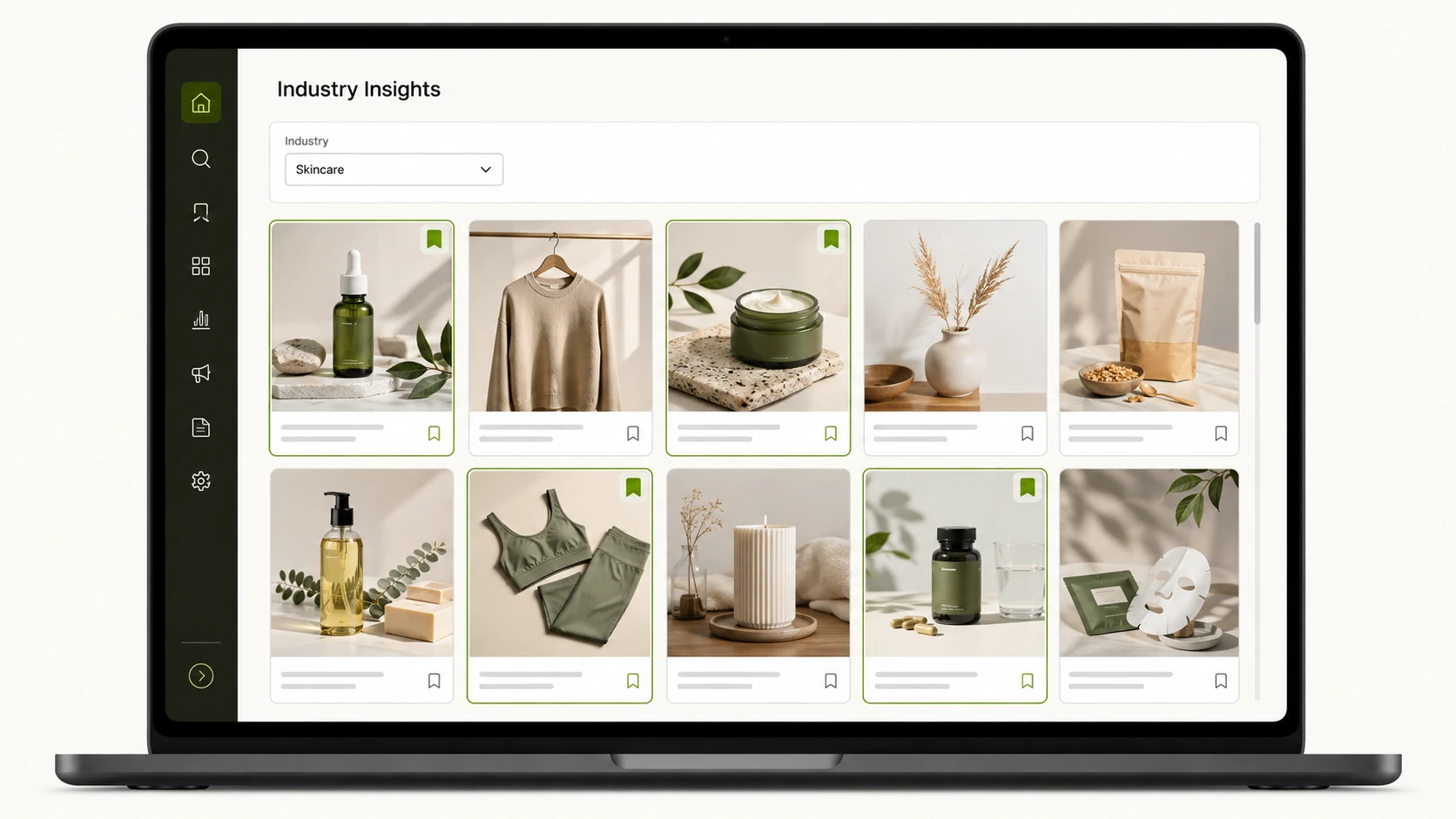
This is where filtering by industry, vertical, or niche earns its keep. In FabFunnel’s Industry Insights, adding a competitor page or brand puts their active Meta ads into a monitored feed automatically, helping you find competitors facebook ads without digging manually, so you’re not re-searching the same names every week. You can also browse top-performing ads across all of Meta filtered by vertical to catch what’s working outside your immediate competitor set, which is often where the freshest angles come from.
What Signals Actually Matter When You Review a Result
Visual polish is the first thing anyone notices in a spy tool result, and it’s the least reliable indicator of whether an ad is actually working. A handful of signals matter more.
Longevity is the strongest one available to you. Advertisers pull underperforming creative fast, usually within days, because spend is expensive and feedback loops are short. An ad that has been running for weeks or months is still running because it’s still earning its budget. That single fact tells you more than any headline or visual choice.
Engagement matters, but only relative to the advertiser’s scale. A small account with a few hundred comments on one ad is a much stronger signal than a large account with the same number. Look at the ratio, not the raw count, and check whether the comments are actual buyer questions or just generic reactions.
Format tells you what’s earning attention at that funnel stage. A UGC-style video with handheld camera work signals a cold-audience, trust-building placement. A static carousel with feature callouts signals a warmer audience already comparing options. A testimonial-driven ad signals a bottom-funnel push toward conversion. Matching format to funnel stage is usually more useful than matching visual style.
One more signal worth checking: how many variants of the same angle an advertiser is running at once. Several ads pushing the same core claim with different hooks or creators usually means that angle is winning and the team is scaling it through testing, not guessing.
These four signals need context to interpret, which is why they work better as a walkthrough than a checklist. A comparison table would flatten judgment calls that actually depend on the advertiser’s size, category, and funnel stage, so this section stays in prose rather than forcing a grid that would oversimplify the read.
Translating a Competitor Angle Into a Brief Without Copying It
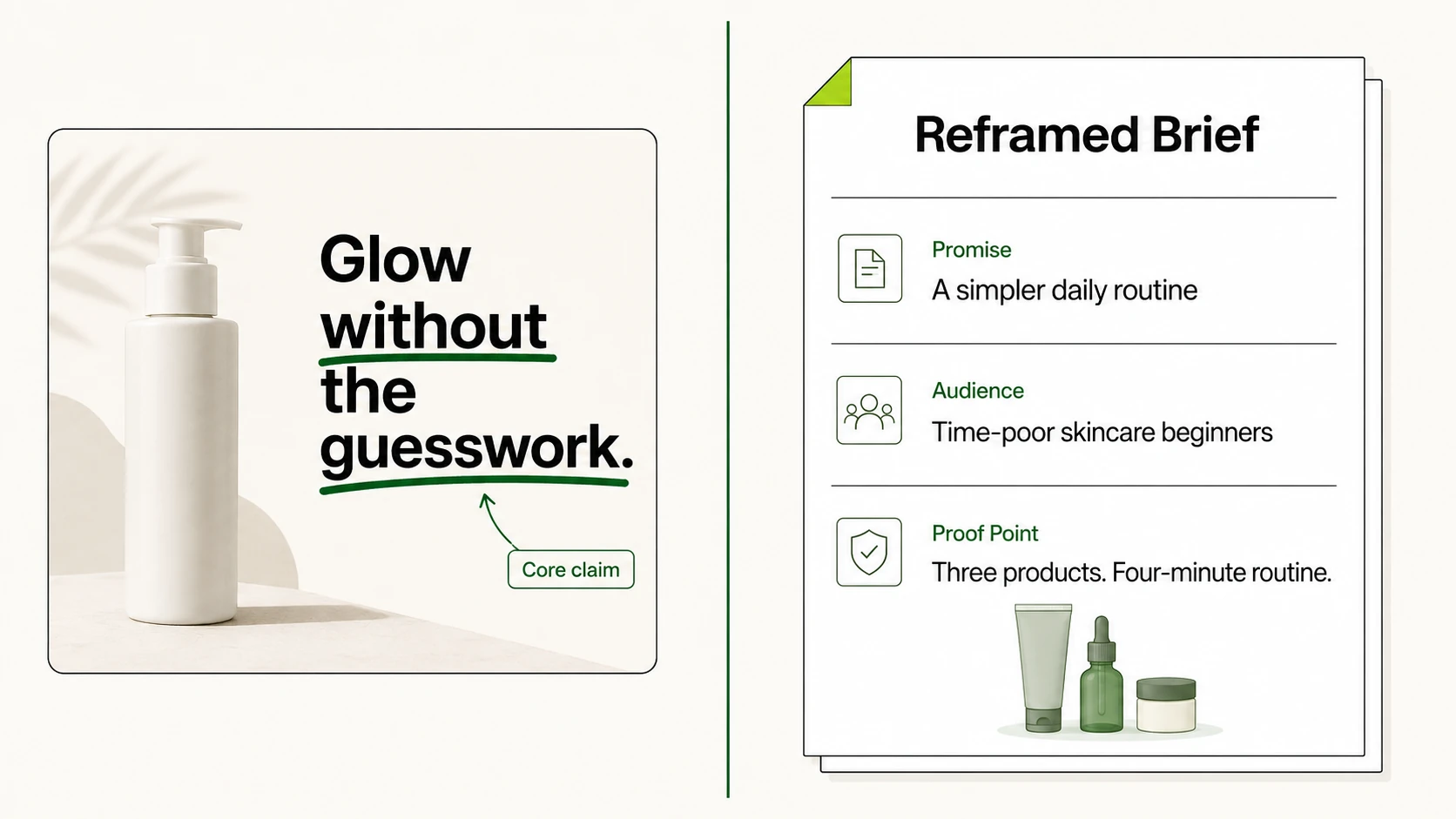
Once an ad clears the relevance and signal checks, the next step is separating the angle from the execution. The angle is the underlying claim: the pain point it names, the promise it makes, the objection it’s answering. The execution is everything else, the actors, the exact wording, the visual style, the music choice. Copying the execution is what gets flagged as unoriginal. Understanding the angle is what makes it useful.
Write the angle down in one sentence, stripped of the competitor’s product name and specific phrasing. Then ask whether your product actually supports that claim. If a competitor is winning with a speed-to-results angle and your product’s actual strength is accuracy, forcing their angle onto your brief will produce a testable ad that doesn’t hold up once someone clicks through. The angle only transfers if your own proof points back it up.
A workable brief translates that angle into your own language: the core promise, the audience it’s aimed at, the specific hook or objection it addresses, and the proof element you’ll use instead of the competitor’s, whether that’s a stat, a demonstration, or a different kind of social proof. This is also where a connected product catalogue matters. Genie can generate creative starting from a competitor angle, but it pulls in your actual brand and product data rather than inventing generic copy, so the output is grounded in what you can actually claim.
From Insight to Testable Variant, Fast
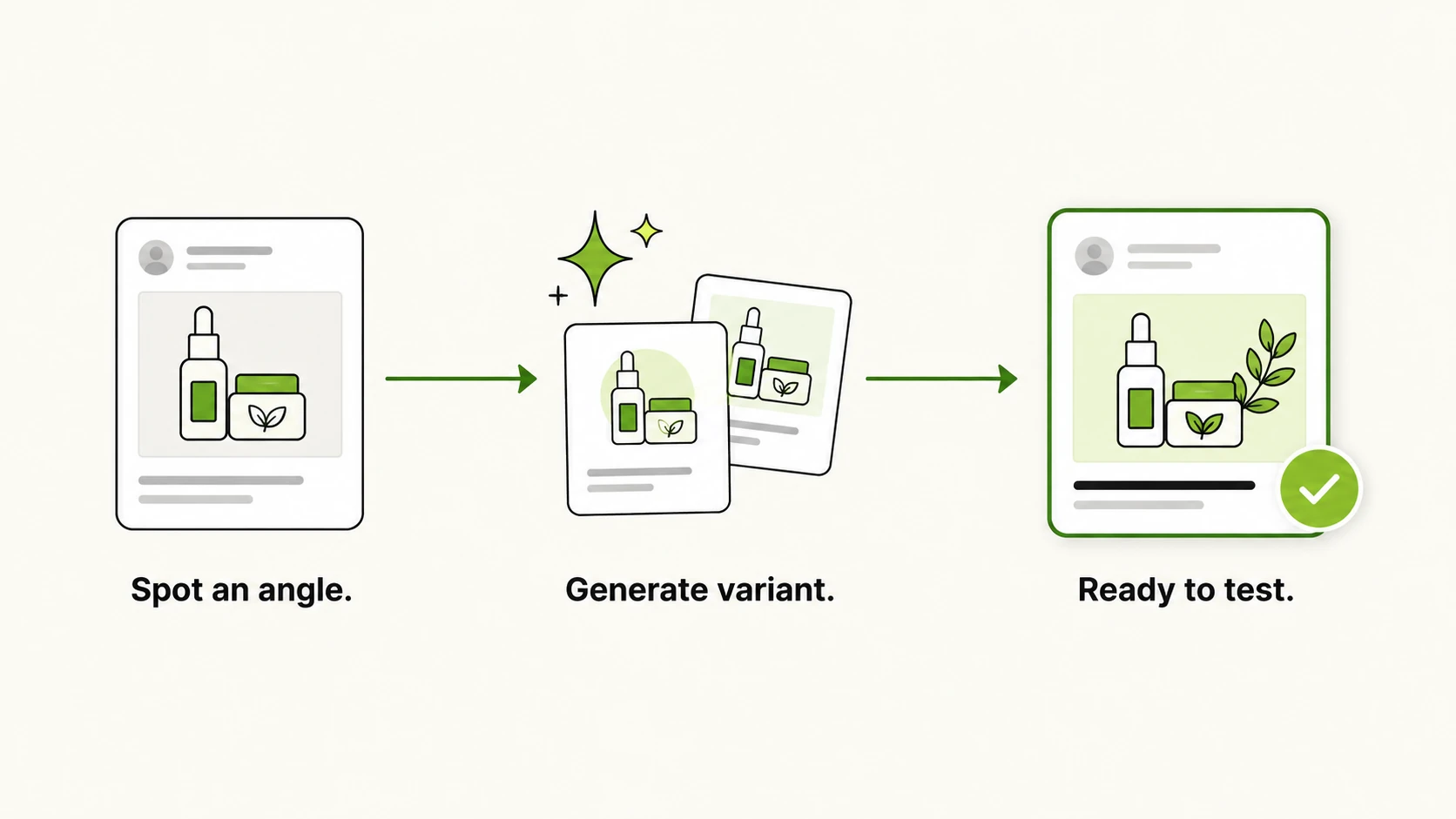
The biggest failure point in competitor research isn’t finding good ads, it’s the gap between finding one and having something to test. Most workflows require exporting a screenshot, opening a separate creative tool, re-explaining the angle from scratch, and waiting for a first draft. By the time that draft exists, the moment that made the research feel urgent has passed.
The reason FabFunnel connects Industry Insights and Genie in the same session is to close that gap. You spot an angle in the ad feed, open Genie without leaving the workflow, and generate variations on that angle immediately, without re-typing a brief into a different tool or briefing a separate person. The research and the creative generation happen in one continuous pass instead of two disconnected tools with a manual handoff between them. This kind of connected workflow is part of what FabFunnel’s ai advertising platform covers, keeping research and creative generation in one pass.
Speed here isn’t about skipping judgment, it’s about not losing the judgment you already applied. You did the work of checking longevity, engagement, and format. You did the work of separating the angle from the execution. The only thing left is producing a variant fast enough to test while the insight is still fresh, rather than filing it away for a briefing document nobody reopens.
FAQs
1. How often should I check facebook ad spy tools for competitor activity?
A weekly pass is usually enough for most categories, since meaningful new angles don’t appear daily. If your category moves fast, such as seasonal or promo-heavy retail, checking two or three times a week catches shifts before they’ve already been tested by everyone else.
2. What’s the difference between a spy tool and the Meta Ad Library?
The Meta Ad Library is a public, one-off search you run manually each time. A dedicated spy tool typically adds continuous monitoring, so ads from advertisers you’re tracking appear automatically instead of requiring you to re-search the same names repeatedly.
3. How long should a competitor ad run before I consider it a signal worth acting on?
There’s no fixed threshold, but a few weeks of continuous activity is a reasonable baseline, since it suggests the ad is clearing the advertiser’s own performance bar rather than being an early test that hasn’t been judged yet. Longer runs, especially with multiple variants, are stronger signals still.
4. Is it legal to use ideas from a competitor’s ad in my own campaign?
Using the underlying strategic idea, such as a pain point or positioning angle, is standard competitive practice. Copying specific copy, visuals, or brand assets is a different matter and can create legal exposure, so keep the extraction at the level of the angle, not the execution.
5. How many competitor ads should I review before briefing a new creative?
Quality matters more than quantity. A handful of genuinely relevant, well-vetted ads that pass the longevity and engagement checks will produce a better brief than dozens of ads pulled in without filtering for relevance first.
6. Should I focus on direct competitors only, or adjacent categories too?
Both, but for different reasons. Direct competitors show you what’s working for your exact buyer. Adjacent categories, companies solving a related problem for a similar audience, often reveal fresher angles that haven’t been tried yet inside your own category.
7. What if my competitor’s ad angle doesn’t fit my product’s proof points?
Don’t force it. An angle only works if your product can back up the claim it makes. If the underlying promise doesn’t match what your product actually delivers, look for a different angle rather than stretching your positioning to fit someone else’s ad.
8. How do I know when a creative variant is ready to test versus needs more work?
A variant is ready when the promise, audience, and proof point are all clear and specific rather than generic. If you can’t state in one sentence who it’s for and what it’s claiming, it needs another pass before it goes into a test.
Start the next research pass at FabFunnel, or see how Genie turns an angle into a variant.