Running Facebook ads without AI in 2026 is like editing video without shortcuts – possible, but slower than it needs to be. The practitioners outperforming everyone else right now use an AI Facebook ad generator to handle creative production and AI Facebook ad optimization to keep live campaigns on track. Both working together is what actually moves the needle. This guide breaks down how to set that up – for people who already run Facebook ads and want to run them better.
The Mindset Shift Most Practitioners Miss
Most practitioners who’ve tried Facebook ads AI tools fall into one of two camps.
The first group uses them occasionally – a quick creative when they’re short on time, a headline variation here and there. Modest gains. Then back to the old workflow.
The second group has rebuilt their process around them. The ones getting consistent returns from an AI Facebook ad generator aren’t using it as a backup plan. They’re generating 15 to 20 variations per test, letting data decide what works, and feeding winners back into the next brief.
The difference isn’t skill. It’s whether you’ve made these tools part of the process or kept them optional.
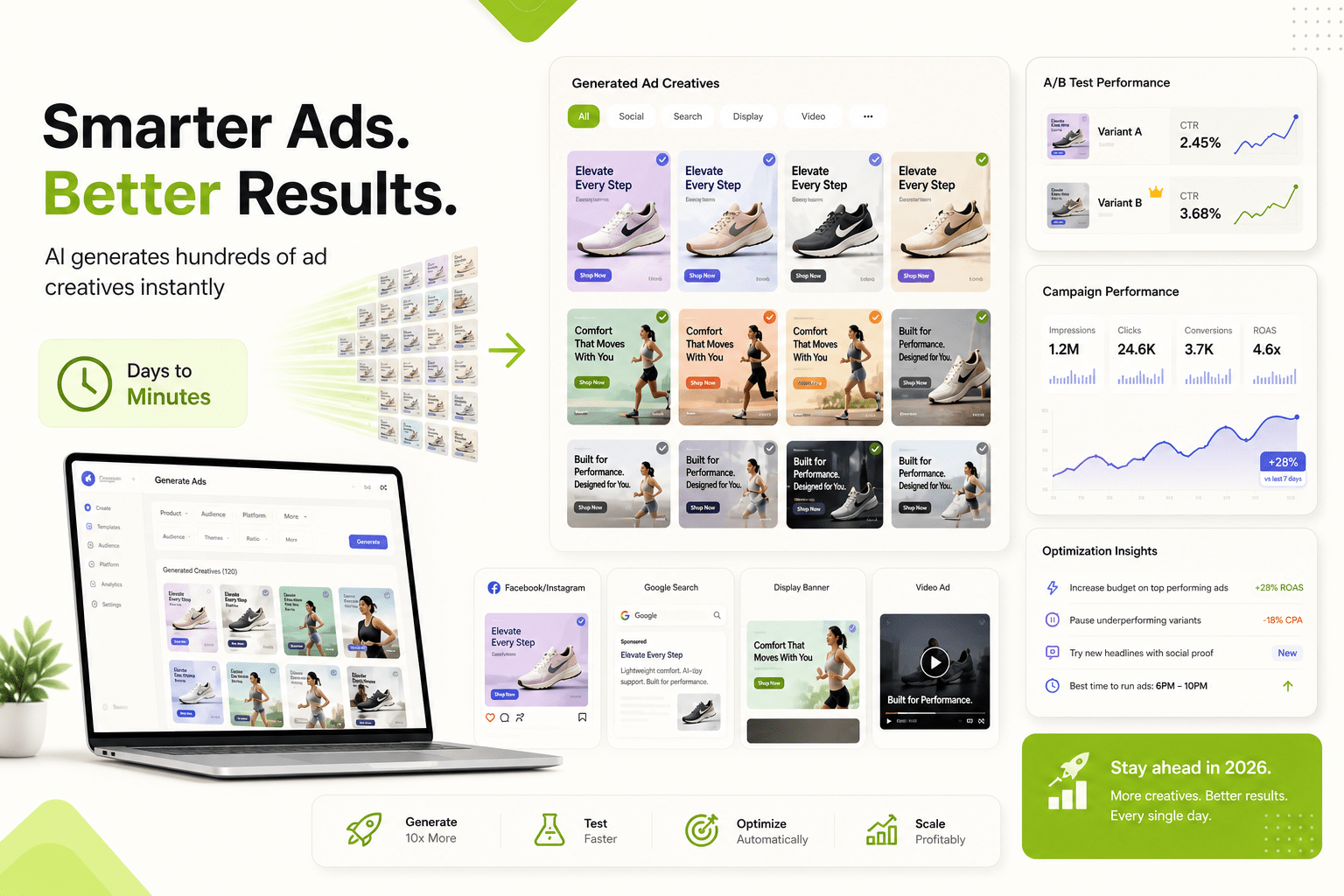
How to Actually Use an AI Facebook Ad Generator
Here’s where most people go wrong: they open an AI Facebook ad generator, type something vague – ‘create a Facebook ad for my brand’ – and wonder why the output looks like every other ad they’ve seen.
The brief is everything. Your offer, the specific hook angle you’re testing, target audience, brand assets, and the placement you’re building for. Feed those details in, and you’ll get 15 to 20 distinct variations back fast. Different hooks, different visual treatments, different framings of the same offer – from one brief.
And that volume is the whole point. An AI Facebook ad generator doesn’t just save production time – it compresses the feedback loop. AI generated Facebook ads let you put more angles in the market simultaneously, which means more data, which means you stop wasting budget on assumptions.
One thing to build in regardless: a review step. Not everything that comes out of an AI Facebook ad generator is launch-ready. A quick check for brand accuracy and message clarity before anything goes live. You’re aiming to keep 60 to 70 percent of what you generate. Keeping everything means you’re not generating enough variety to make the testing worthwhile.
Brief for the Placement – Not Just the Format
One thing AI tools for Facebook ads handle well, when you let them, is placement-specific creative. But most people generate one strong asset and try to adapt it across feed, story, and reel after the fact.
These aren’t minor differences. Reels need a hook in the first two seconds. Stories need a single, clean message – no clutter. Feed ads have more breathing room but compete harder. An AI Facebook ad generator can be briefed for each placement separately, and the performance gap between placement-native output and adapted output is consistent enough to matter.
AI generated Facebook ads built for their placement outperform adapted ones more often than not. The extra detail in the brief takes thirty seconds.
Copy Is Where More Teams Should Be Testing
Visuals get most of the attention when people talk about AI tools for Facebook ads. But hook copy and CTAs carry a lot of conversion weight, and generating multiple versions costs almost nothing.
Use your AI Facebook ad generator to produce multiple hook lines for the same offer. ‘Save 40% today’ and ‘Get 40% off your first order’ sound identical. On the right audience, one outperforms the other by a margin that isn’t small. Generating both takes ten seconds. Testing different variations will give you data instead of guesses.
For CTAs, boring wins. ‘Shop now,’ ‘Claim your discount,’ ‘Get started.’ Direct language outperforms clever alternatives on direct-response placements far more often than not. Run them through your AI Facebook ad generator as variations alongside the visuals – you’ll have the full package tested faster than building each piece separately.
AI Facebook Ad Optimization: What It Actually Handles
Getting ads live is step one. Keeping campaigns performing without manual check-ins every morning is where AI Facebook ad optimization earns its keep.
The mechanic is simple: you define rules based on your thresholds – ROAS, CPA, frequency, CPM – and the system executes them continuously. ROAS drops below your floor for 48 hours? Ad set pauses. CPA is on target with budget headroom left? Scale by 20%. No one needs to be logged in for any of this.
For creative specifically: watch frequency and CPM together. When both climb at the same time, your AI generated Facebook ads are fatiguing. Set a strict rule to flag that combination and trigger a creative refresh. Catching fatigue early through AI Facebook ad optimization means you’re acting on data before ROAS drops – not after.
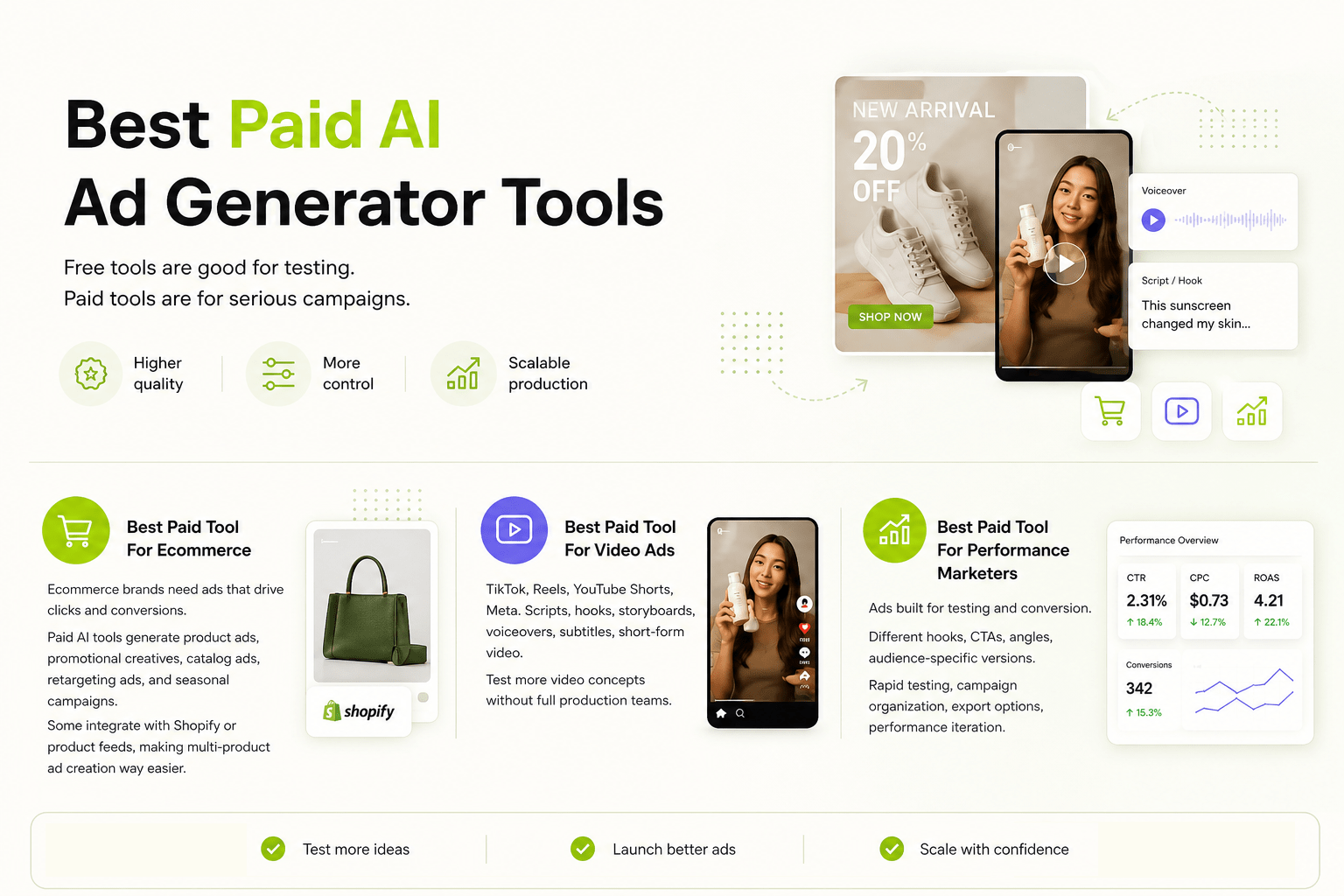
What AI Won’t Handle
Worth being clear: no AI Facebook ad generator makes strategic decisions for you. Which offer to test next, which audience segment is being underserved, whether a campaign has run its course – those are still your calls.
The right Facebook ads AI tool handles execution – production, iteration, optimization logic. You handle strategy. That’s a good division of labor, because it means your time goes toward decisions that actually require judgment rather than repetitive production work that doesn’t.
The Workflow That Actually Scales
Once an AI Facebook ad generator and live optimization rules are in place, the workflow looks like this:
Brief → Generate → Filter → Launch → Optimize → Feed Winners Back Into the Next Brief And each iteration costs less than the one before, because an AI Facebook ad generator gets more useful the more specific your winning-creative reference inputs are.
It compounds. Winning creative becomes reference input. Briefs get sharper each cycle. Output quality improves without additional effort.
For teams managing campaigns across multiple accounts, FabFunnel handles bulk launch and automation in one place – so the workflow scales without being rebuilt from scratch every time.
Frequently Asked Questions
What is an AI Facebook ad generator?
A tool that creates ad creatives – images, video, or copy – from a structured brief. The key difference from a design tool: an AI Facebook ad generator produces multiple variations at once, so you can test more angles without proportionally more production time.
Do AI generated Facebook ads actually convert?
On direct-response campaigns, yes. Hook strength and offer clarity drive performance on Facebook – not production value. AI generated Facebook ads let you test more angles faster, so you find what converts before burning through the budget on assumptions.
What should I put in a brief for an AI Facebook ad generator?
Your offer, hook angle, target audience, brand assets, and the placement you’re building for. Vague in, vague out. The more specific the brief, the less post-editing the output needs. A good brief for an AI Facebook ad generator takes five minutes and saves much more than that on the back end.
How does AI Facebook ad optimization work?
You define rules based on your performance thresholds and the system runs them continuously. When conditions are met – ROAS drops, CPA exceeds your cap, frequency spikes – actions fire automatically: pause, scale, or flag for review. It’s conditional logic that runs without someone needing to check in.
How many ad variations should I generate per test?
Ten to twenty is a solid starting range. Enough to get meaningful signal, not so many that your daily budget spreads too thin per asset. Start at ten if you’re unsure and scale from there once you see what your CPA looks like.
Can AI tools for Facebook ads create video formats?
Most of them, yes – UGC-style, product demos, slideshows. Brief for the video format specifically from the start rather than adapting a static brief afterward. The output quality difference is noticeable.
How do I stop automation rules from overspending?
Set hard budget caps at the ad set and campaign level separately from your optimization rules. The rules work within those limits – they don’t override them. That’s the guardrail, and it’s non-negotiable when running a Facebook ads AI tool on accounts with real budget. Caps first, rules second.
When should I refresh my creatives?
When frequency and CPM climb together – that’s the signal. Don’t wait for ROAS to drop first. Set an automated flag at your audience’s fatigue threshold so you catch it early and act before the damage shows up in the numbers.