If you’re the only person running paid media at your company, creative is usually the first thing to stall. Media buying, reporting, and optimization can all be done solo with the right tooling, but new ad creative has historically needed a designer, a brief cycle, and a review loop that a team of one doesn’t have time for. That’s the gap creative automation is built to close.
This isn’t about organizing the assets you already have. It’s about removing the step where you wait on someone else to make something new.
Quick Answer: Creative automation, for a solo operator, means generating, varying, and refreshing ad creative directly from your product data and brand inputs, without commissioning new design work for every campaign. A lean setup replaces the brief → designer → revisions → handoff cycle with brief → generate → variants → launch → refresh, all inside tools you run yourself. The tradeoff isn’t quality versus speed, it’s whether you can keep creative moving at the pace your media spend requires, or whether design capacity caps how much you can run.
What Does “Creative Automation” Actually Mean at This Scale?
At the enterprise level, “creative automation” often refers to template systems that resize a master asset across formats. That’s not the problem a solo marketer has. You don’t have a master asset to resize, you often don’t have any asset yet, and no one to make one.
For a team of one, creative automation means something more specific: turning inputs you already control, product catalog data, brand guidelines, past-performing ad angles, into finished ad creative without a design handoff. The output has to be launch-ready, not a starting point for someone else to polish.
That distinction matters because it changes what you should be evaluating. You’re not shopping for a system that makes existing creative easier to manage. You’re shopping for something that replaces a design function you don’t have.
Why Does Creative Fatigue Break Solo-Run Campaigns Faster?
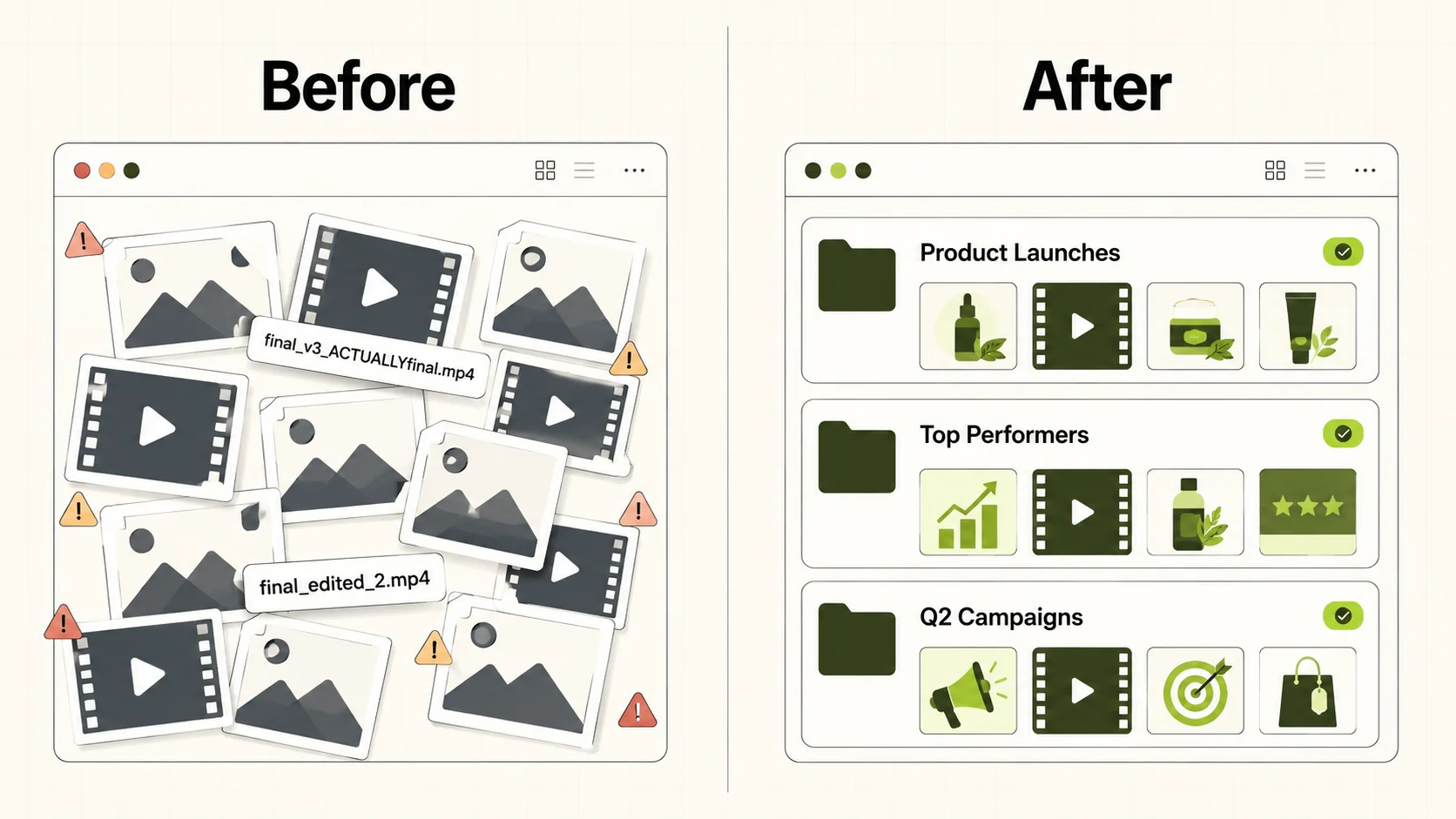
Creative fatigue, the point where an audience has seen an ad enough times that performance drops, hits every advertiser eventually. It hits solo operators faster in relative terms, because there’s no design bench to draw a refresh from. A team with a creative resource can turn a fatigued ad around in a day. A solo marketer without one either lets the ad run past its useful life or drops spend on that placement entirely.
Frequency is the leading indicator most people already track, when the same users see an ad too often, response rates fall regardless of targeting quality. The operational question for a team of one isn’t detecting fatigue, most reporting tools show that. It’s what happens next, and whether producing a replacement variant is a five-minute task or a five-day one.
This is where creative automation earns its keep: not in producing the first ad, but in producing the fifth, tenth, and twentieth variant on a timeline that matches how fast your audience burns through creative.
What Does a Lean Creative Pipeline Actually Look Like?
Strip out the design department and the pipeline collapses to five stages. Each one either has to be fast enough to do solo, or automated outright.
| Stage | What It Involves | Manual Bottleneck | How Automation Changes It |
|---|---|---|---|
| Brief | Define the product, angle, and format | Writing a creative brief and waiting on a designer to interpret it | Product and brand data (catalog, logo, guidelines) feed the generator directly, no interpretation gap |
| Generate | Produce the first working ad | Sourcing or shooting imagery, laying out copy and design | AI-generated creative from structured inputs (e.g., product image plus copy), built for a specific ad type rather than a generic template |
| Variants | Produce multiple versions for testing or placements | Manually duplicating and re-editing files per format/audience | One-click variation generation off an approved creative, instead of rebuilding from scratch |
| Launch | Get creative live across campaigns and accounts | Manually attaching assets to ad sets one at a time | Bulk push of creative into live campaigns, including at scale across many campaigns in one action |
| Refresh | Replace fatiguing or underperforming creative | Waiting for a new design cycle | New variants generated from the same brief inputs as soon as performance data flags the need |
The stages themselves haven’t changed, brief, generate, variants, launch, refresh is the same lifecycle a full creative team runs. What changes is who (or what) executes each step, and whether it takes hours or days.
What Should You Look For in a Creative Automation Tool If You’re a Team of One?
Not every tool marketed as a “creative automation tool” is built for someone running the entire pipeline solo. Many assume you’re feeding them assets a designer already made. If that’s not your situation, filter for these specifically:
| What to Check | Why It Matters for a Solo Operator | Questions to Ask |
|---|---|---|
| Generation from raw inputs | You have no designer to hand off to, the tool needs to work from product data or a brief, not a finished asset | Can it generate a usable ad from a product image and copy alone? |
| Format coverage | Different ad types (product-focused, brand-focused, UGC-style, performance-first) need different structures, not just resizes | Does it distinguish between ad types, or just template one look? |
| Fast variant generation | Fatigue management depends on how quickly you can produce a next version | Is there a dedicated “make more like this” function, or do you rebuild manually each time? |
| Launch integration | Generating creative faster doesn’t help if uploading it is still manual, one ad at a time | Does creative output connect directly to campaign launch, or do you export and re-upload? |
| Catalog sync | If you sell physical products, manually re-uploading every time inventory changes is its own bottleneck | Does it sync from your storefront, or require manual catalog maintenance? |
| Decision support | Without a media team around you, you need a second opinion on what to change and when | Does it surface recommendations from your own performance data, or just raw numbers? |
Treat this as a filter, not a checklist to satisfy in full, a tool that’s strong on generation and variants but weak on launch integration still leaves you doing manual work at the handoff point, which defeats the purpose. Our breakdown of generation, automation, and optimization tools covers this handoff problem in more depth if you want the fuller framework.
Is AI Creative Automation Reliable Enough to Run Without a Designer?
This is the honest tension in AI creative automation: generated creative isn’t the same as art-directed creative, and it shouldn’t be marketed as a like-for-like replacement in every case. What it’s reliable for is volume and speed on formats that don’t require bespoke art direction, most standard product and performance ad formats fall here.
Where it’s most defensible for a solo operator: producing the variant count needed for testing, keeping catalog-driven ads current without manual updates, and generating a working first draft fast enough that you’re not the reason a campaign launches late. Where you should still apply judgment: brand campaigns with a specific creative vision, or anything where the ad itself is the differentiator rather than the offer.
The practical framing: AI creative automation removes the bottleneck on quantity and cadence. It doesn’t remove your judgment on what to say, you’re still the one deciding the angle, the offer, and whether a variant is good enough to spend budget behind. Our ad design tool guide goes further into where that judgment still matters most.
Where FabFunnel Fits for a Team of One
FabFunnel is built around this exact gap, running the full pipeline without a design team behind you.
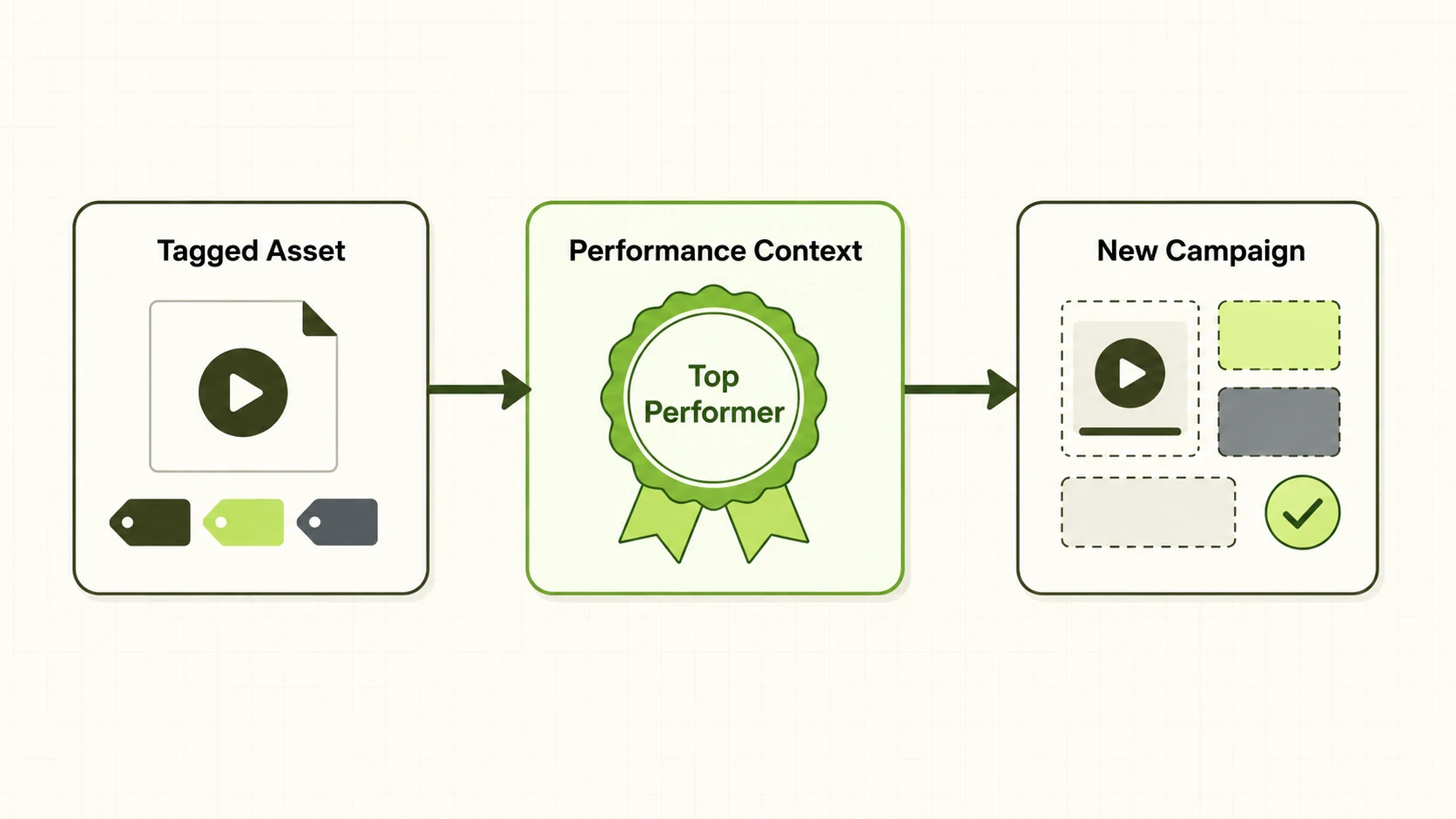
Genie, FabFunnel’s ad creative generator, covers four modes (Product Ad, Brand Ad, Product Shoot, Performance Ad) matched to how you’re actually pitching a product, not a generic template. Its Create Variations feature is the direct answer to the fatigue problem above: instead of rebuilding an ad from scratch, you generate new versions off a creative that’s already approved or already performing. Short on angle ideas, Genie’s Concepts tab has roughly 200 pre-built creative frameworks to start from, and its Catalogue structure (Brand → Categories → Products) organizes what Genie generates against, with Shopify stores syncing automatically and other platforms requiring manual upload.
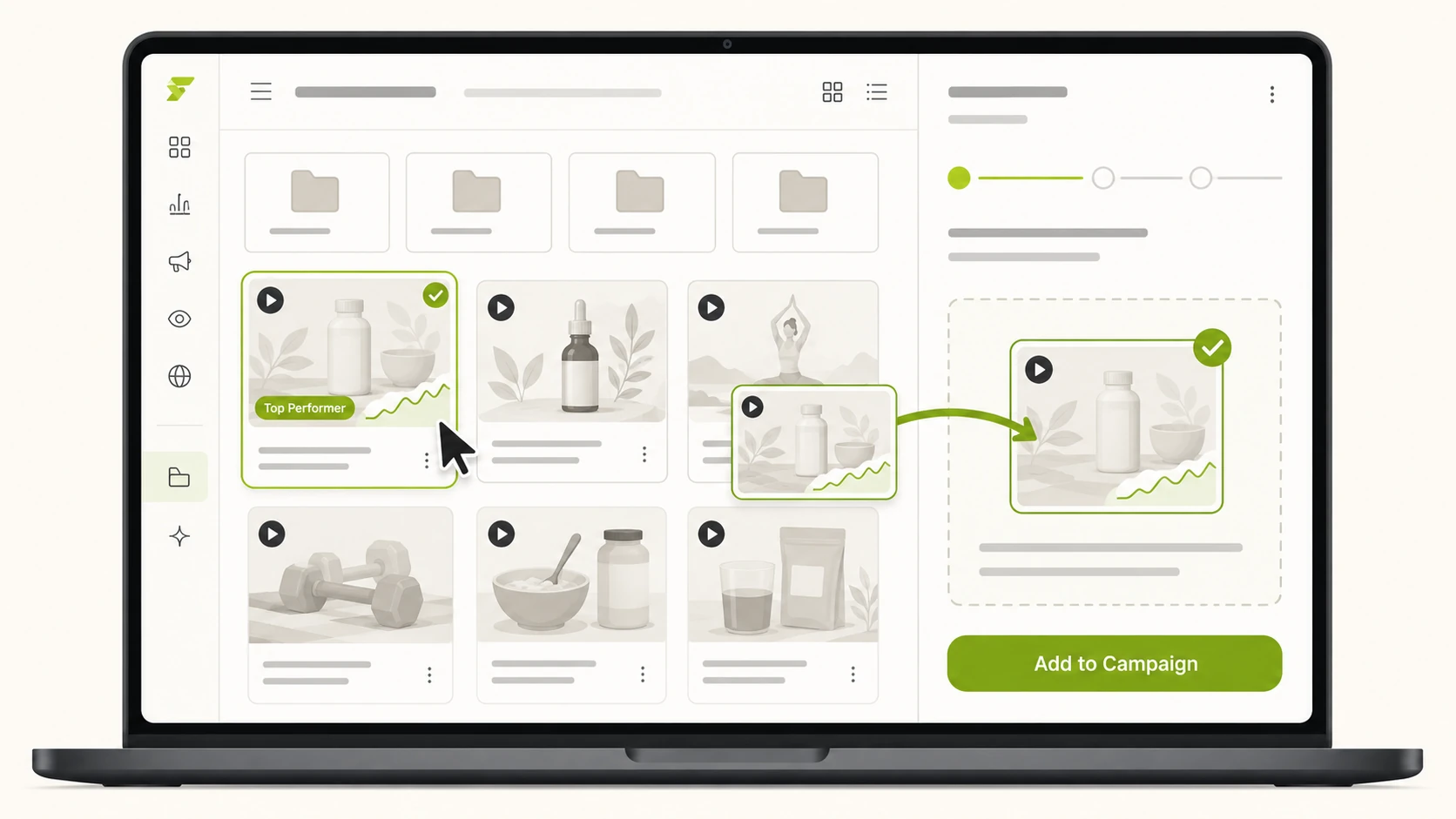
Once creative exists, Bulk Campaign Launcher gets it live without a one-at-a-time upload cycle: it can push 200+ campaigns live in under two minutes, supports Folder Launch for grouped campaigns, and handles dynamic variables for generating over 1,000 campaign variations in a single run. Generated variants land in the Creative Library, organized by folder and category, so they stay usable for the next launch.
For knowing when to refresh, the Automation Rules Engine sets frequency caps, CPA floors, and ROAS thresholds, with every automated action logged against the condition and timestamp that triggered it. Co-Pilot layers recommendations on top of your live reporting data, it flags what to look at but doesn’t execute changes itself, so you keep control of the decision. Multi Ad Account Reporting keeps spend, ROAS, CPR, CPC, and CTR synced roughly every 15 minutes across Meta, TikTok, and NewsBreak, so you’re not logging into three platforms to check a variant. Short on angle inspiration, Industry Insights lets you browse competitor Meta ads by vertical.
None of this replaces strategic judgment, deciding what to say, which angle to test, when a variant isn’t good enough to launch. What it removes is the dependency on someone else’s calendar to act on that judgment.
FAQ
Is creative automation the same as using ad templates?
No. Templates require you to already have a finished asset to plug in. Creative automation, in the sense that matters for a solo operator, generates the ad itself from product data or a brief, there’s no design step in between.
Do I still need any design skills to use a creative automation tool?
You need judgment about what makes a good ad, offer, angle, audience fit, more than you need production skills. The tools handle layout, format, and variant production; you’re still deciding what the ad should say and whether a version is worth spending budget on.
How many creative variants do I actually need to avoid fatigue?
There’s no fixed number, it depends on spend level and audience size, but the practical target for most small-to-mid accounts is having a next variant ready before frequency and CPA start moving, not after. That’s a cadence problem more than a quantity one.
Can creative automation work for non-ecommerce products?
Most catalog-driven generation is built around product ads with a physical or digital SKU. Service-based or B2B advertisers can generally still use brand- and performance-ad modes, but catalog sync assumes you have a product feed.
Will AI-generated creative underperform designer-made creative?
Depends on the format. For most direct-response and product ads, the gap is smaller than assumed, since these are judged on offer clarity more than art direction. For brand campaigns where the visual is the differentiator, a designer’s judgment still matters more.
What’s the actual cost of not automating creative as a solo marketer?
Usually not a failed campaign, a stalled one. Budget sits on the same three ads past the point of fatigue because there’s no time to make a fourth, and performance erodes quietly rather than dramatically.
Where to Go From Here
If design capacity is the reason your campaigns run stale creative longer than they should, that’s a pipeline problem, not a hiring problem you’re going to solve immediately. Start by mapping your own five stages, brief, generate, variants, launch, refresh, and find the one taking the longest relative to how often you need to repeat it. That’s the stage to automate first. If generation and variant production are the bottleneck, FabFunnel’s Genie and Bulk Campaign Launcher are built for exactly that handoff, worth a look if you’re evaluating what a lean, designer-free pipeline could look like for your account.