Quick Answer
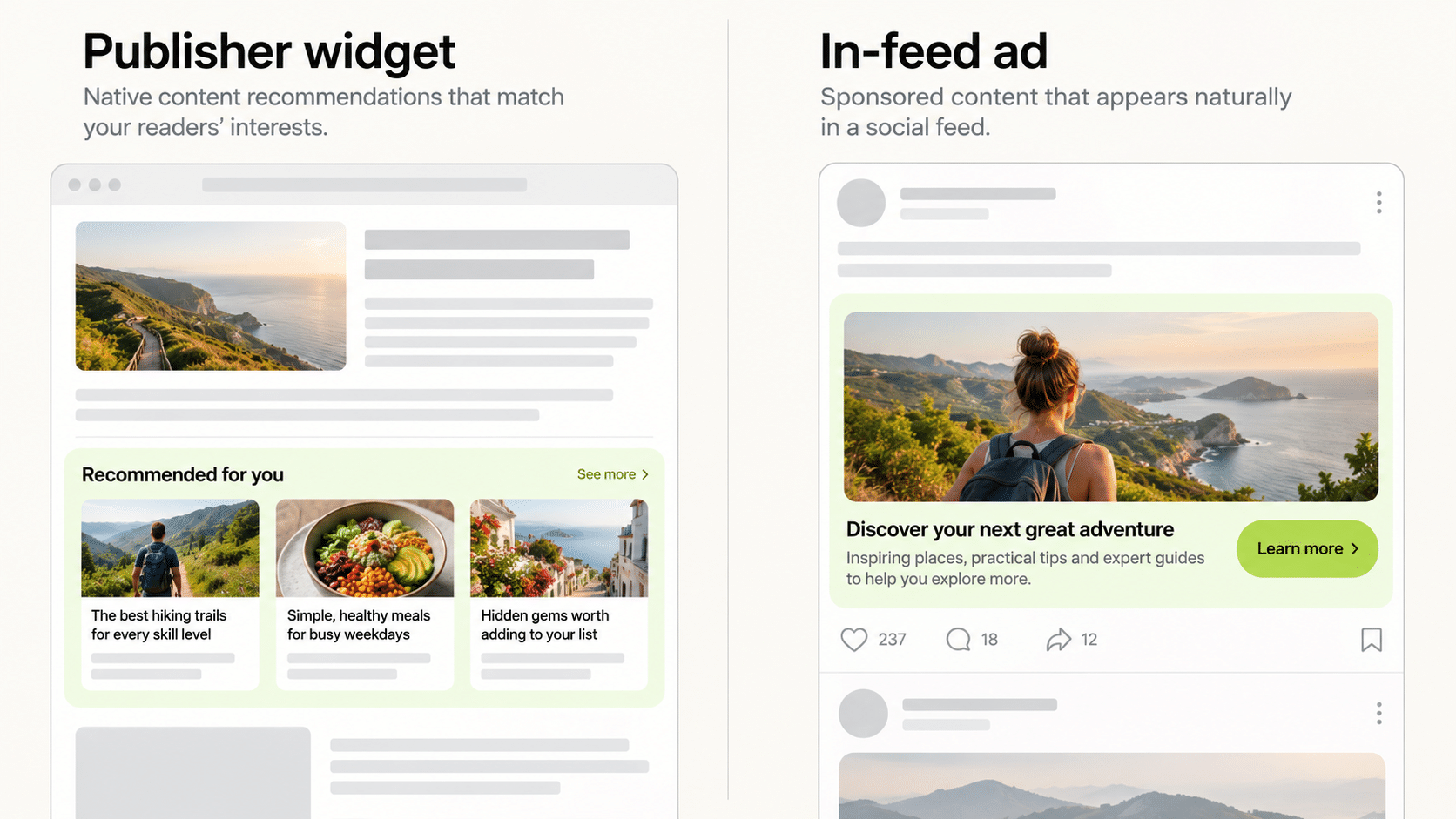
Native ads platforms distribute paid content that matches the look and feel of the page or feed where it appears. Two families dominate. Content recommendation networks such as Taboola and Outbrain place sponsored links and articles on publisher sites, usually below or beside editorial content. Social platforms such as Meta serve in-feed ads that follow the format of organic posts, and many marketers describe those as native too. Compare native ads platforms on inventory, formats, targeting, creative requirements, transparency about placements, and cost per result. Cost figures from third-party sources vary widely, so test in your own account before you trust any average.
What Are Native Ads Platforms?
Native ads platforms are the systems advertisers use to buy placements that blend into their surroundings. The ad looks like the content around it, whether that is an article recommendation, a social post, or a search-style listing. It is still labelled as paid, and platforms and regulators expect that disclosure.
The reasoning is simple. People are more likely to engage with something that looks like the content they came for than with a banner that looks like an interruption. Whether that holds for your product is something to test, not assume.
What Are the Main Types of Native Ads Platforms?
| Type | How it works | Typical examples | Best for |
|---|---|---|---|
| Content recommendation networks | Sponsored links appear in recommendation widgets on publisher sites | Taboola, Outbrain | Content marketing, lead generation, broad reach |
| Social in-feed | Ads appear in feeds in the same format as posts | Meta, TikTok, Snapchat | Awareness, discovery, ecommerce |
| Programmatic native | Native placements bought through a DSP | Various DSPs | Scale across many publishers |
Per descriptions from industry blogs, Taboola delivers personalised recommendations and in-feed ads across publisher sites, often placing a recommended article at the bottom of a page, and its formats include in-feed, video native, in-article ads, and recommendation widgets. Outbrain offers in-feed ads and sponsored content. These are vendor-adjacent descriptions, so confirm current formats and minimums on the platforms’ own pages.
What Formats Do Native Ads Platforms Support?
Formats vary by platform, but the common ones are consistent.
- In-feed ads. A sponsored item inside a list of editorial or social content.
- Recommendation widgets. A block of sponsored links, usually beneath an article.
- Sponsored content. A full article or video, written or produced to match the publisher’s style.
- Video native. A video unit that plays within a feed or article.
- In-article placements. Ads embedded between paragraphs of editorial text.
On recommendation networks, the creative is typically a headline plus an image. That makes the headline the main variable to test. On social platforms, the creative is an image or video with copy, and the first second of the video does most of the work.
How Does Native Advertising on Facebook Work?
Native advertising on Facebook means ads that appear inside the feed in the same format as ordinary posts, as well as in Stories and Reels placements. They are bought through Meta’s Ads Manager with a campaign, ad set, and ad structure, and delivered through an auction.
Meta’s ad format is native in the sense that it fits the feed, but it differs from a recommendation network in important ways. Targeting is based on audience, interest, and behaviour signals rather than on the content of the page. Meta also has its own measurement tools. Instagram native advertising works the same way, with placements in Feed, Stories, and Reels. Both are set up in the same system, and Meta’s Advantage+ placements can distribute ads across them automatically.
For many advertisers, social native placements are the easiest place to start because the setup is familiar and the audience tools are rich. Recommendation networks are often added when the goal is reach on publisher sites or when the content is article-led.
How Do Content Recommendation Networks Differ From Social Platforms?
The two families of native ads platforms behave differently.
| Question | Recommendation networks | Social platforms |
|---|---|---|
| Where do ads appear? | On publisher sites and apps | Inside the platform’s own feed |
| How is targeting done? | Content context, location, device, and audience signals | Interests, behaviours, and your own data |
| What does creative look like? | Headline and thumbnail, or sponsored article | Image or video with copy |
| What is the traffic like? | Often earlier in the buying journey | Varies with audience and offer |
| What is the main risk? | Placement quality and low-intent clicks | Creative fatigue |
Neither is better in general. A recommendation network may suit a content-led offer, such as a guide or a newsletter sign-up, while a social platform may suit a product with strong visuals. Many advertisers run both and compare cost per result.
What Should You Compare Across Native Ads Platforms?
Use the same checklist for each candidate.
| Question | Why it matters |
|---|---|
| What inventory can you reach? | Determines reach and context quality |
| How much control do you have over placements? | Affects brand safety |
| What targeting is available? | Decides how precisely you reach people |
| What creative do you need? | Sets the production workload |
| How is conversion tracking handled? | Determines whether you can judge results |
| What are the minimums and fees? | Sets the realistic size of a test |
| How transparent is the reporting? | Lets you see where ads ran |
Ask each vendor for a live look at your own account, and for placement-level reports.
How Much Do Native Ads Cost?
Costs vary widely. Third-party blogs cite click costs from a few tens of cents on recommendation networks to higher figures on social, but those numbers come from different industries, years, and definitions, and they conflict. Treat them as a rough range only.
The better method is to work backwards. Set the result you need, estimate a cost per result you can afford from your margin, and size a test budget accordingly. Then compare platforms on cost per result, measured the same way. A cheap click from a low-intent placement can cost more per customer than an expensive click from a better one.
How Do You Test Native Ads Platforms Fairly?
A fair test uses one goal and one metric, such as cost per lead. Give each platform a similar budget large enough to leave its learning phase, and use the same offer with creative adapted to each format. Fix a review date in advance.
On recommendation networks, test headlines first. On social platforms, test the first second of the video first. Track conversions the same way on both, and review placement or site-level reports so that you can exclude weak sources.
How Should You Write Creative for Native Placements?
Native creative has to earn attention on its own terms, because it sits next to content people chose to read or watch. Write headlines that promise something specific and deliver it on the landing page. Avoid vague teasers: a curiosity gap that the page does not close leads to quick bounces and wasted spend.
Match the tone of the environment without pretending to be editorial. A clear label, an honest promise, and an image that shows the actual product or topic build more trust than a disguised ad. For social placements, lead with movement in the first second and add short text for viewers who watch without sound. For recommendation widgets, test several headlines with the same image, then several images with the winning headline.
Finally, keep the landing page consistent with the ad. If the ad is a guide, send people to the guide, not to a pricing page. A short, mobile-first page with one next step converts better than a page that tries to do everything.
What Mistakes Should You Avoid?
Common mistakes include clickbait headlines that attract clicks but not customers, a landing page that does not match the ad’s promise, ignoring placement reports, and skipping disclosure. Another is expecting native ads platforms to close sales alone when they often sit earlier in the journey. Pair them with retargeting and a clear next step.
How Do You Read Results Across Platforms?
If you run native ads platforms next to search and social campaigns, the practical problem is reading the numbers together. FabFunnel’s Multi Ad Account Reporting shows Meta, TikTok, and NewsBreak alongside Google and Snapchat in one dashboard. FabFunnel launches campaigns on Meta, TikTok, and NewsBreak, while Google and Snapchat are connected for reporting only. This article does not claim FabFunnel connects to Taboola or Outbrain, so confirm what any tool can ingest before you plan around it. The columns follow each platform’s own metrics, so check them before you use the dashboard for client reporting.
FAQs
What are native ads platforms?
They are the systems used to buy ads that match the look and feel of the content around them, such as recommendation widgets and in-feed social ads.
What are the best native ads platforms?
Taboola and Outbrain are well-known recommendation networks, and Meta is a major social platform with in-feed ads. The best choice depends on your goal and audience.
Is native advertising on Facebook the same as Taboola?
No. Facebook ads run inside Meta’s feeds and are targeted by audience signals. Taboola places ads on publisher sites using content and audience signals.
What is Instagram native advertising?
Ads placed in Instagram Feed, Stories, and Reels in formats that match organic content, bought through Meta Ads Manager.
Are native ads labelled?
Yes. Native ads are expected to be disclosed as paid, and platforms apply their own labels.
Can FabFunnel launch native campaigns on Taboola or Outbrain?
No. FabFunnel launches on Meta, TikTok, and NewsBreak. Google and Snapchat are reporting only.