Quick Answer: For a small or starting budget, In-Feed Ads and Spark Ads are the practical TikTok ad types to test with, since both run through the self-serve auction with flexible spend. TopView and Branded Effects deliver bigger reach and scale, but they carry premium, less flexible commitments that only pay off once a brand has budget to spend consistently.
Why TikTok Ad Types Aren’t One-Size-Fits-All
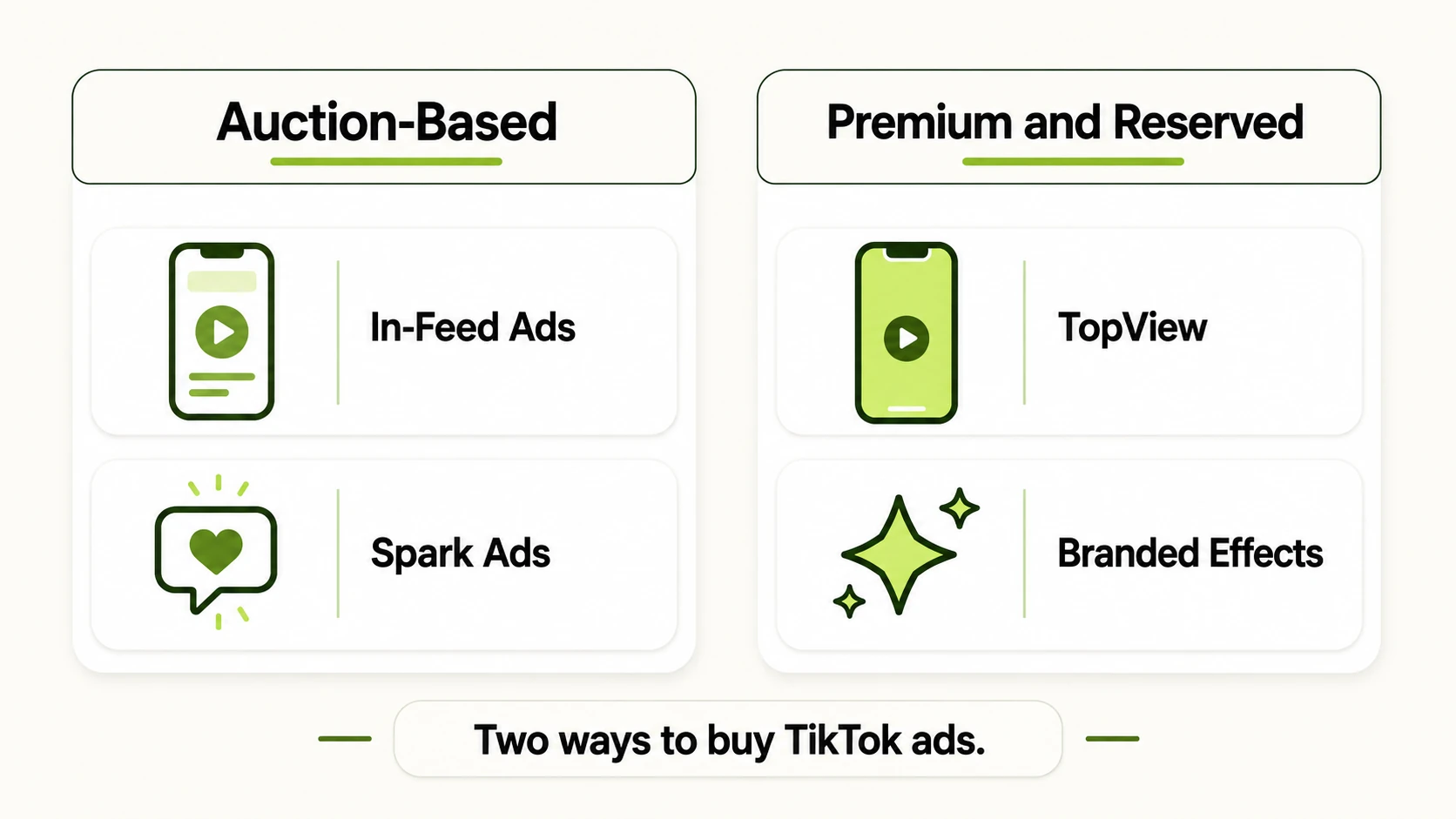
TikTok’s ad formats split into two groups, a useful way to think about the types of tiktok ads available before picking one for your budget. In-Feed Ads and Spark Ads are auction-based, bought through Ads Manager with ongoing control over spend and targeting. TopView and Branded Effects are premium, largely reserved placements typically sold with a bigger upfront commitment and less day-to-day flexibility.
That split matters more than any single performance number. An auction format lets you start small, watch results, and adjust daily, which is the flexibility that separates auction-based types of ads on tiktok from the premium reserved ones. A reserved format asks for commitment before you know how the creative will land with your audience. The right pick depends on where your budget sits and how much testing room you need before spending more.
In-Feed Ads: The Default Starting Point
In-Feed Ads appear natively in the For You feed between organic videos, bought through the standard TikTok auction. You set your own daily or lifetime spend, adjust targeting as you learn, and pause or scale without a placement-level minimum. This is usually the right first move among TikTok ad types for a modest budget, since it lets you learn what resonates before committing more.
Spark Ads: Building on What’s Already Working
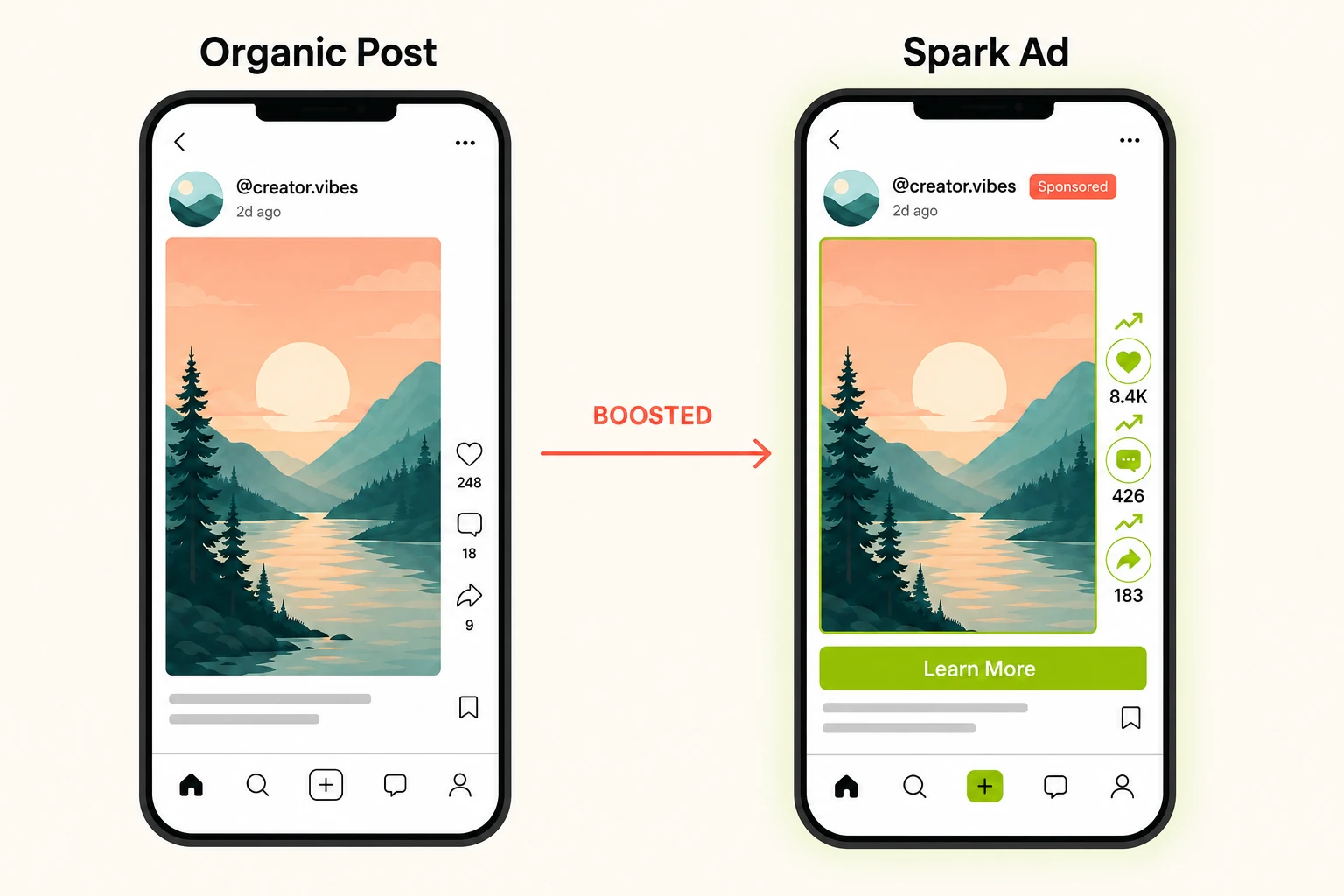
Spark Ads promote an existing TikTok post – either a brand’s own organic content or a creator’s video for which the advertiser holds authorization – directly within the feed. Because the ad inherits the post’s likes, comments, and shares, it tends to carry more credibility than a cold ad asset and can extend the life of content already proving itself.
Spark Ads suit a small-to-moderate budget because they don’t require new production to get started. If a video is already performing organically, putting spend behind it is often more efficient than commissioning a new ad from scratch. Our earlier post on Spark Ads covers setup and mechanics in more depth; the short version is that Spark Ads pair naturally with In-Feed budgets rather than needing a separate spend tier.
TopView: When Reach Justifies the Premium
TopView is the placement that greets users the moment they open the app: a full-screen, sound-on video ad that plays before any other content loads. It’s a premium, largely reserved buy rather than a self-serve auction, so it typically comes with a higher, less flexible commitment than In-Feed or Spark Ads.
TopView makes sense when a brand needs guaranteed, high-visibility reach in a short window, such as a major launch. It’s not the format for testing creative on a limited budget; it’s the format you move to once a message already works and you’re ready to pay for guaranteed prominence.
Branded Effects and Hashtag Challenges: For Established Budgets
At the top of TikTok’s format spectrum sit Branded Effects (custom AR filters and interactive stickers) and Branded Hashtag Challenges (campaigns inviting users to create around a branded theme or sound). Both are typically sold within larger managed campaign packages and demand more production and coordination than a standard video ad.
These formats are worth considering once a brand has a recurring TikTok budget and a specific goal around cultural participation, not as an entry point. The payoff, when it works, is user-generated content at scale that a single ad buy cannot replicate, but the commitment required puts it out of reach for a first-time budget.
Matching TikTok Ad Types to Your Budget Tier
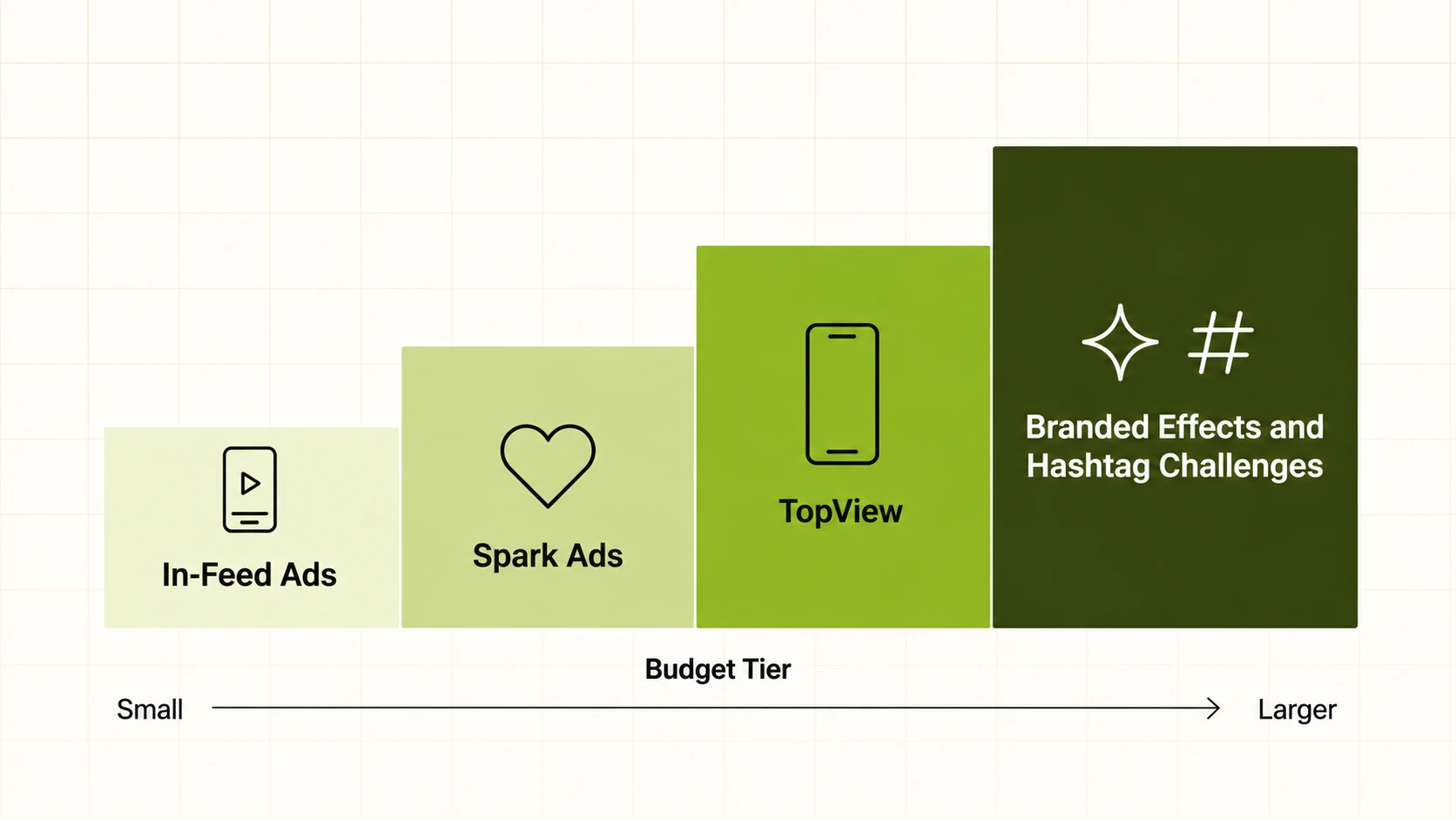
The table below summarizes how each format tends to line up against budget level, without attaching specific dollar figures, since TikTok’s minimums and typical spend shift by market, industry, and objective.
| Ad Type | Typical Budget Tier | Best Use Case |
|---|---|---|
| In-Feed Ads | Small or starting budget | Testing creative, audiences, and offers with full control over daily spend |
| Spark Ads | Small to moderate budget | Extending the reach of organic or creator content already performing |
| TopView | Larger, campaign-level budget | Guaranteed high-visibility reach for launches or major awareness pushes |
| Branded Effects / Hashtag Challenges | Larger, established budget | Driving user-generated participation and cultural reach at scale |
How to Decide Where to Start
Treat these formats as a sequence rather than a menu of equal options, since moving through tiktok campaign types in order tends to protect a smaller budget. Start with In-Feed Ads to build a base of creative and targeting data on a budget you control day to day. Once content is proving itself organically, layer in Spark Ads to extend its reach without starting production from zero. Only after a message is validated and the budget is recurring should TopView or Branded Effects enter the conversation, since both ask for a bigger commitment before you know what works.
Creative cost is a real constraint at the small-budget end, especially when testing different types of tiktok ads before knowing which one will earn the spend. Producing enough UGC-style and demo creative to test properly across formats can be slow if every asset needs a separate shoot. FabFunnel’s Genie generates UGC-style, reel, and demo creative across static and video formats, which helps stretch a smaller testing budget before deciding whether a bigger format is worth the jump. Once a creative and format combination is validated, FabFunnel’s Bulk Campaign Launcher can push the resulting campaigns live across accounts in minutes instead of rebuilding them one at a time.
FAQs
1. Is Spark Ads more expensive than In-Feed Ads on TikTok?
Not inherently. Both run through the same auction system, so cost depends on targeting, competition, and bidding rather than the format itself. The practical advantage of Spark Ads is that it can reduce production cost by reusing content that has already shown it resonates with an audience.
2. Can I run TopView on a small test budget?
Generally no. TopView is sold as a premium, largely reserved placement with a higher commitment than auction-based formats, so it isn’t built for small-scale testing. Most advertisers validate their message on In-Feed or Spark Ads first, then move to TopView once ready to spend at a larger, more consistent level.
3. What’s the difference between a Branded Hashtag Challenge and a Branded Effect?
A Branded Hashtag Challenge is basically asking people to make and post stuff around your theme, sound, or prompt – hoping tons of them join in. A Branded Effect is a custom AR filter or interactive sticker people slap on their own videos. Both are pricey, high-production formats, so usually only brands with real money use them.
4. Do I need a large following to use Spark Ads?
No. Spark Ads can be applied to your own brand account’s posts even with a modest following, and can also run on a creator’s content if you have the right permissions. The organic engagement on the post is what carries over into the ad, not the size of the account behind it.
5. Should a small business start with In-Feed Ads or Spark Ads?
Most small businesses are better off starting with In-Feed Ads if they don’t yet have organic content that has proven itself, since In-Feed gives full control over spend and targeting from day one. If a brand already has a post or creator video getting real organic traction, boosting it as a Spark Ad can be a faster way to extend that momentum.
6. How do I know when my budget is ready for TopView or Branded Effects?
A reasonable signal is having a message and creative that have already performed consistently through In-Feed or Spark Ads, paired with a recurring rather than one-time budget. Both formats ask for a bigger commitment upfront, so they work best once you’re scaling a proven approach rather than still figuring out what resonates.
7. Can I mix multiple ad formats in the same campaign period?
Yes, and many advertisers do, typically running In-Feed and Spark Ads together as a base layer while reserving TopView or Branded Effects for specific launch moments. The formats aren’t mutually exclusive; they’re better thought of as different tools for different stages of budget and confidence.
8. Does the ad type affect what kind of creative I need to produce?
Absolutely, format changes everything. In-Feed and Spark Ads thrive on native, UGC-style video that slides right into the feed. TopView and Branded Effects? They’re premium and interactive, so they need polished, high-production creative built specifically for their mechanics.
If you’re weighing which TikTok ad types fit your current budget, FabFunnel’s Genie can help produce the creative to test them, and the Bulk Campaign Launcher can get validated combinations live fast. Genie is the AI ad creative generator behind that testing, producing UGC-style and demo variations without a separate shoot for each one. Get started or explore Fab AI.