Quick Answer: Spark Ads on TikTok let brands and agencies pay to boost an existing organic post, either their own or a creator’s, while keeping that post’s original likes, comments, and shares attached. The format uses TikTok’s native authorization system to turn a real post into a paid placement without resetting its engagement history. Agencies reach for it when a piece of creator or UGC content already shows organic traction worth scaling.
What Spark Ads on TikTok Actually Are
A standard TikTok in-feed ad is built from scratch inside Ads Manager. You upload a video, write copy, attach a call to action, and TikTok serves it as a fresh unit with zero history and zero engagement.
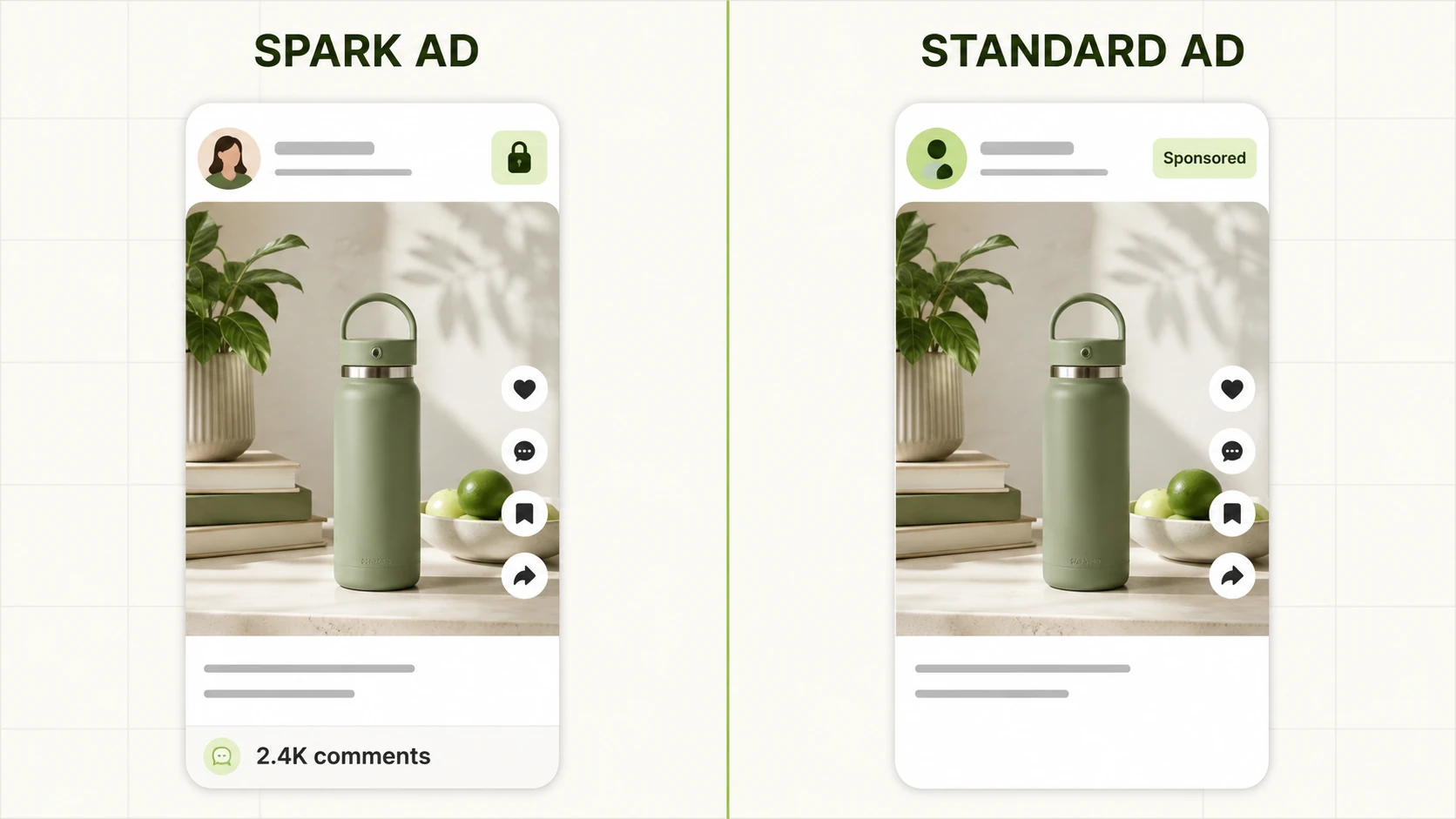
Spark Ads on TikTok work differently. Instead of building a new unit, the advertiser attaches paid distribution to a post that already exists, either a branded account’s own video or a creator’s video the advertiser has been authorized to use. The post keeps its original URL, comment thread, like count, and profile attribution. Paid spend simply extends its reach. Viewers can tap through to the original creator’s profile, follow them from the ad, and see the same comments that were there before the campaign started.
This matters because TikTok users are quick to spot an ad that feels like an ad. A Spark Ad still carries the visual signature of native content: a real profile, a real caption, a comment section that looks lived in rather than freshly seeded. That authenticity signal is the reason the format exists.
How Spark Ads on TikTok Differ From Standard In-Feed Ads
The two formats solve different problems even when they run through the same campaign objectives, and spark ads tiktok examples side by side make the distinction concrete.
| Dimension | Spark Ads | Standard In-Feed Ads |
|---|---|---|
| Content source | Existing organic post (brand or creator) | Newly uploaded ad creative |
| Engagement history | Preserved (likes, comments, shares carry over) | Starts at zero |
| Profile shown | Original poster’s TikTok profile | Advertiser’s ad account, often no linked profile activity |
| Permission needed | Yes, via TikTok’s authorization mechanism if boosting someone else’s post | No, advertiser owns the asset outright |
| Comments visible | Original comment thread stays public | New comment thread built from scratch |
| Typical use case | Creator partnerships, UGC, organic posts that already tested well | Fresh creative, direct-response offers, tightly controlled messaging |
A table earns its place here since the format choice comes down to a short list of comparable attributes, not a narrative.
When Agencies Reach for Spark Ads Over a Standard Ad
Creator Partnerships
When an agency pays a creator to post about a client’s product, that creator’s audience already trusts the account. Running the post as a Spark Ad instead of ripping the video and re-uploading it as a standard ad keeps that trust visible. Followers see the creator’s handle, the creator’s existing comments, and the creator’s usual posting style, not a version stripped of context.
UGC Campaigns
FabFunnel’s Genie tool generates UGC-style video creative for advertisers who want that look without booking a creator for every asset. Whether the underlying UGC clip comes from a paid creator, a customer, or a generated asset published as an organic post first, Spark Ads let an agency test it organically, watch how it performs, and then put budget behind the version that already has real comments and shares rather than guessing which script will land as a cold ad.
Preserving Social Proof
A video with three thousand organic comments reads as validated. The same video re-uploaded as a standard ad reads as untested, even if the footage is identical. Agencies managing brand-sensitive accounts often prefer to Spark a post specifically to keep that visible proof intact through the paid phase of a campaign.
The Authorization Mechanism, at a High Level
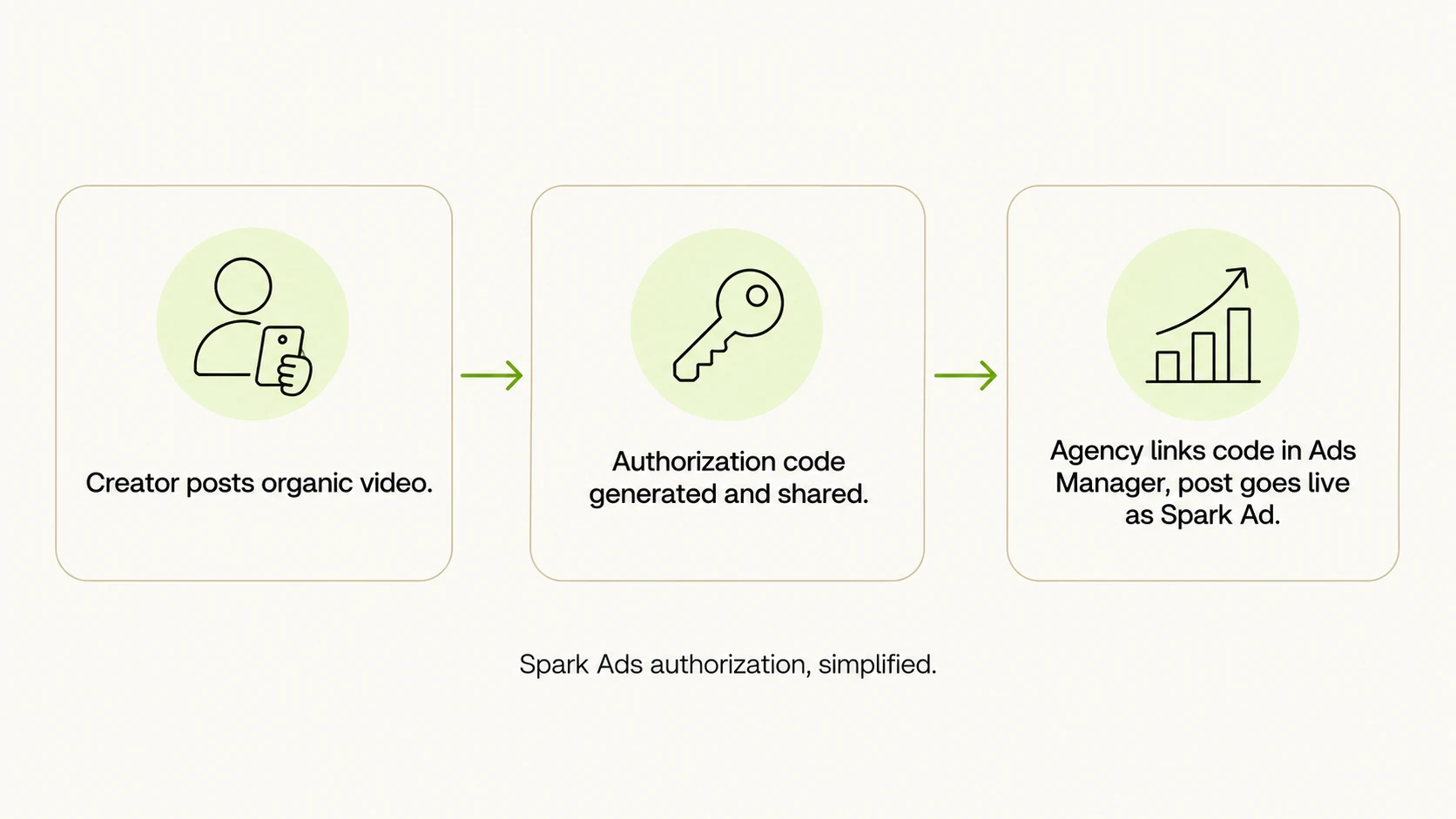
Boosting your own account’s post as a Spark Ad requires no special permission since the advertiser already owns the content. Boosting a creator’s post is different: TikTok requires the content owner to actively authorize the advertiser before that post can carry paid spend.
At a high level, the creator generates an authorization credential inside TikTok tied to the specific video, then shares it with the agency or brand running the campaign, a step that sits at the center of any tiktok spark ads setup. The agency enters it in Ads Manager when setting up the Spark Ad, which links the paid campaign to that exact post. The authorization has an expiration and can be revoked by the content owner, so the creator keeps control over how long their content runs as a paid unit.
Exact steps inside TikTok’s interface change over time and vary by account type, so agencies should confirm the current authorization flow directly in Ads Manager or TikTok’s own support documentation before a campaign.
Practical Considerations for Choosing Content to Spark
Not every organic post is a good candidate for paid distribution, which is one of the core tiktok spark ads best practices agencies apply before spending budget. Engagement quality matters more than raw count: a video with modest views but a comment section full of genuine questions often converts better than one with inflated views and thin engagement. Comment sentiment needs a check too, since the thread stays visible and public once spend is live, and unresolved negative comments carry into the paid campaign.
Format fit for the objective matters separately from engagement. A post that performed well organically because it was funny or trend-driven will not automatically convert for a direct-response objective; the content still needs a reason for someone to act, not just watch. Authorization terms should be confirmed with the creator upfront, including how long the agency can run the post as a Spark Ad and whether renewal needs to be discussed before that window closes. Finally, check content freshness: a high-performing video from months ago can still work as a Spark Ad, but only if the product, offer, or claims in the caption still hold up.
Where FabFunnel Fits
FabFunnel supports TikTok alongside Meta and NewsBreak, so Spark Ads sit inside the same operational surface as the rest of a paid social program rather than a separate workflow. Genie generates AI creative, including UGC-style video output tied to a connected product catalogue, which agencies can use as source material for organic posts worth testing before deciding whether to Spark them. The Bulk Campaign Launcher can push 200+ campaigns live in under two minutes across Meta, TikTok, and NewsBreak, which matters when an agency is managing several creator authorizations at once and needs setup to move as fast as the content decisions do.
FAQs
1. Can I run a Spark Ad without the creator’s permission?
No. Boosting someone else’s post requires that person to generate and share an authorization credential with the advertiser through TikTok’s own mechanism. Running paid spend behind a creator’s video without that authorization is not how the format is designed to work.
2. Will the comments on my organic post change once it becomes a Spark Ad?
The existing comment thread stays intact and public, and new comments from the paid audience get added to it. This is part of what makes Spark Ads feel native, but it also means comment moderation matters more once spend is live.
3. Can a brand Spark its own organic post without going through the authorization process?
Yes. Authorization is only required when boosting content from an account the advertiser does not own. A brand’s own TikTok account can Spark its own posts directly.
4. Is a Spark Ad the same thing as a TikTok boosted post?
They are related but not identical. Spark Ads run through TikTok Ads Manager with full campaign controls like objective selection, audience targeting, and budget management, while a simple in-app boost is a lighter-weight option with fewer controls. Agencies running structured campaigns almost always use the Ads Manager path, since managing tiktok ads spark ads through full campaign controls beats the lighter in-app boost option.
5. Should every piece of UGC content be run as a Spark Ad instead of a standard ad?
No. Spark Ads make the most sense when the underlying post already has engagement worth preserving or when profile-level authenticity is part of the strategy. For fresh creative, direct-response tests, or content that never existed as an organic post, a standard in-feed ad is often simpler to manage.
6. How do agencies decide which organic posts are worth Sparking versus which should stay unpaid?
The decision usually comes down to engagement quality, comment sentiment, and whether the content still supports the current offer or messaging. Posts with strong organic signal and accurate, current claims are the ones worth putting budget behind.
If you are managing Spark Ads for TikTok alongside Meta and NewsBreak campaigns, FabFunnel keeps creative generation, catalogue-linked UGC output, and bulk campaign launch in one place. Generating and refreshing the creative that feeds Spark Ads campaigns is part of what FabFunnel’s ad creative automation covers. Get started or see how Genie generates creative.