AI has made marketing faster, more targeted, and more efficient. It’s also introduced a set of ethical questions around ai online marketing that most marketers haven’t been forced to answer yet – but will be.
This isn’t about abstract philosophy. The ethical dimensions of ai online marketing are becoming practical and regulatory. Transparency requirements around AI-generated content, data privacy obligations, and audience targeting restrictions are shaping what marketers can legally do in a growing number of markets. Understanding where the lines are – and why they exist – is now part of operating competently in ai online marketing.
What the Ethical Questions in AI Online Marketing Actually Are
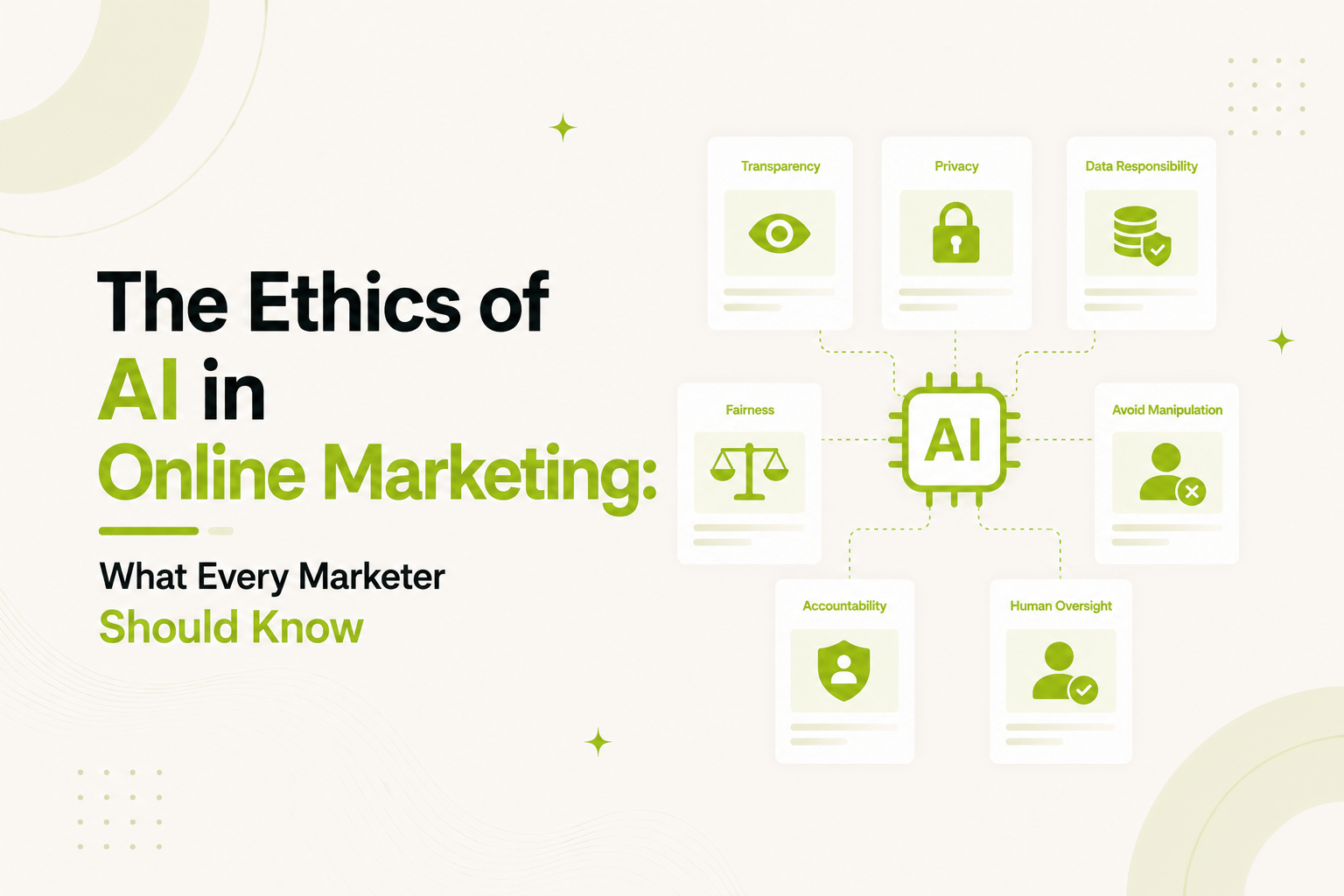
The ethics of AI in online marketing cluster around four areas: transparency, data, targeting, and content authenticity. Each has a practical implication for how campaigns are built and managed in ai online marketing.
Transparency
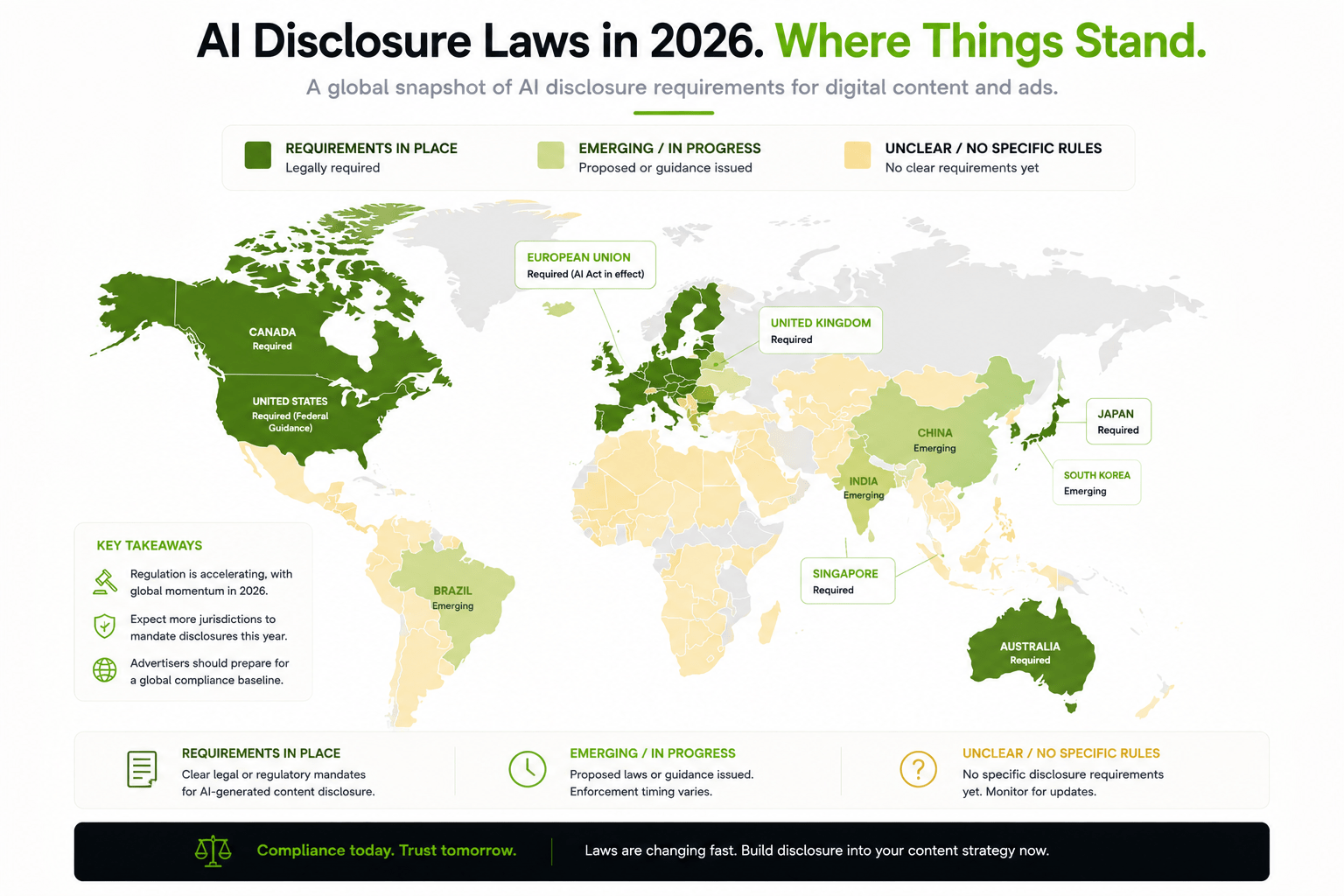
When AI generates ad copy, produces a video, or personalizes a message to an individual as part of ai online marketing, the audience often doesn’t know. In most current regulatory environments, they don’t have to be told – but that’s changing.
The EU’s AI Act, which came into full effect in 2025, includes disclosure requirements for AI-generated content in specific contexts. The FTC in the US has issued updated guidance on endorsements and testimonials that covers AI-generated social proof. Several platforms including Meta and TikTok now require disclosure labels on AI-generated creative in certain ad formats.
The practical implication: know where disclosure is legally required in your markets. The threshold varies by content type and jurisdiction, but the direction of travel is toward more transparency, not less.
Data
AI-driven personalization and targeting in ai online marketing run on data. The more granular the data, the more targeted the marketing – and the more potential for practices that audiences would object to if they understood them.
The relevant questions for ai online marketing performance marketers:
- Are the data sources feeding your targeting compliant with GDPR, CCPA, and equivalent regulations in your active markets?
- Are you collecting and retaining data in ways users were informed about and consented to?
- Are you using inferred characteristics (health status, financial situation, political views) for targeting in ways that exceed what consent was given for?
These aren’t new questions. AI amplifies their significance because the targeting capability has increased – the same data that produced adequate targeting in 2020 produces highly granular targeting in 2026, and the ethical weight of how that data is used has increased with it.
Targeting
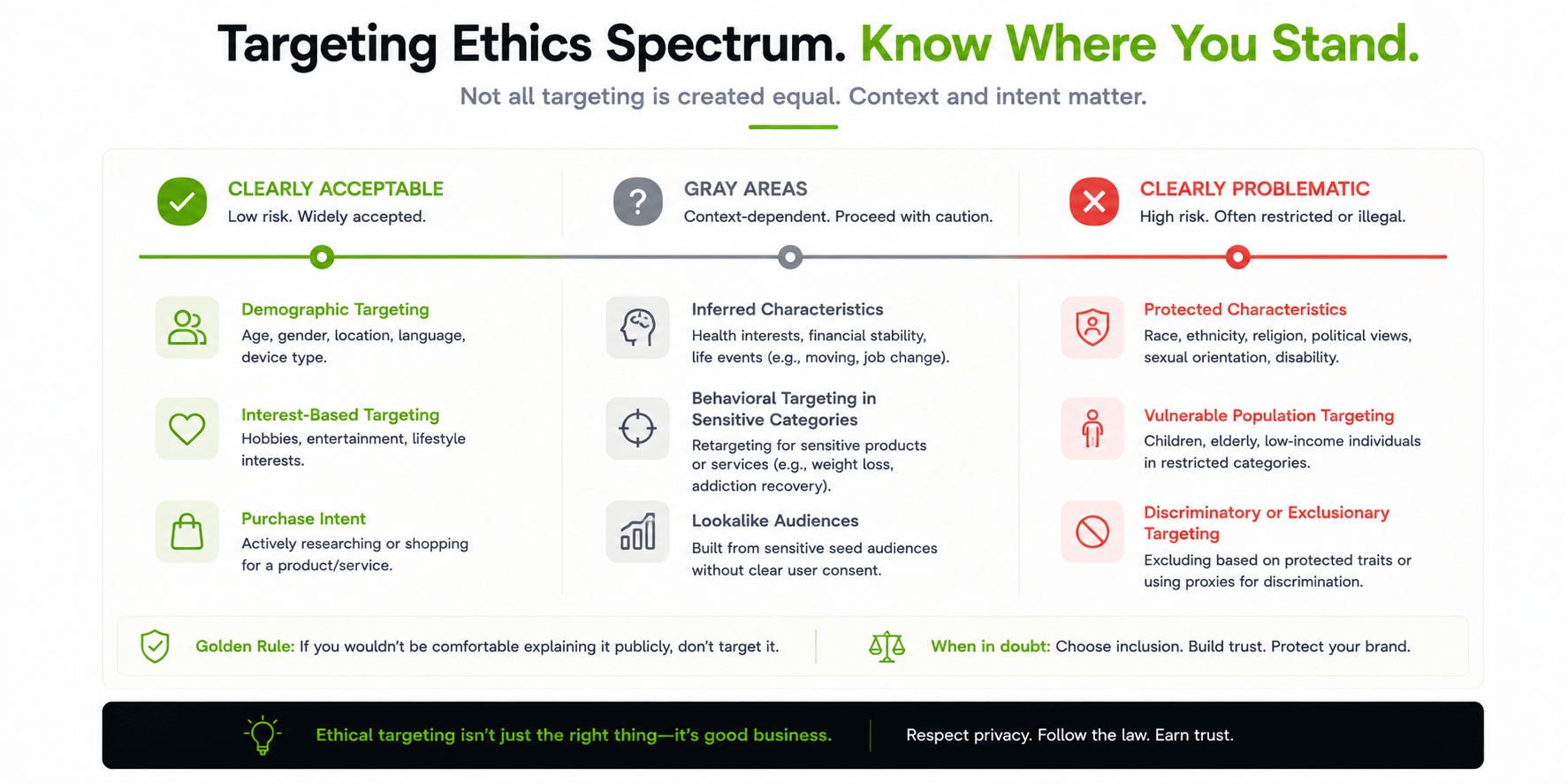
Precision targeting – one of the core value propositions of AI in digital advertising and machine learning in online advertising alike – creates the technical capability for targeting practices that are either illegal or ethically problematic in specific contexts.
Housing, employment, and credit advertising have legal restrictions on audience targeting that apply regardless of how the targeting is executed. Meta’s own policies prohibit targeting based on protected characteristics in these categories. AI doesn’t change the underlying legal restriction – but it makes it easier to get close to the line accidentally.
The broader ethical question is around targeting vulnerable populations. Financial products targeted specifically at people in financial distress, health products targeted at people with specific medical histories, gambling products targeted at people showing problem gambling indicators – these represent targeting that is technically possible with current AI tooling and ethically contested regardless of legality.
Content Authenticity
AI-generated content creates authenticity questions in ai online marketing that are specific to the scale and realism of current generation tools.
AI-generated testimonials, reviews, or endorsements that misrepresent real customer experiences are deceptive regardless of the tool used to produce them. The FTC’s endorsement guidelines apply to AI-generated social proof just as they apply to paid human endorsements – if the endorsement is material and doesn’t reflect genuine experience, it requires disclosure.
AI-generated UGC-style ads are a more nuanced case in ai online marketing. An ad formatted to look like organic user content is not inherently deceptive if it’s labeled as an advertisement – which platform policies on both Meta and TikTok now require. The label is not optional.
Deepfake-style content that misrepresents a real person – a celebrity, a public figure, or a private individual – is a different category entirely. Most jurisdictions have existing legal frameworks (right of publicity, defamation, fraud) that apply, and platform policies prohibit it explicitly.
What Responsible AI Marketing Practice Looks Like
A few operational principles for ai online marketing that apply regardless of where regulation currently sits:
Disclose where required and consider disclosing where it’s not. The minimum is legal compliance. The more durable approach is transparency that builds audience trust – audiences that know AI is involved and feel the marketing is still honest are more valuable long-term than audiences deceived by authenticity they’ll eventually recognize as manufactured.
Audit your data sources. Know where the data feeding your targeting came from, what consent was given when it was collected, and whether the use you’re putting it to is consistent with that consent. This is a compliance requirement in most markets and a basic practice in all of them.
Apply targeting restrictions as policies, not just platform rules. Housing, employment, credit, and health advertising have targeting restrictions for reasons that predate AI. Understanding why those restrictions exist – not just what they are – produces better judgment when edge cases arise.
Test your AI-generated content for accuracy. AI models produce confident-sounding output that can be factually wrong. An ad copy that makes claims about product effectiveness, clinical results, or comparative performance needs verification before it runs. The tool that generated it can’t fact-check itself.
The Takeaway: Ethical AI Marketing Is a Competitive Advantage, Not Just a Compliance Checkbox
Marketers who understand the ethical dimensions of ai online marketing and build practices around them are better positioned than those who treat it as a regulatory obstacle.
Audience trust compounds. A brand that practices artificial intelligence online marketing in ways audiences find honest and useful builds durable engagement. A brand that uses it to manipulate, deceive, or target inappropriately creates short-term results and long-term damage.
The regulatory environment around ai online marketing is also moving in one direction. Requirements around AI disclosure, data use, and targeting restrictions are increasing, not decreasing. Practices that are technically legal today are being restricted in 2026 and beyond. Getting ahead of that curve is cheaper than responding to it.
Frequently Asked Questions
Do marketers need to disclose when they use AI to create ads?
Depends on content type and jurisdiction. The EU AI Act requires disclosure in specific contexts. Meta and TikTok both require labels on AI-generated creative in certain formats. FTC endorsement guidelines cover AI-generated testimonials. Check current guidance for your actual markets – this shifts often.
Is it legal to use AI for audience targeting in performance marketing?
Mostly, yes. Housing, employment, and credit ads carry legal targeting restrictions no matter how the targeting gets executed – AI targeting protected characteristics in these categories is prohibited. Everywhere else, AI targeting is fine as long as you’re following data privacy rules.
What data privacy laws apply to AI marketing tools?
GDPR in the EU/EEA, CCPA and CPRA in California, LGPD in Brazil, PIPEDA in Canada, and more jurisdictions adding their own versions. They all circle back to consent, data retention, and the right to opt out of profiling. Most major platforms publish GDPR/CCPA compliance docs – check before you use one.
Are AI-generated testimonials and reviews legal?
Not if they misrepresent a real customer experience. FTC endorsement rules apply the same to AI-generated testimonials as paid human ones. A fake review that reads as authentic is deceptive advertising, whoever or whatever wrote it.
What’s the ethical issue with AI-generated UGC-style ads?
It’s built to look like organic creator content, so unlabeled, it’s deceptive. Meta and TikTok both require sponsored labels on native-looking formats now. Label it properly and AI-generated UGC is just a format choice – the problem is only ever the missing disclosure
How should marketers stay current on ai online marketing regulations?
Watch the FTC, the EU AI Office, and the ICO in the UK – those are the primary sources. Meta and TikTok’s own policy updates move faster than any legislation and hit AI content directly. Outside the US and EU, local counsel is the safer bet.