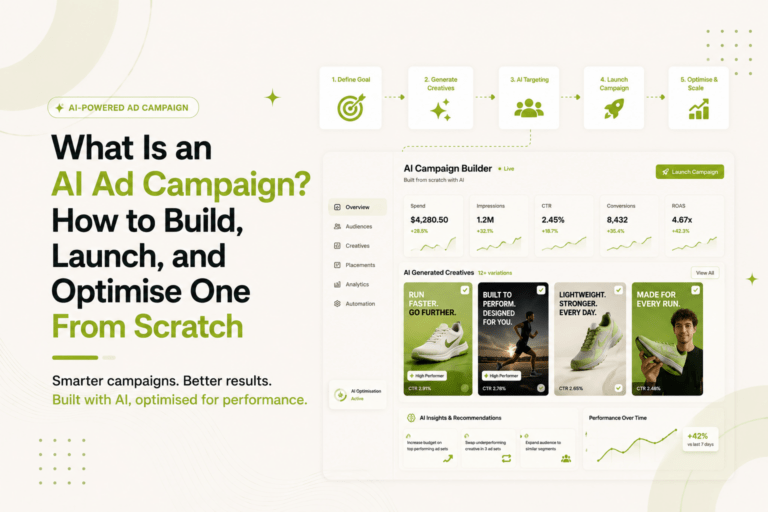
Running an AI ad campaign has never been more accessible. Better tools, faster creative generation, lower barrier to launch -most of that is genuinely useful progress. But easier setup doesn’t automatically mean better results. Most teams are making the same handful of avoidable mistakes, and these aren’t obvious ones. They’re the kind that look fine from the outside while quietly capping conversions week after week. This post covers the common ones -and what to do instead.
Where Most AI Ad Campaigns Go Wrong Before Launch
The most common mistake in any artificial intelligence advertising campaign isn’t a technical one. It’s the brief.
Most people open their AI ad campaign tool, type something like ‘create a Facebook ad for my brand,’ and expect strong output. The tool can only work with what you give it. Vague input produces vague creative, and vague creative disappears in a feed already crowded with everything else fighting for attention.
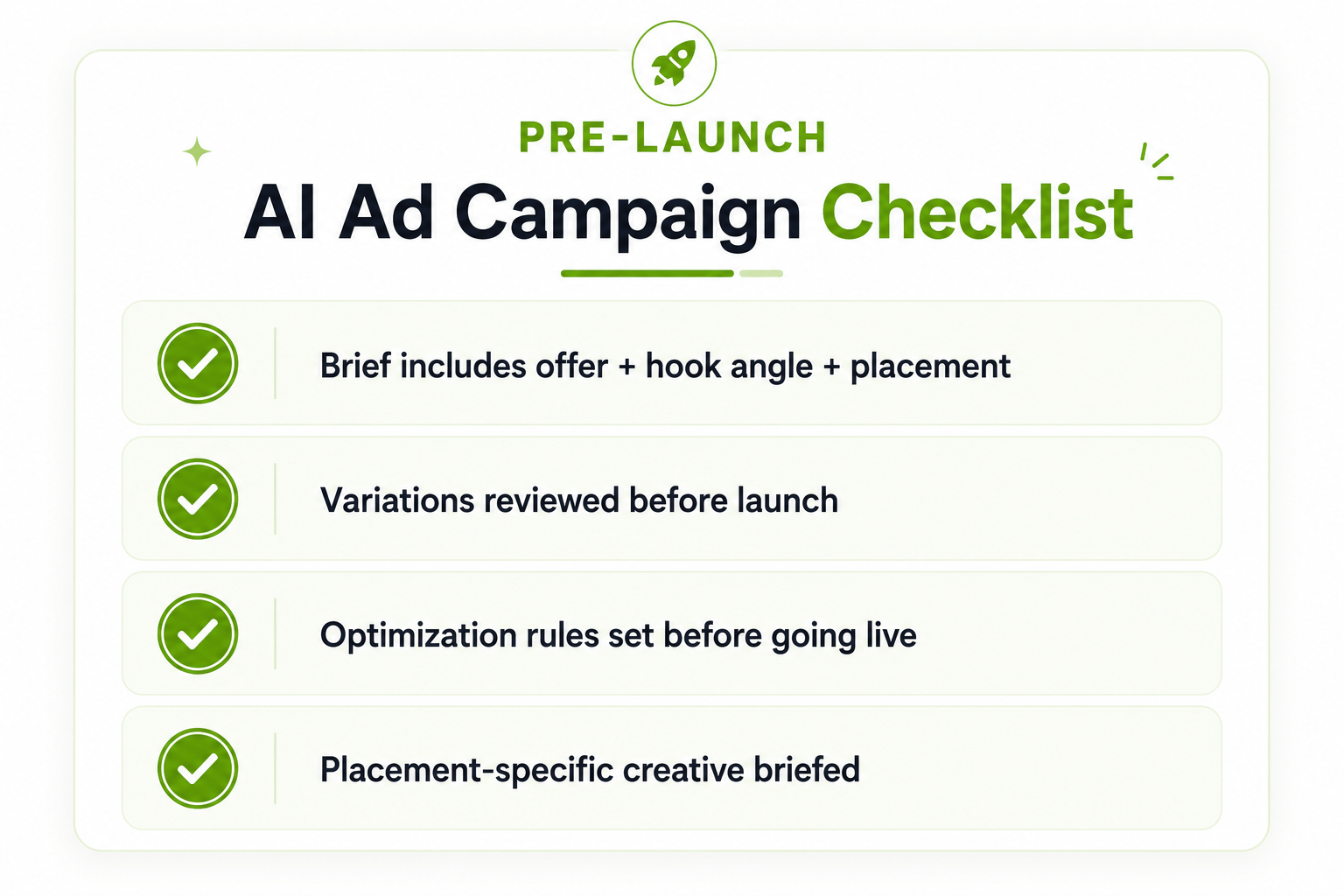
What actually works is treating the brief the way you’d brief a human team. Your offer, the hook angle you’re testing, the specific frustration your audience has, the placement you’re building for -all of that goes in. The best AI advertising campaigns don’t happen because the tool is smarter. They happen because the brief was sharper.
The second mistake happens right after generation: skipping the review step. An AI ad campaign tool produces fast, and that speed creates a pull toward pushing everything straight to launch. But not every output lands -some visuals miss the brand, some copy angles don’t fit the audience, and some CTAs are flat.
A quick review pass before anything goes live catches the underperformers before they burn your first days in the market. Five minutes of filtering saves two days of wondering why the numbers are off.
The Mistakes That Kill Performance Mid-Campaign
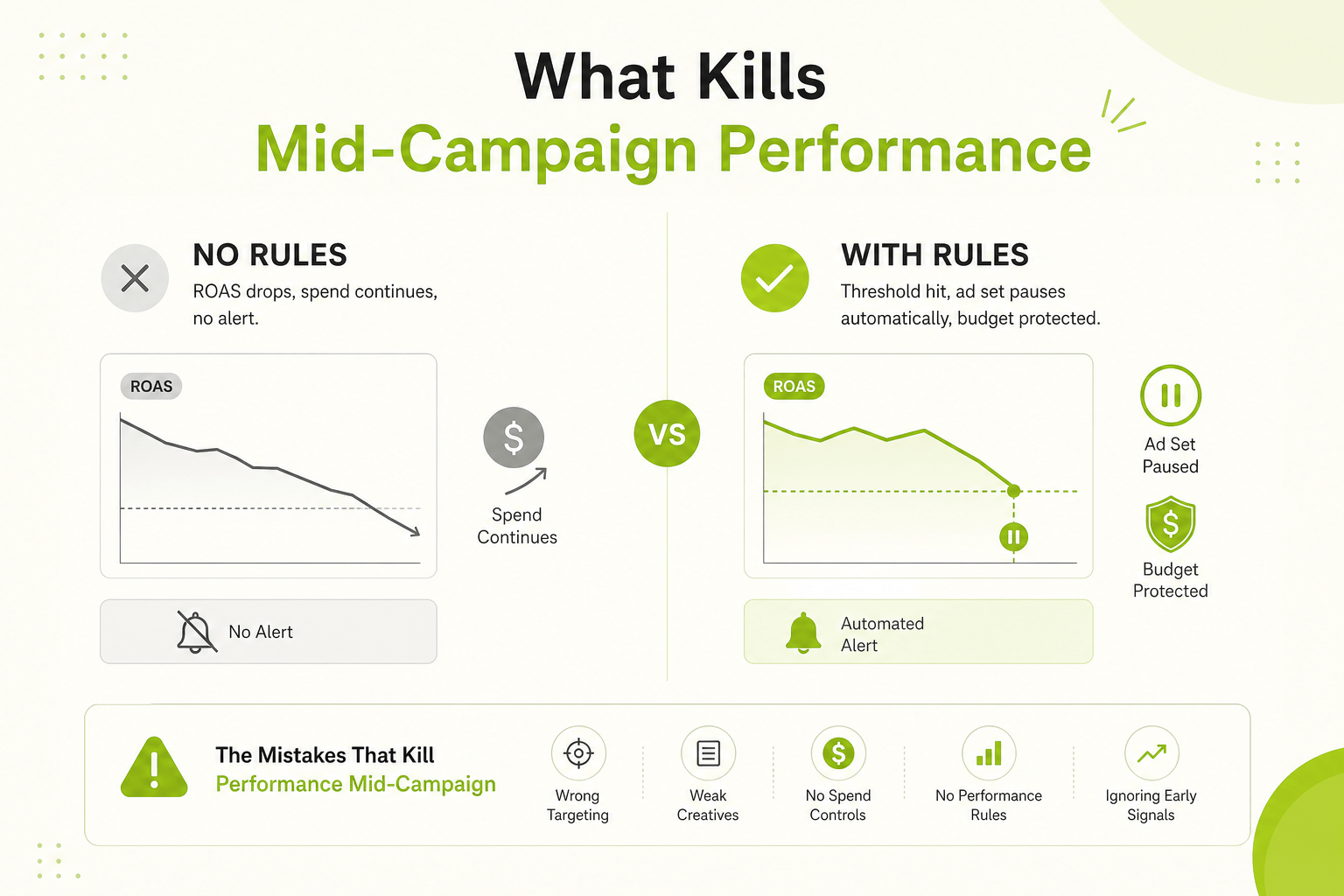
Running an artificial intelligence advertising campaign without live optimization rules is one of the more expensive ways to lose money quietly.
The campaign launches, the creative looks good, and early signals seem okay. Then frequency climbs, CPM rises, and ROAS slides -while the campaign keeps spending at full pace. By the time someone notices, you’ve already paid for the decline.
Build your rules before the campaign goes live, not after results go sideways. Set thresholds: if ROAS drops below your floor for 48 hours, pause the ad set. If CPA exceeds your cap, flag it for review. If frequency and CPM climb together, trigger a creative refresh. These rules run automatically, so your AI ad campaign responds to live data without someone needing to check in every morning.
The other mid-campaign mistake: generating creative and then trying to fit it across different placements afterward. Meta feed, Stories, Reels, TikTok, and NewsBreak all have unique functionality. What converts in a feed ad often falls flat in a Reel. Your AI ad campaign tool can be briefed for each placement from the start -native creative tends to perform better than adapted creative — the difference in brief specificity usually shows up in results.
Brief for the placement. It just takes a few extra minutes and makes a measurable difference.
What the Best AI Advertising Campaigns Do Differently
Most teams generate four or five variations, put them in market, and wait. That’s not enough to find a real winner -it’s enough to confirm what you already thought you knew.
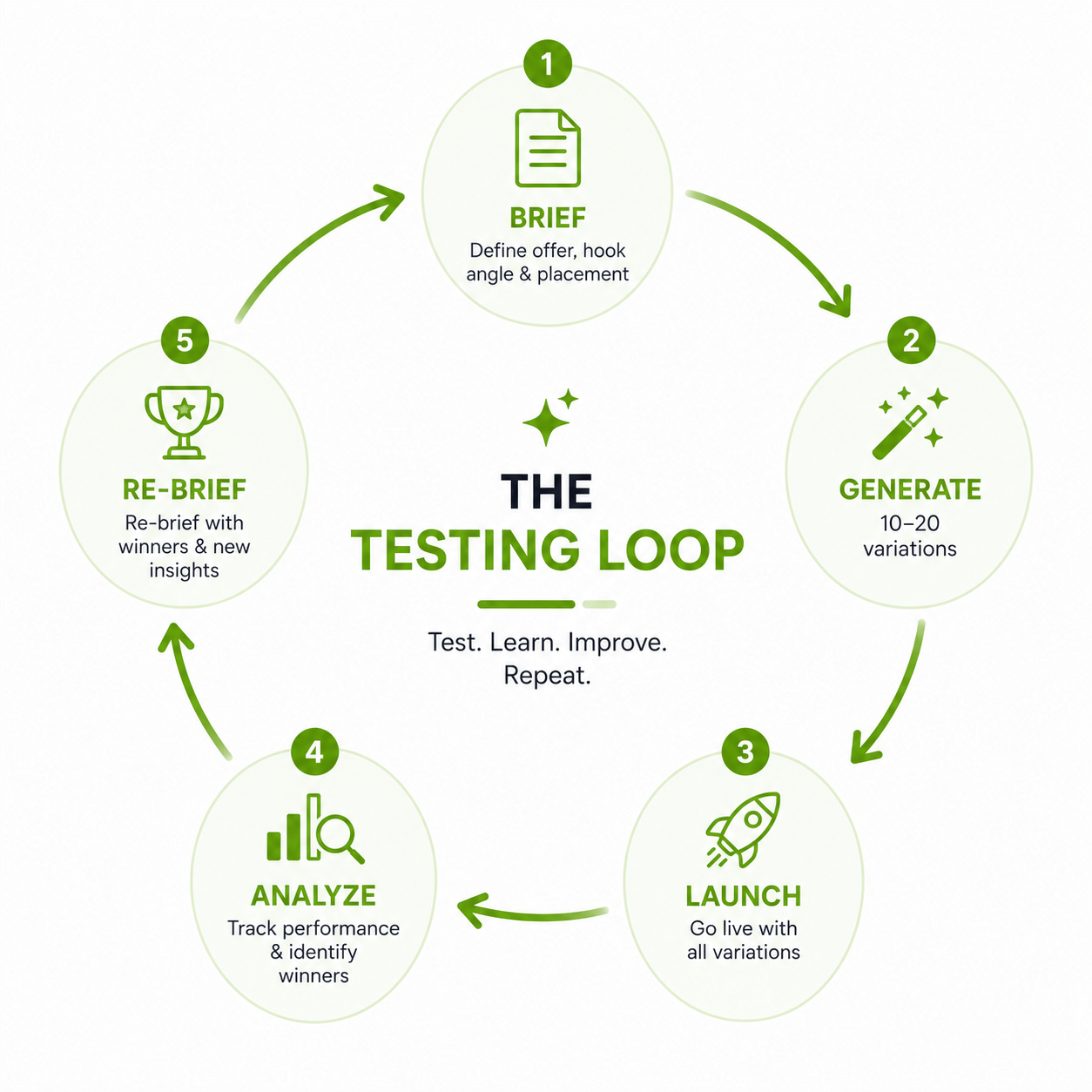
The best AI advertising campaigns run ten to twenty variations in each testing round. Different hook angles, different visual treatments, different CTAs for the same offer. More variations in market means more data, and more data means you find the real winner before budget runs out on assumptions.
The second thing the best AI advertising campaigns consistently do: they feed winning patterns back into the next brief. A hook that performed tells you something real about what your audience cares about. A visual that got clicks tells you something about the emotion or context that’s resonating. When that data goes back into the next brief, each cycle gets sharper than the last.
An artificial intelligence advertising campaign that doesn’t evolve based on its own results is just expensive testing with no compounding benefit. The loop -brief, generate, test, learn, re-brief -is what turns a single campaign into a system that keeps improving.
Your AI ad campaign tool handles the production side of that loop fast. But reading the data and translating it into a better brief? That part still needs a person.
Run Your AI Ad Campaign on the Right Foundation
Avoiding these mistakes doesn’t mean running a perfect campaign from day one. It means building the habits that compound: specific briefs, a review pass before launch, live optimization rules, placement-native creative, and a consistent loop of testing and re-briefing.
FabFunnel handles the launch, automation, and creative management side across Meta and other platforms -so you’re not rebuilding the same workflow from scratch every time.
The Takeaway: The Mistakes Are Fixable Before They Cost You
Most AI ad campaign failures aren’t creative problems — they’re process problems. A vague brief, no review step, no optimization rules, creative that wasn’t built for its placement. Each one is fixable before launch. Build the right habits early and the compounding works in your favor instead of against you.
Frequently Asked Questions
What is an AI ad campaign?
An AI ad campaign uses AI tools to generate ad creatives and manage live optimization -rather than relying on manual production and daily check-ins. The goal is faster testing, more variations, and performance that improves without constant oversight.
What makes the best AI advertising campaigns work?
Specific briefs, enough creative variation to generate real signal, and a consistent loop of feeding winning patterns back into the next round. The best AI advertising campaigns also run live optimization rules -so performance dips get caught before they turn into budget problems.
What should I look for in an AI ad campaign tool?
Multiple variations from a single brief, placement-specific output for different formats, and live optimization rules. An AI ad campaign tool that only handles creative generation leaves you managing the harder half -performance monitoring and scaling -manually.
How many ad variations should I test per round?
Ten to twenty per round is a practical range. Fewer than five and you’re not generating enough signal to find a real winner. The exact number depends on your daily budget -you want enough variations to get data without spreading spend too thin across assets.
What is an artificial intelligence advertising campaign?
An artificial intelligence advertising campaign is a paid media campaign where AI handles creative production and, often, live performance optimization. The human side focuses on strategy, the brief, and translating performance data into better creative for the next round.
How do I avoid wasting budget on a poorly set-up campaign?
Build optimization rules before launch. Set thresholds for ROAS, CPA, and frequency, and let those run automatically. Do a review pass on generated creatives before anything goes live. And brief for the specific placement rather than generating generic assets and adapting afterward -that’s where performance leaks.
Why do some AI ad campaigns underperform even with good creative?
Usually one of three things: not enough variation to surface a real winner, no live rules to catch performance drops early, or the creative wasn’t built for the specific placement it ran in. Good creative adapted to the wrong format still underperforms.
When should I refresh creative during a campaign?
When frequency and CPM both start climbing together -that’s the fatigue signal. Don’t wait for ROAS to drop first. Set an automated flag at your threshold and refresh before the decline shows up in the numbers.