Marketing in 2026 is not a game of which player has deeper pockets, it is of which player moves faster. With growth in acquisition costs, broken customer journeys, and overwhelming data traditional marketing is left in the dust. Today businesses compete on speed, intelligence and decision making which is beyond the scope of creative output. This is where AI in marketing comes in. From creating high performing ads to real time analysis of customer behavior, AI is transforming how we build and scale campaigns. It is not just a tool, it is a competitive edge. Also what we saw as a solution for large scale players is now available for the small business which have lean teams to go head to head at scale. In this report we will look at how AI is changing the game in marketing and how you can use it to play.
What is AI in Marketing?
At the base of it, AI used in marketing refers to the application of artificial intelligence in improving how companies plan, execute, and optimize their marketing strategies. Today, AI is used in marketing in many areas.
Data Analysis
AI processes large sets of marketing data in seconds, which is a task that would take humans hours or even days. It also notes trends.
Personalization
AI is at the helm of hyper personalization which in turn is made possible by analysis of user behavior, preferences and intent. We see this in the form of customized ad content and targeted email campaigns which in turn present the right message to the right audience at the right time. Predictive Modeling.
One out of the primary benefits of AI is what it does for predictive analytics. It looks at trends in customer behavior, which products will sell, and how campaigns will do, which in turn allows marketers to use that info to change their tactics proactively instead of playing catch up. Automation.
AI is taking over the routine tasks of campaign optimization, audience segmentation, and budget allocation which in turn allows teams to put their energy into strategy while AI does the heavy lifting.
Real-World Example
Imagine running a pay per click campaign. Instead of manual creative and budget adjustments AI can:.
- Run multiple ad variations. Now.
- Spot your top creatives fast.
- Move the budget immediately to what converts.
- Dig into call logs. Find who didn’t close.
AI which is redefining traditional marketing workflows into smart and adaptive systems. Key Benefits of AI in Marketing.
Adopting AI is also not for the sake of efficiency but to transform how marketing plays out. In 2026 we see that companies are reporting the following main benefits:.
Key Benefits of AI in Marketing
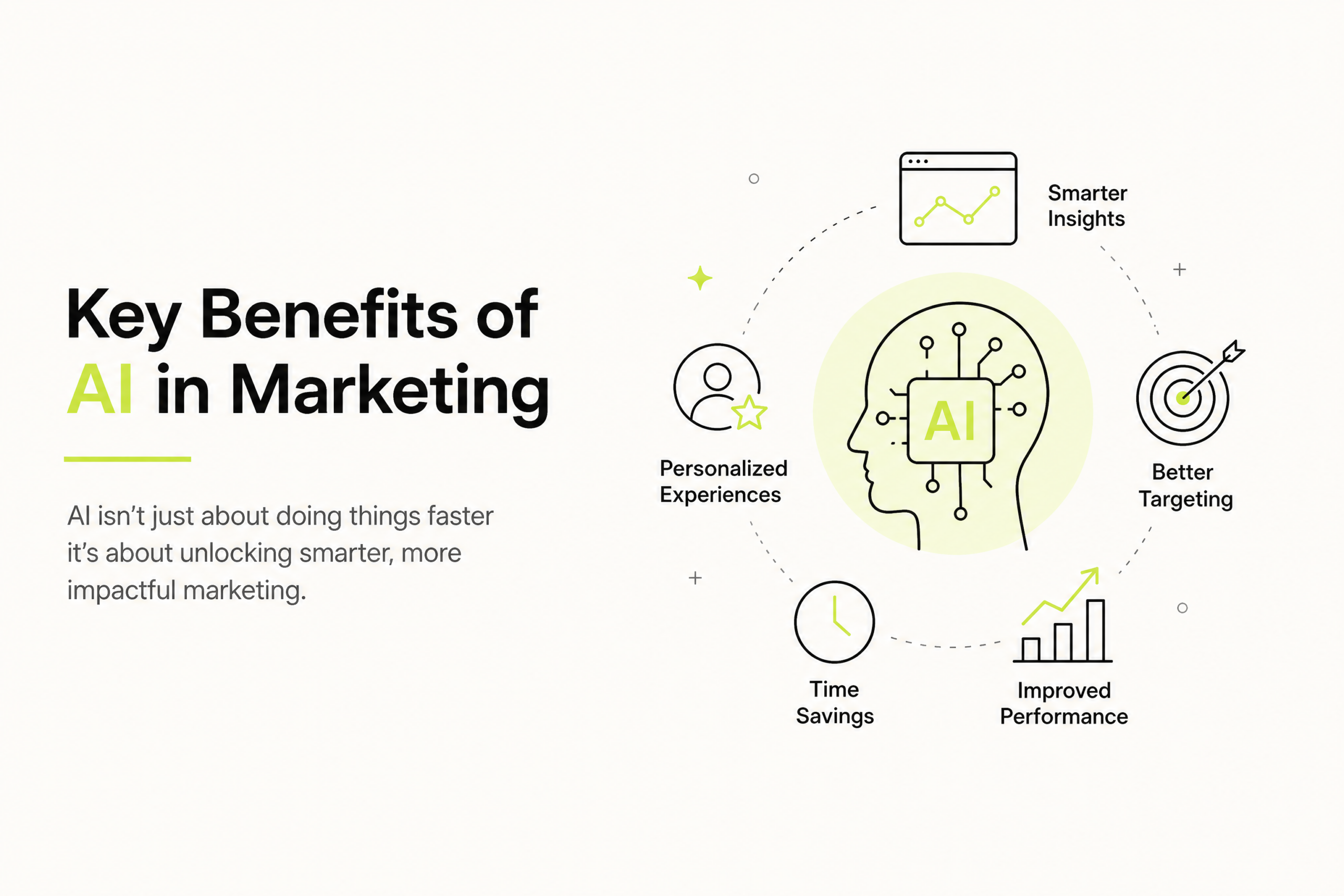
Adopting AI is also not for the sole purpose of efficiency. What we are seeing this year in 2026 is how it transforms marketing’s performance. Also see how businesses are reporting to benefit from it:.
Improved Targeting & Personalization
AI is enabling marketers to step out of basic demographics into behavior based segmentation. We see it in the analysis of user actions, clicks, searches, engagement patterns which in turn we use to build very specific audience groups. This enables:.
- Highly relevant ad targeting
- Dynamic ad sets which fit user intent.
- Personalized messaging across channels
The results are that we have better engagement and higher conversion rates. Quicker decision making.
In past marketing practices we saw that decisions were delayed by data analysis and report cycles. With AI we see instant generation of insights.
Higher ROI & Reduced Costs
One of the primary benefits of AI in marketing automation is cost efficiency. Through continuous optimization of campaigns, AI which in turn puts your budget to best use. Key areas which see improvement include:.
- Lower cost per acquisition (CPA)
- Reduced wasted ad spend
- Smarter budget allocation across channels
Over the course of time we see that which in turn results in great ROI. Scalable Marketing Operations.
As companies grow in size, management of campaigns becomes more complex. AI steps in to solve this issue by which we achieve scale in marketing. With AI, you can:.
Manage thousands of campaigns simultaneously
Optimize for multiple platforms (Meta, Google, TikTok, etc. Maintain performance without growing team size.
This is true of companies that aim to grow fast at a less than proportional rate.
In 2026 we will see the use of AI in Marketing which will include:.
AI has left the analytic reports and is at the stage of driving action at each step of the marketing funnel. We see businesses using AI to automate, optimize, and scale at every stage of their marketing which we will discuss in detail below. Also we have what AI is doing in marketing today.
The Best Ways to Use AI in Marketing in 2026
AI is no longer just for analytics; it’s now driving execution throughout the entire marketing funnel. Companies are using AI to make every part of their marketing work faster, better, and bigger. Here are some of the most important ways that AI is used in marketing today.
AI for Making Ad Creatives
In the past the development of ad creatives that performed well was a time intensive process which required manual testing. AI now allows businesses to create many different versions of ad copy, images, and also videos in just a few minutes. AI studies past performance data to put out better performing creatives. It is also able to change messages based on audience segments, platforms, and campaign goals which in turn makes it a very useful tool for performance marketers.
AI for Better Campaigns
AI does very well at improving campaign performance. What we see is AI which pays attention to performance and scales decisions in real time, so that you do not have to change bids and budgets out by hand. That level of automation means that marketing spend is always put in the best position to see the highest return.
AI analyzes calls and tracks conversions
What drives someone to act or walk away, ultimately determines outcomes. In AI for Small Business Marketing, machines analyze voice logs, messages, slow clicks, and sudden drop-offs to uncover patterns that human eyes often miss, helping businesses understand behavior and respond more effectively.
It helps businesses:
- Detect common objections or drop-off points
- Identify sales blockers in conversations
- Improve scripts and funnel performance
AI Automates Customer Journeys
Marketing today doesn’t follow a straight line. People run into brands in many places and at odd times. Trying to track everything by hand just won’t work. AI can help by doing the work for you: it takes action based on what users do, makes each step personal, and finds the best path to a sale—while things are happening. Old-style funnels change into flexible ones that adjust on their own as people show what they like. The funnel moves based on real actions, not a fixed plan.
The Future Of AI In Marketing
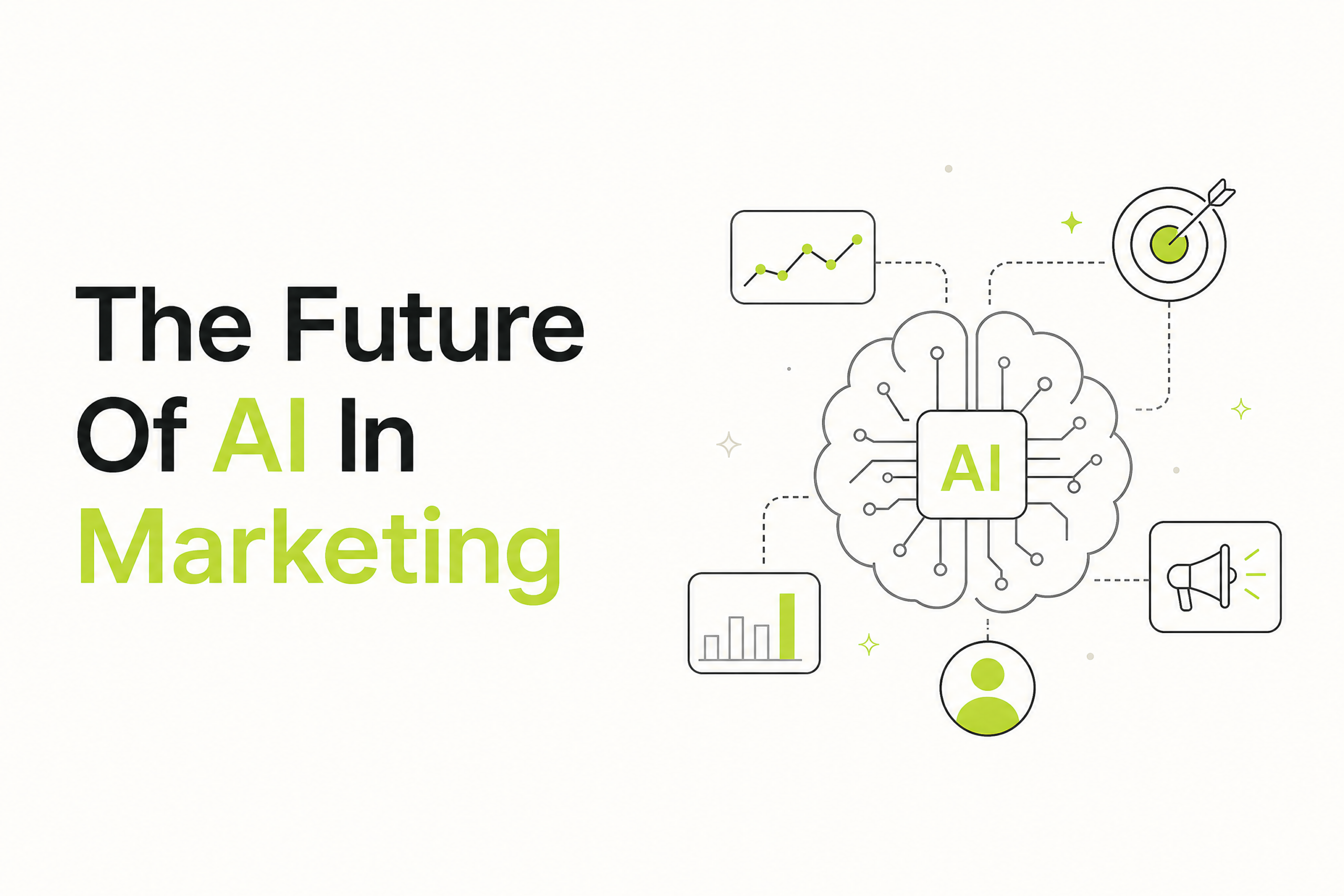
Faster than most expect, artificial intelligence reshapes how brands connect with people. Today’s tools? Merely the opening note in a longer shift already underway, especially with AI for Marketing Automation leading the way.
Imagine machines just running your whole ad game for you—no humans needed. No more hands-on clicking around. Smart software does it all: launches promos, tweaks ’em live, scales what’s working, all on its own as the numbers roll in. So you, the marketer, can kick back and think about the big stuff instead of obsessing over daily changes. Decisions happen faster because machines spot patterns. The first companies to do this leave everyone else behind. Smarter moves come from data, not hunches.
Conclusion
Right now, machines shape ads more than guesswork ever did. Because precision beats luck, messages find people who actually care. When timing matters most, adjustments happen before delays show up. Effort shrinks while outcomes grow, quietly. Tools learn fast so teams don’t repeat tasks. Progress isn’t coming – already here, reshaping every campaign.
When speed matters, tweaking ads on the fly can make a difference – some tools now handle that smoothly. Smarter workflows often come from using software designed for today’s pace. Real results start when systems learn as they go, not after delays. It’s worth checking what’s out there if waiting slows you down.
FabFunnel shows what AI brings to marketing – peek inside or jump into a demo to begin. 🚀
FAQS:
1. So what is AI marketing in 2026?
Basically it’s using smart software to do your marketing work for you. Targeting people. Writing stuff. Predicting what’s gonna work. Optimizing ads. Chatbots. Emails that send themselves. Making quick decisions.
2. How does it actually help?
AI looks at tons of customer data super fast. Find patterns you’d never see. Does all the boring repetitive stuff. And makes everything feel personal to each customer. End result? More sales. Less money wasted on bad ads. People are actually engaging. And you make decisions way quicker.
3. What tools are people using?
You’ve got content generators, predictive analytics, journey tools, CRMs with AI, chatbots that actually work, ad optimizers, and AI that makes images and videos. Some bigger companies even build their own custom AI stuff.
4. Is AI gonna take marketing jobs?
Probably not. But marketers who use AI will take jobs from those who don’t. AI does the grunt work. Humans still do strategy, creativity, branding, storytelling, and big calls. Just don’t be the person refusing to learn it.
5. How does a tiny business start?
Pick one thing. Start cheap. Content creation is easy. Email automation is easy. A simple chatbot is easy. Social media scheduling too. Get that working. Save some time or make some money. Then add another tool later. You don’t have to do everything at once.