Alright so it’s 2026 now. And AI? Not a buzzword anymore. It’s just real. It’s everywhere in digital marketing.
You’ve got AI in ad targeting that’s kinda scary personal. Automated campaigns that run themselves. Predictive analytics that actually work. And AI writing content like it’s nothing.
Remember when people did all this stuff by hand? Guessing what might work? Yeah that’s pretty much over. Now it’s all data-driven precision through smart systems.
AI is changing how brands operate. No question. And marketing with AI? That’s becoming the standard for businesses trying to scale without going crazy.
But if you’re a beginner, you’re probably thinking: what even is digital marketing with AI? And how do I get into it?
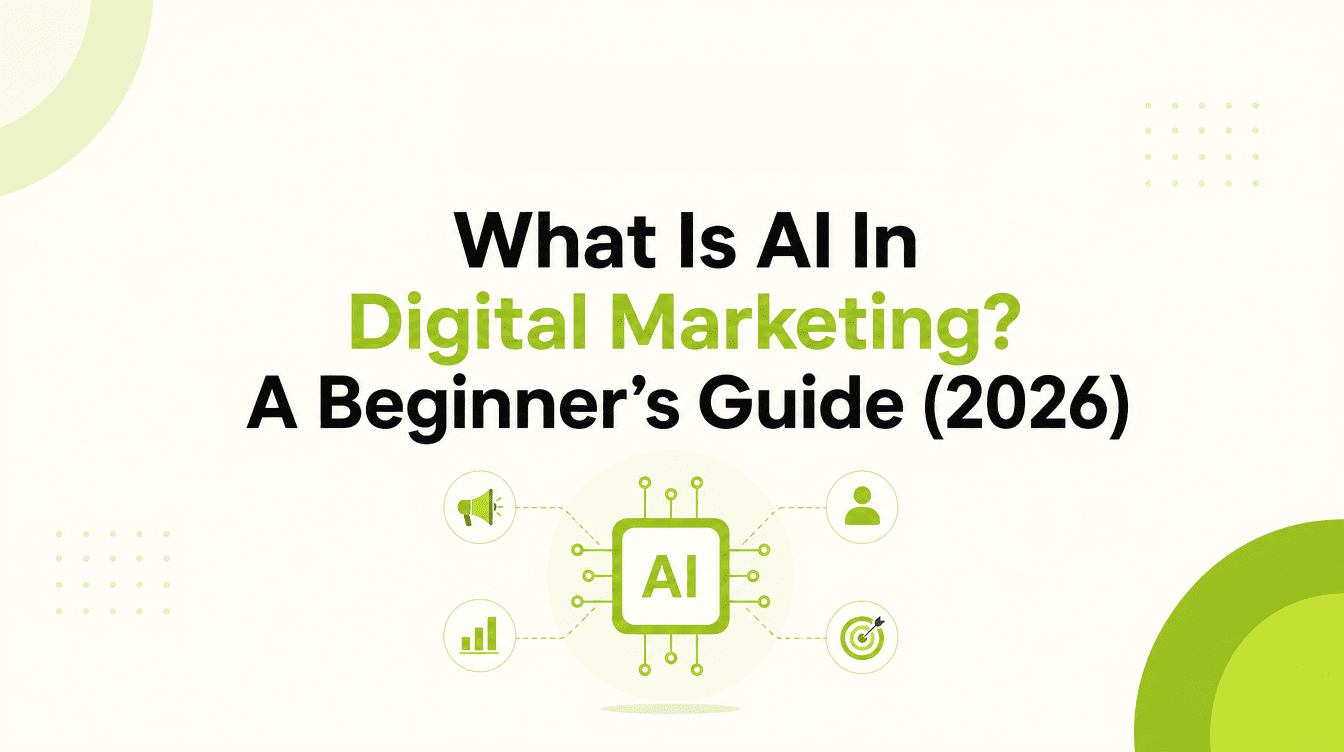
What is AI in Digital Marketing?
AI in Digital Marketing is what we call the application of artificial intelligence technologies like machine learning, data analytics, and automation which in turn improve how marketing campaigns are run from the start to finish and through optimization. Instead of manual decision making and assumption AI Based Digital Marketing uses data to understand what the user does, to predict results and in the end gives the customer a more relevant experience.
At its core, AI in digital marketing works through three key elements:
- Data: AI amasses and analyzes large sets of user data which includes browsing behavior, demographics, and interactions.
- Machine Learning: Algorithms which use this data to identify trends and predict user action.
- Automation: Based on these ideas AI automatically does the task of targeting, bidding and content delivery.
AI vs Traditional Digital Marketing
In the past digital marketing has been very much a do it yourself affair which includes manual targeting, static campaigns, and periodic review and adjustment. On the other hand we see AI powered strategies which are live, constantly learning, and able to make real time decisions at scale.
Role of AI in Digital Marketing
AI’s role in Digital Marketing has grown to be at the core of what modern marketing teams do. As data becomes more complex and competition grows, AI aids marketers in making faster, smarter, and more accurate decisions.
Key Roles of AI in Digital Marketing:
1. Automation
AI takes over for repetitive tasks which include bid adjustments, email scheduling, and audience targeting which in turn allows marketers to put more time into strategy.
2. Personalization
AI is at the wheel of hyper personalization which includes ad, email, and content marketing we send out to users based on what we know of their behavior and preferences.
3. Data Analysis
AI in seconds processes vast data sets which present insights that would be otherwise impossible to find through manual review.
4. Decision Making
AI is a player in which it is also a promoter of automation in the decision making process which also includes prediction of outcomes and recommendation of best actions to improve performance.
How AI Is Transforming Digital Marketing
The rise of AI Driven Digital Marketing is fundamentally changing how campaigns are built and optimized. What used to be manual, time-consuming processes are now handled by intelligent systems in real time.
The Shift: From Manual to Intelligent Systems
- Campaigns are no longer static, they continuously evolve based on data
- Decisions are no longer based on assumptions, they’re driven by algorithms
- Optimization is no longer periodic, it happens in real time
1. Customer Segmentation
AI has a sure eye for high intent users which in turn enables marketers to target the right audience at the right time.
2. Content Creation
AI is able to produce ad copy, visuals and even videos for different audience segments which in turn makes content production faster and more scalable.
3. Campaign Optimization
AI which is always watching over campaign performance and which in turn amends bids, budgets, and targeting to do better.
Key Benefits of AI in Digital Marketing
1. Advanced Directed and Personalized
AI studies out what users do, what they like, and what they intend to do which in turn we use to put forward very relevant content and ads for them. This level of personalization which we see is also a great booster for engagement and conversion rates.
2. Real Time Optimization
Unlike past campaigns which were more static in nature, Digital Marketing with AI is dynamic and in real time which improves results whether that be adjusting bids, audiences, or creatives.
3. Enhanced ROI and Efficiency
AI decreases large scale ad waste by zeroing in on top performance segments. Also we see improved results and more efficient use of marketing budgets.
6. Time and Cost Savings
How much of your team’s day is eaten up by manual, repetitive tasks? Automation takes those off the table. Suddenly your people have room to breathe—and they can put their energy into strategy, creativity, and real growth. Isn’t that the whole point?
5. Predictive Insights
So AI can look at stuff that’s already happened and pretty much guess what’s coming next. Trends, what users are gonna do, that kind of thing. That means marketers can plan ahead instead of always just reacting to whatever just happened. Way less firefighting.
How AI in Digital Marketing Works (Step-by-Step)
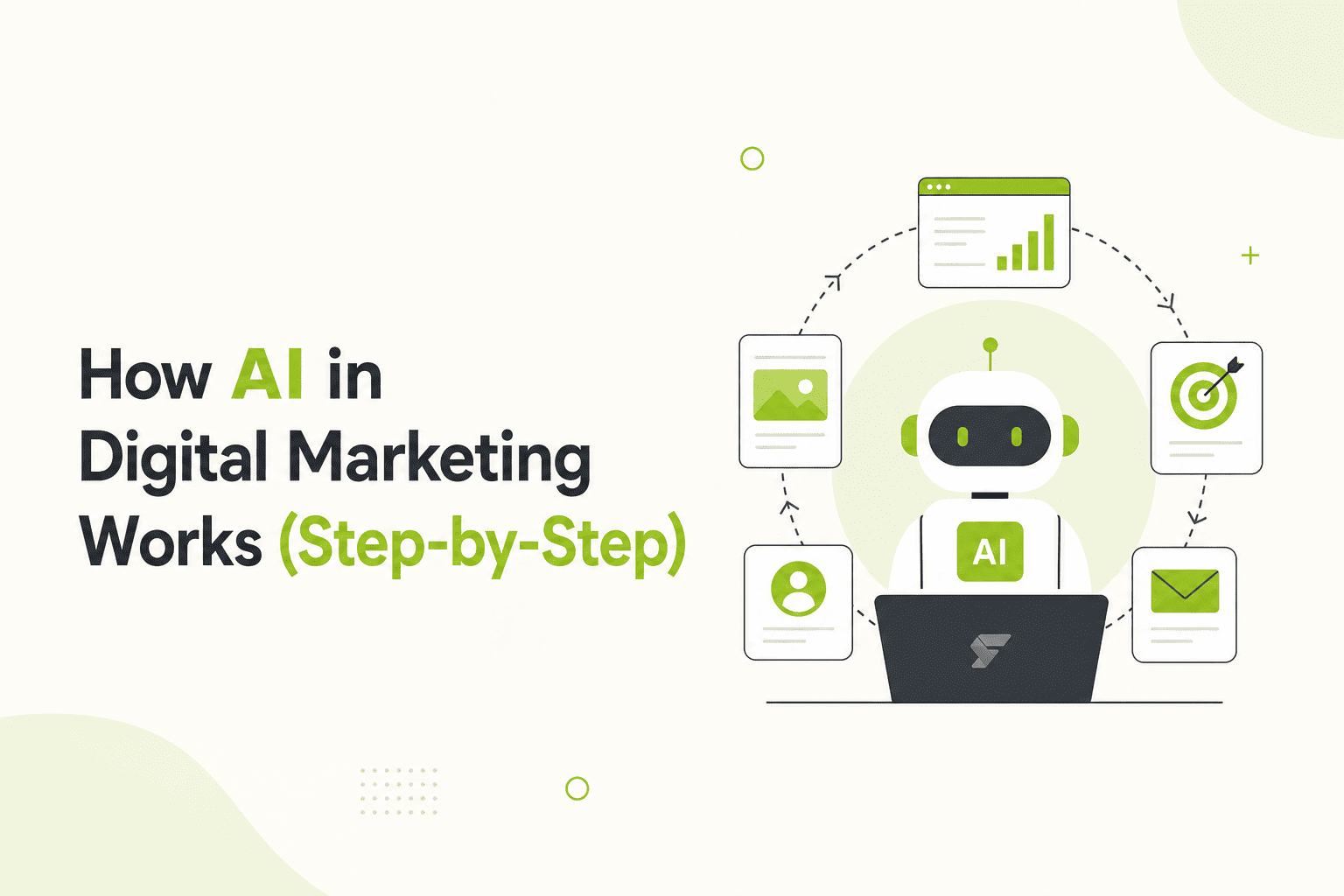
To understand how AI Based Digital Marketing operates, it’s helpful to break it down into a simple workflow:
Step 1: Data Collection
So the AI just pulls data from everywhere. Websites, apps, social media, your CRM, anything users do. That messy pile of data is what makes everything else work.
Step 2: Audience Segmentation
Machine learning jumps in and studies how people behave, what they seem to want, and whether they’re likely to buy. Then it automatically splits everyone into segments. You don’t have to figure it out yourself. How great is that?
Step 3: Content & Ad Generation
Now the AI starts creating. Ad copy, emails, visuals—all tailored to each segment. So different groups see different messages, and each one actually fits them. No more one-size-fits-all blasts.
Step 4: Automated Execution
This is where the AI just runs things. Ad delivery, email scheduling, bid adjustments—all automatic. Your campaigns hum along in the background without you having to babysit. Freedom at last!
Step 5: Continuous Optimization
Once your campaigns go live, the AI keeps learning from fresh data. It tweaks strategies in real time. Performance keeps climbing, and you barely have to lift a finger. That’s the dream, right?
Types of AI in Digital Marketing
So there’s a bunch of different AI tech running marketing these days.
If you understand these categories, it’s way easier to pick the right tools and figure out a strategy.
1. Predictive Modeling
Predictive AI looks at everything that’s already happened and forecasts future behavior. That gives marketers a heads‑up on emerging trends and a much better shot at targeting the people who actually matter.
2. Recommendation Engines
You know how Amazon and Netflix always seem to know what you want? That’s a recommendation engine. They watch what you do and what you like, then suggest products or content that fit.
3. Chatbots Conversational AI
AI driven chatbots which in real time interact with users, answer questions, and take customers through the buying process.
4. Generative AI
Generative AI produces text, images, videos and ad content which in turn enables faster more scalable marketing production.
5. Programmatic Advertising
Programatically AI which is used for the purchase and placement of ads in real time also which puts ads in front of the most relevant audiences.
Conclusion
AI is past the stage of being a futuristic idea. It is today what is transforming how businesses reach out to, interact with, and get the attention of customers online. From personalization and auto campaigns to predictive analysis and AI generated content, AI in Digital Marketing is what is enabling brands to operate at faster, smarter, more efficient pace than ever before. What makes AI so powerful is its ability to turn large scales of data into actionable info in real time.
Instead of playing by guesswork, marketers can now base their decisions on data which in turn improve target audience reach, increase return on investment and see better performance. Also the aim of Digital Marketing with AI is not to take over marketers’ roles it is to augment them. The best brands will be those which integrate AI into the mix with human creativity and strategy.
FAQs:
1. So what’s AI in digital marketing?
AI marketing software automates, analyzes, and optimizes. That’s it. Businesses use it to target better, personalize messaging, create content, kill boring workflows, and make data-driven decisions. No guessing. Just numbers.
2. How are people actually using AI for marketing in 2026?
All over the place. Writing content, predicting what customers will do, chatbots, email automation, ad targeting, splitting people into groups, SEO, and those “you might like” recommendations. Plus businesses watch customer behavior live and change campaigns on the fly.
3. What’s the real benefit for me?
You save a bunch of time. Less manual work. Campaigns that actually work better. People engage more. Your ROI goes up. You can make things feel personal for each customer without killing yourself. You waste less money on ads. And you get insights from data you’d never see on your own.
4. I’m new to this. Can I actually use AI tools?
Yeah, totally. Most AI marketing tools are made for regular folks, not tech people. ChatGPT, Canva AI, HubSpot AI, Jasper, Mailchimp AI—they’re all pretty easy to use. You don’t need to be a coder.
5. Is AI gonna take my marketing job?
Probably not. AI is like a really helpful assistant. It does the boring repetitive stuff and gives you smart insights. But humans still need to handle creativity, strategy, emotional stuff, and brand storytelling. That’s not going anywhere.