Most marketing teams don’t have a strategy problem. They have an execution problem.
The strategy is clear. The campaigns are planned. The content is ready. What slows everything down is the operational layer – scheduling, launching, monitoring, adjusting, repeating. That’s where hours go. And that’s exactly what AI marketing automation is built to fix.
This guide covers the top AI marketing automation tools worth using in 2026, what each category actually does, and how to think about building a stack that doesn’t just look good on paper.
What AI Marketing Automation Actually Means in 2026
The phrase gets used loosely. It’s worth being specific.
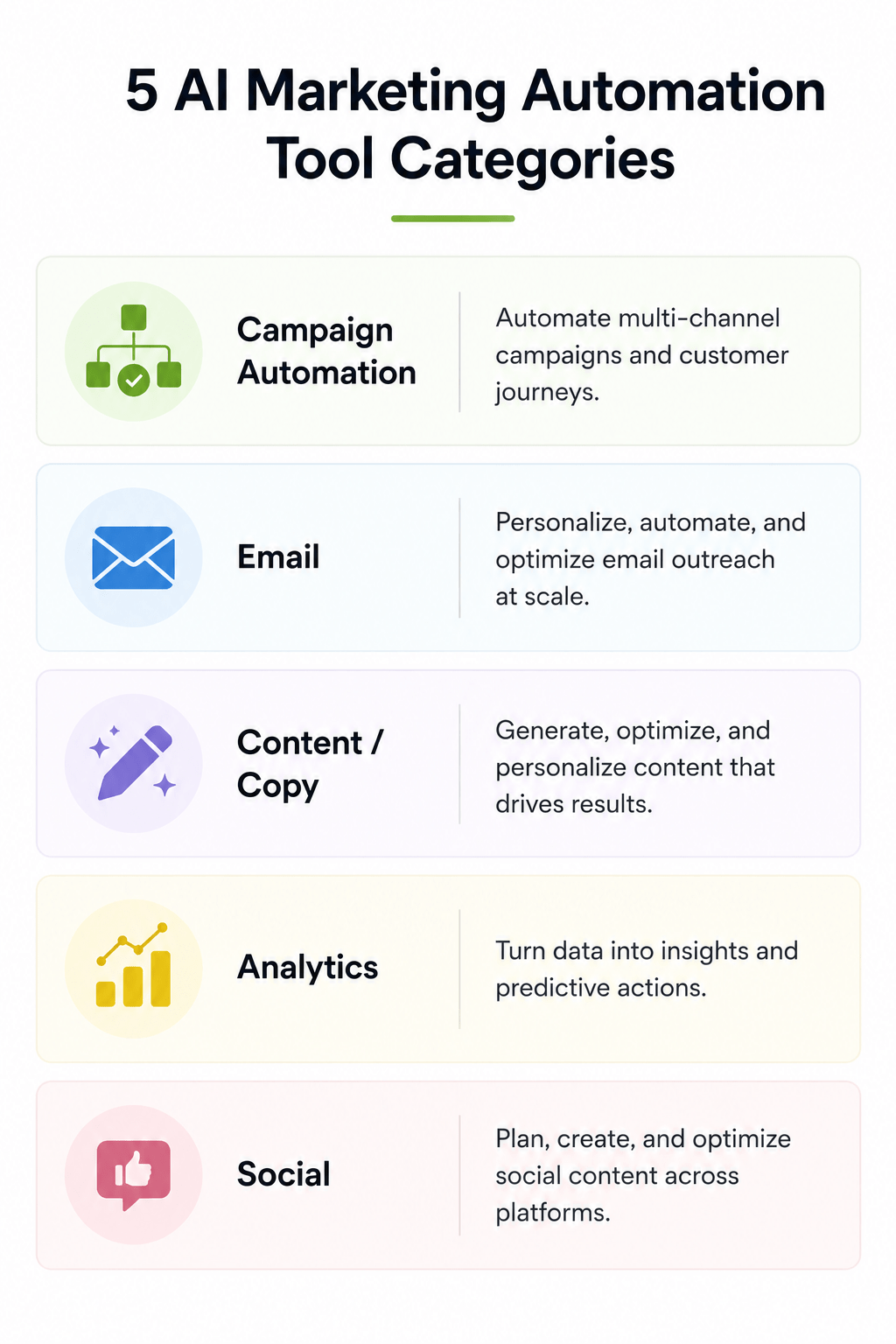
AI marketing automation tools fall into a few distinct categories:
- Campaign execution – launching, scaling, pausing ads based on performance conditions without manual review
- Content and copy generation – producing ad copy, email sequences, and landing page variants faster than a human team can
- Analytics and insight – processing performance data and surfacing what’s working before you’d catch it in a weekly report
- Audience and personalization – adjusting messaging based on behavior, segment, or funnel stage automatically
A tool that handles one of these well is useful. A platform that handles two or three together starts to remove real operational overhead. The distinction matters because “AI marketing automation” as a category label gets applied to everything from basic email schedulers to full campaign management systems.
The goal isn’t automation for its own sake. It’s cutting the time between a decision and its execution.
The Top AI Marketing Automation Tools By Category
1. Campaign Launch and Ad Automation
This is where AI-driven marketing automation delivers the most measurable ROI for performance teams.
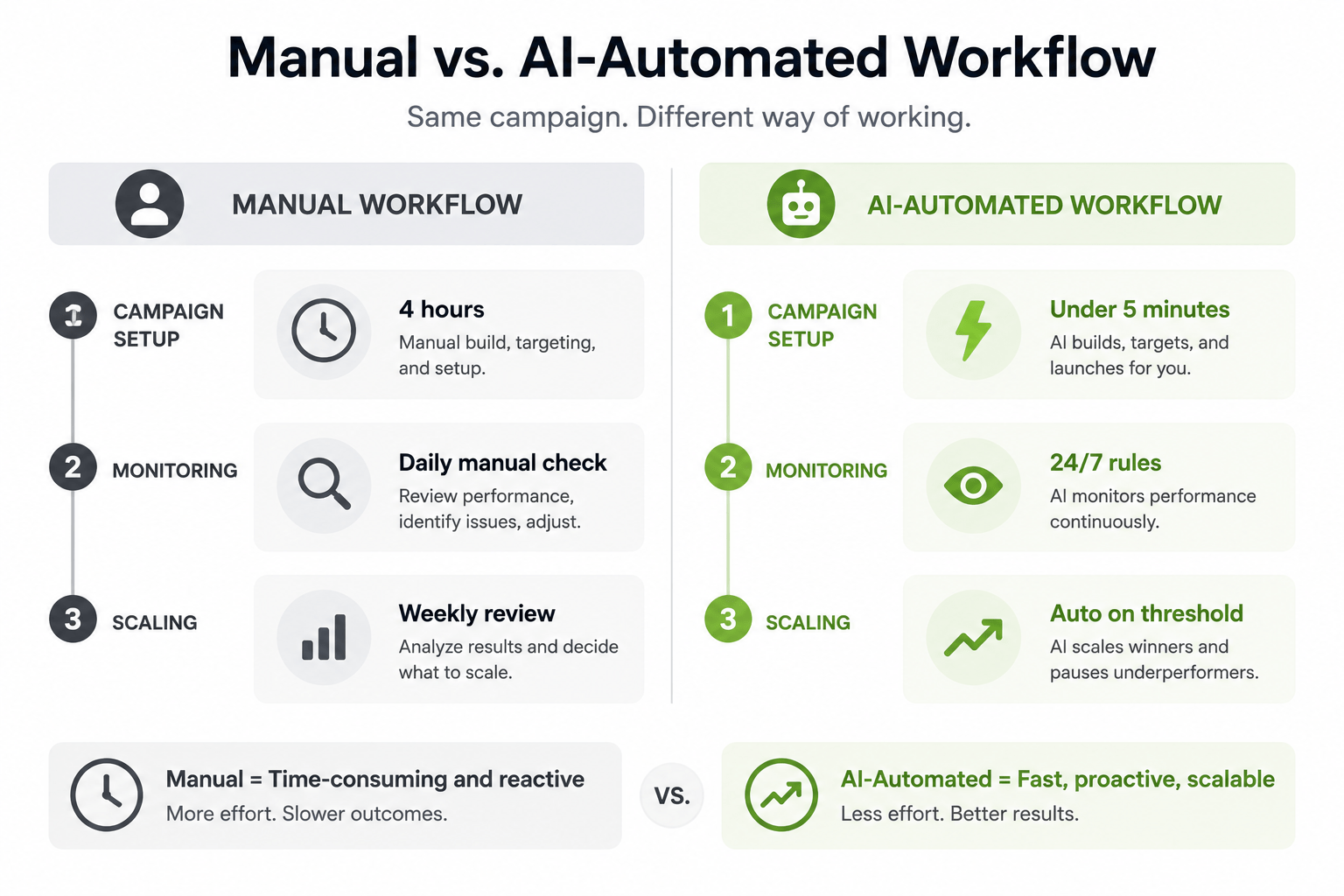
Manual campaign setup – building ad sets, assigning creatives, setting budgets, hitting publish – is time-consuming and error-prone at scale. At five campaigns a week, it’s manageable. At fifty, it’s a bottleneck.
Here’s how you scale: define your campaign parameters once. Deploy hundreds of ad variations in minutes. Then let the machine run the show. Automated rules cull the weak, elevate the strong, and shift budget by performance – CPA, ROAS, whatever you set. No human glued to a dashboard. No tedious hourly updates. You set the strategy. AI executes without hesitation.
FabFunnel sits in this category. It’s built for performance marketers and agencies running high-volume campaigns across Meta, TikTok, and NewsBreak. The Bulk Campaign Launcher pushes 200+ campaigns live in minutes. Automation rules run 24/7 at campaign, ad set, and ad level – every action logged. For teams where campaign setup is eating into analysis time, it’s a direct fix.
2. Email Marketing Automation
Email automation has been around the longest, but AI has meaningfully changed what’s possible.
Modern AI email marketing tools do more than trigger sequences based on user actions. They optimize send times per recipient, adjust subject line variants based on historical open rates, and segment audiences dynamically as behavior changes. A subscriber who’s been opening every email for six months gets treated differently from one who went quiet after the first two – automatically.
Tools worth looking at: Klaviyo (strong for ecom), ActiveCampaign (solid for B2B sequences), and Instantly.ai for cold outreach with AI-driven personalization at scale.
The core metric to watch: reply rate and revenue per email, not open rate alone. AI optimization on vanity metrics produces vanity results.
3. AI Content and Copy Generation
Content bottlenecks are real. Most teams have more distribution channels than they have writers to feed them.
AI copywriting tools have improved significantly. They’re not replacing creative direction, but they’re good at volume: ad copy variants, email subject lines, product descriptions, social posts. The best use case is giving a human writer a starting draft that’s already 70% there, not asking the tool to own the final output.
Tools in this category: Jasper for long-form content, Copy.ai for ad copy and short-form, and dedicated ad creative platforms that combine copy generation with visual creative production.
The quality ceiling on AI-generated copy is still set by the brief you give it. Garbage in, garbage out – same as any tool.
4. Marketing Analytics and AI Insights
Data is rarely the problem. Time to analyze it is.
AI analytics tools take performance data from your campaigns, website, and CRM and surface insights faster than a manual review cycle would catch them. A campaign that started underperforming Wednesday at 11am shows up in an automated alert before Thursday’s check-in, not after the weekend.
Tools in this category: Triple Whale (for ecom attribution), Northbeam (cross-channel attribution), and Supermetrics for aggregating data from multiple ad platforms into one view for analysis.
The practical value is in response time. Every day a budget bleeds into an underperforming campaign because no one caught it yet is a solvable problem.
5. Social Media and Scheduling Automation
Lower on the ROI ladder than ad automation, but still worth solving.
AI-powered social media tools now handle more than scheduling. They suggest optimal post times, recommend content formats based on historical engagement, and in some cases generate post copy based on a content brief.
Tools in this category: Buffer, Metricool, and Publer for scheduling and analytics. For teams producing video at scale, AI-assisted editing tools like Opus Clip handle the clip selection and captioning layer.
The trap here is spending more time managing the social automation stack than you save. Keep it simple. Schedule, post, review weekly.
How To Build an AI Marketing Automation Stack That Works
A few principles worth following before adding more tools:
Fix the highest-friction point first. If campaign setup is taking 10 hours a week, that’s where you start. Not social scheduling. Not email personalization. The tool that removes the biggest bottleneck has the highest return.
Don’t automate a broken process. Automation amplifies what’s already in your workflow. If your campaign structure is inconsistent, AI-driven marketing automation will deploy it consistently – at scale. Clean up the process before scaling it.
Measure what changed. Pick one metric per tool and track it for 30 days. If a campaign automation platform cut your launch time from 4 hours to 20 minutes, that’s recoverable time for analysis and strategy. If an email automation tool didn’t move revenue per email, it’s not working.
The Takeaway: Automate Execution, Not Judgment
The best AI marketing automation tools in 2026 remove operational overhead – they don’t remove the thinking. Campaign strategy, creative direction, audience refinement – those stay human. What gets automated is the repetitive layer between a decision and its execution.
The stack that wins is the one that closes the gap between “we know what to do” and “it’s live.”
Frequently Asked Questions
What is AI marketing automation?
AI marketing automation refers to tools that handle repetitive marketing execution tasks – launching campaigns, pausing underperformers, sending emails, generating copy variants – using AI-driven logic instead of manual action per task.
How is AI-driven marketing automation different from traditional automation?
Traditional automation runs on fixed rules (if X, do Y). AI-driven automation adapts – it adjusts send times based on recipient behavior, shifts budgets based on real-time performance signals, and surfaces insights without being asked. The difference is responsiveness to changing conditions.
Which AI marketing automation tool is best for performance marketers?
For teams running paid campaigns at volume, the priority is campaign launch speed and automated performance management. Platforms built for ad operations – like FabFunnel – handle bulk launch and automated rules in a way that general marketing automation tools don’t.
Do AI marketing automation tools replace marketing teams?
No. They remove the operational overhead that keeps teams from doing high-value work. The judgment layer – strategy, creative direction, campaign architecture – stays human. Automation handles execution.
What should I automate first in my marketing workflow?
Start with your highest-friction, highest-repetition task. For most performance teams, that’s campaign setup and monitoring. For content-heavy teams, it’s copy generation and scheduling. Solve the biggest bottleneck first, measure the result, then expand.
Is AI marketing automation worth it for small businesses?
Yes, if applied to the right problems. A small team that saves 6 hours a week on campaign management has effectively added capacity without hiring. The tools that matter most are the ones that remove tasks only a human was doing because there wasn’t a better option yet.