Ad copywriting is one of those things that looks simple until you’re staring at a blank text field trying to produce the fifth hook variation for the same offer. The brief is clear. The product is solid. But the copy still takes longer than it should – especially when you’re testing multiple angles at once. AI copywriting tools are built for exactly this problem. These tools are not meant to replace the judgment behind the writing; instead, they are designed to handle the production side of copy generation quickly. This guide covers how to use them for ad copy, what separates the best AI copywriting tools from weaker ones, and how to build a workflow that actually speeds up your testing without compromising output quality.
Why Ad Copy Production Slows Down Campaigns
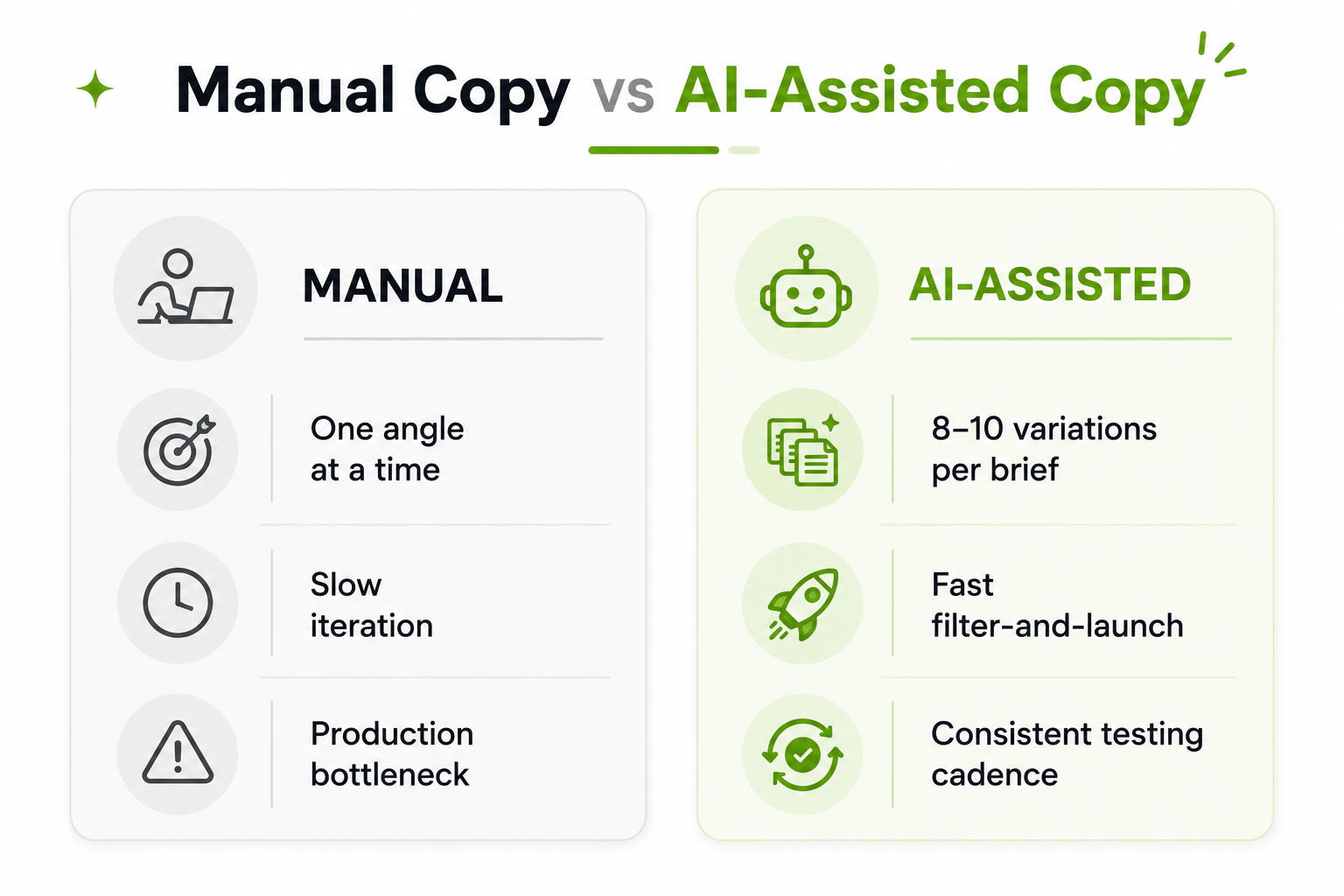
The bottleneck usually shows up at the same point: variation. Writing one strong hook for an ad is manageable. Writing eight, each from a different angle and targeting a slightly different pain point, is where things stall out.
Most ad creative testing requires multiple copy versions per campaign. Different opening lines, different value propositions, different CTAs for the same offer. Doing that manually at any meaningful pace makes copy production the constraint, not your strategy or your budget.
AI copywriting tools change that math. Feed the tool your offer, the audience’s core frustration, and the hook angle you want to test – and you get multiple variations back in seconds. The output isn’t always perfect, but getting to a strong working draft ten times faster is where the actual value sits. You’re not outsourcing the judgment; you’re removing the blank-page drag that slows everything down.
The best AI for copywriting also understands the difference between ad copy and general writing. Short-form ad copy needs a hook that cuts fast, a CTA that converts, and body copy that carries the offer without getting long-winded. General-purpose AI copywriting tools don’t always account for that. The best copywriting tools built for performance marketing do – and the gap in output quality between the two is real enough to matter when you’re testing at volume.
How to Use an AI Ad Copy Generator Without Getting Generic Output
Opening an AI ad copy generator and typing ‘write a Facebook ad for my product’ is the fastest route to copy you can’t actually use.
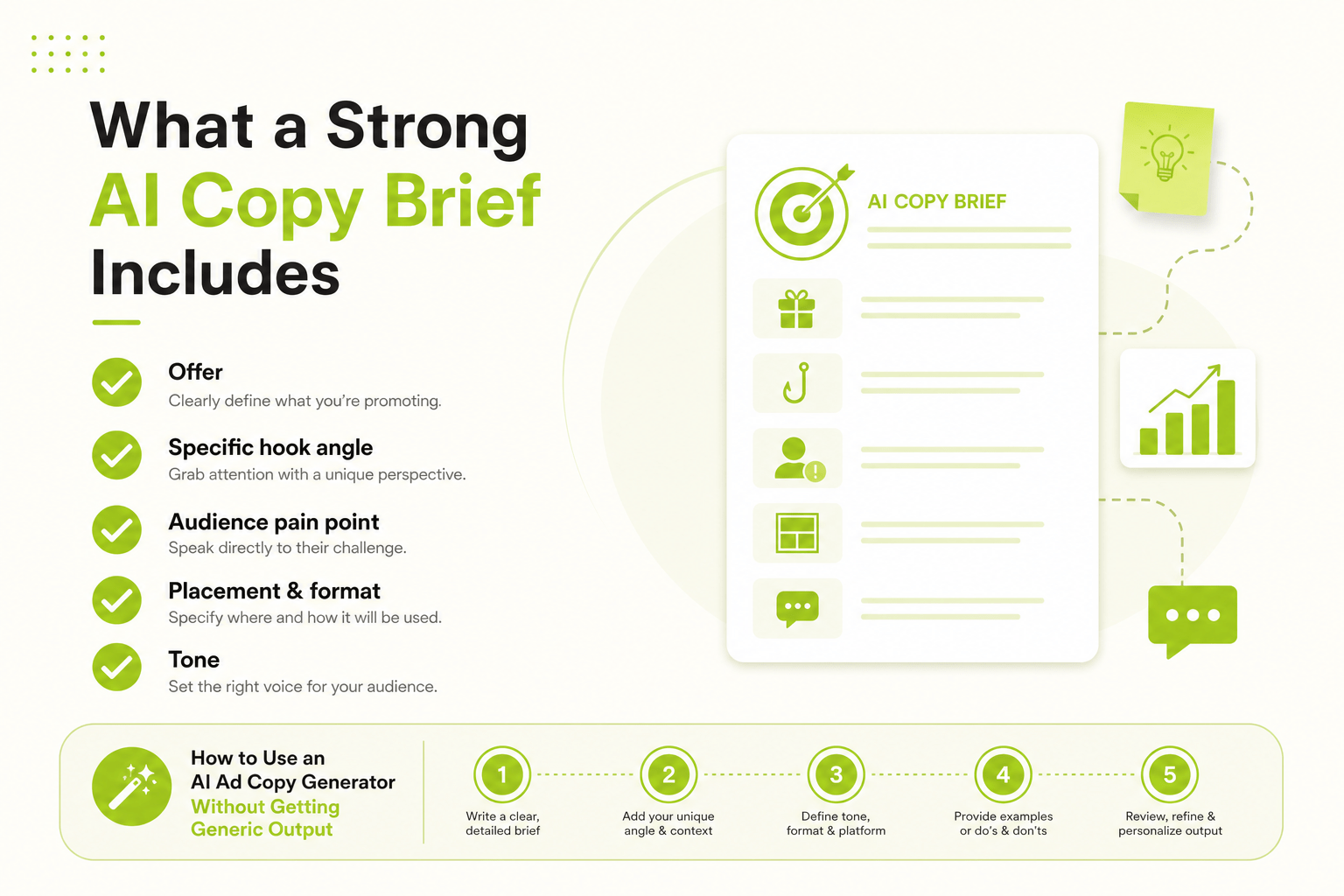
The brief determines the output. Your offer, the specific hook angle, the audience’s pain point, the placement you’re building for, and the tone – those details go in before you generate. Put in the specifics and you’ll get working variations. Go vague and you’ll spend more time editing than you saved in production. A good rule: brief the AI ad copy generator the same way you’d brief a human whose time you respect.
Once variations come back, filter before you launch. Not every output from an AI ad copy generator is worth testing – some will miss the tone, some will have a weak hook, and some CTAs won’t match the offer. You want to launch the top 60 to 70 percent, not everything the tool produced. A clean filter pass keeps your test data meaningful and stops budget being split across underperformers from day one.
The other practical use most people overlook: copy refreshes. When a campaign starts fatiguing – frequency climbing, CTR dropping – you don’t need to rebuild the whole ad. Run the same brief through your AI ad copy generator and generate new hook lines or body copy. Swap those in and the creative keeps running without a full rebuild. It’s one of the more time-efficient applications of AI copywriting tools, and it’s easy to miss if you think of these tools only as production tools rather than maintenance ones too.
How the Best AI Copywriting Tools Actually Set Themselves Apart
Not every AI copywriting tool produces the same quality output, and the difference shows up fast once you’re using them for performance-focused ad copy at any real volume.
Format awareness is the first thing to look for. The best AI copywriting tools adjust output based on the format you specify – a hook for a Reel works differently than body copy for a feed ad. A weaker tool outputs the same style regardless of format, which means you end up doing the adaptation yourself. That work adds back the time you were trying to save.
Real variation matters just as much. The best AI for copywriting generates genuinely different angles – different emotional triggers, different framings, and different approaches to the same offer. If every output looks like a synonym swap, you’re not getting testable variation. You’re getting the illusion of options. Best copywriting tools built for ad production give you hooks that actually differ from each other in angle, not just in phrasing.
Offering consistency is the third thing. Across all the variations, the core message – what you’re selling, what the benefit is, and what the action is – should stay stable. Best copywriting tools that handle this well let the hook change and the emotional angle shift without letting the offer itself get muddled. When that consistency breaks down, variations confuse the audience rather than test different angles.
One more thing worth knowing: output speed matters less than output usability. Getting ten variations in two seconds versus fifteen isn’t a meaningful difference. Getting seven usable variations versus three out of ten absolutely is. That usability gap is where the best AI copywriting tools separate themselves, and it’s worth testing two or three tools against the same brief before you commit to a workflow.
Building a Copy Workflow That Compounds Over Time
Once you’ve identified the best copywriting tools that fit your ad formats, the next step is making copy generation systematic rather than reactive.
Every new campaign brief becomes a copy brief too. Same inputs, same structure every time: offer, hook angle, audience pain point, placement, tone. Running that consistently builds a library of what’s worked – hooks that converted, angles that resonated – and those patterns sharpen your next generation round.
Over time, your briefs get better because you have data behind them. Better briefs get better output from your AI copywriting tools. Better output means less filtering, faster launches, and more usable tests per week. It compounds.
And the best AI for copywriting becomes more useful as your brief quality improves – not because the tool changes, but because you stop asking vague questions and start giving it real context to work with. FabFunnel handles the launch and creative management side across Meta and other platforms, so copy goes live, gets tested, and builds the data that makes your next brief sharper.
Frequently Asked Questions
What are AI copywriting tools, and how do they help with ads?
AI copywriting tools generate ad copy – hooks, headlines, body text, and CTAs – from a brief you provide. The main value for advertising is variation at speed: instead of writing each angle manually, you generate multiple versions fast and test what actually converts. The judgment on which angles to test and which output to keep still sits with you.
What should the best AI copywriting tools do for ad copy specifically?
Format awareness, real variation between outputs, and consistent offer messaging across all variants. The best AI copywriting tools write differently for Reels, feeds, and Stories when you tell them the format; generate genuinely different angles rather than synonym swaps; and keep the core offer stable across hook variations. If a tool doesn’t do those three things, it creates editing work rather than saving it.
How do I find the best AI for copywriting for my ad workflow?
Test at least two or three options against the same brief and compare output usability rather than speed. The best AI for copywriting produces variations that are actually different from each other in angle and feel – not just in word choice. Judge on what percentage of outputs you’d actually launch, not on how fast they came back.
Are the best AI copywriting tools good enough to replace a copywriter?
For production speed and variation, yes. For strategy and brand voice decisions, no. Best copywriting tools handle the blank-page problem and generate testable options fast. A human still decides which angle to run, reviews the output for accuracy and fit, and makes the call on what reflects the brand. They work best as a production layer under human judgment, not as a replacement for it.