Quick Answer: TikTok ads for dropshipping work in 2026 when creative testing speed matches the platform’s discovery-driven feed: many cheap, UGC-style variations pushed live fast, weak performers cut early, and spend concentrated on winners before audience attention moves on. Thin dropshipping margins make this testing discipline necessary, not optional.
Why TikTok’s Format Suits Dropshipping’s Testing Model
Dropshipping runs on different economics than a traditional DTC brand, which is why a dropshipping tiktok ads strategy looks different from a standard campaign playbook. There’s no inventory sunk into any single SKU, so the real asset is finding, within days, which product and which angle converts before shifting budget elsewhere. TikTok’s feed rewards exactly that kind of movement. Its algorithm surfaces content based on watch time and engagement rather than follower count or production polish, so a raw phone-shot demo can outperform a studio ad if the hook lands.
That mechanic matches dropshipping’s constraints almost by accident. A brand with one hero SKU and a large production budget can afford to slow down and get a single ad right. A dropshipper juggling a rotating set of products needs the opposite: cheap ads in front of cold audiences fast, an early read on the signal, and a quick call on whether to scale or kill. TikTok ads for dropshipping work best treated as a discovery engine for what an audience wants, not as a polished brand awareness channel.
This is also where the general “advertising on TikTok” playbook and a dropshipping-specific one diverge. A brand advertiser is usually optimizing one or two campaigns over months. A dropshipper is often running many small, short-lived tests across different products at once, and needs a workflow built for volume rather than a single flagship campaign.
The Creative Testing Velocity TikTok Ads for Dropshipping Actually Require
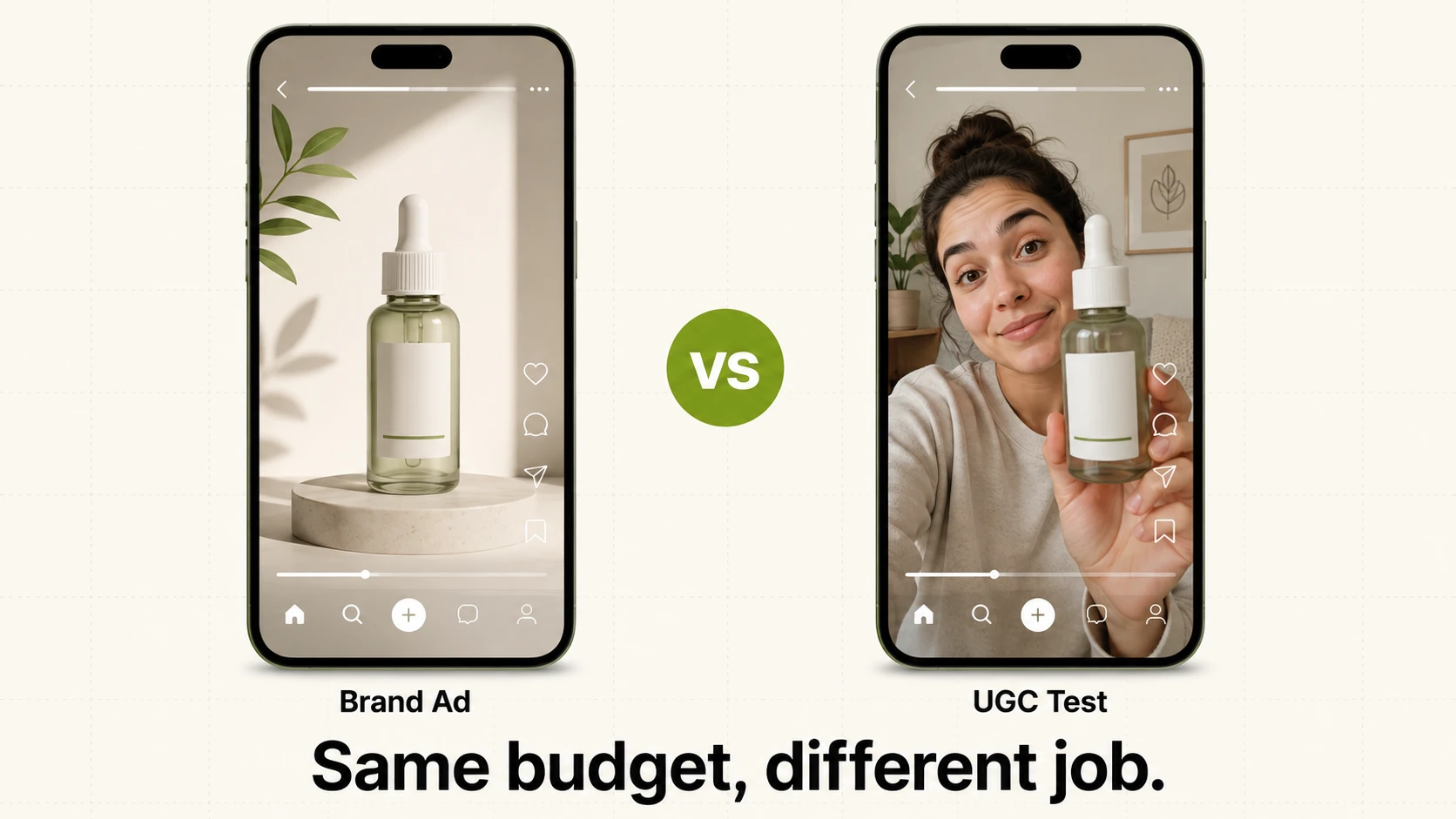
The biggest difference between a dropshipper who wins on TikTok and one who burns spend is testing velocity. Winning accounts run many angles against the same product at once, a problem-agitation hook, a before-and-after demo, a skeptic-turned-believer testimonial, each shot cheaply and pushed live within the same week. Most will fail. That’s expected. The goal isn’t guessing the winning angle in advance, it’s generating enough cheap variations that the data picks the winner.
This only works if production cost and launch friction both stay low. UGC-style content keeps production cheap, since it doesn’t need a studio or a multi-week edit cycle. Getting each variation live as its own testable ad set is where dropshippers stall out manually, because building a dozen ad sets by hand in TikTok Ads Manager for one product test is slow and error-prone.
This is where purpose-built tooling helps rather than replaces judgment. FabFunnel’s Genie generates UGC-style, reel, and demo-format creative from scratch or from pre-built frameworks, and its Create Variations feature refreshes an ad once it starts fatiguing rather than restarting the process. Separately, the Bulk Campaign Launcher addresses the exact bottleneck above, pushing many campaigns live in one pass instead of building each individually.
Margins, Ad Spend Efficiency, and Realistic Expectations
Here’s the part that’s easy to oversell: dropshipping margins are thin by nature, and TikTok ads don’t change that math. Product cost, shipping, platform fees, and ad spend all come out of a per-unit margin that was often already tight before advertising entered the picture. No creative strategy or tooling changes the underlying unit economics of the product itself.
What thin margins do change is how much waste is tolerable. A brand with healthy margins can afford to run an underperforming ad set an extra week while data settles. A dropshipper usually can’t, because a few days against a losing angle can erase the margin on everything that ad set already sold. That’s the honest version of “efficiency matters more, not less” in a low-margin model: TikTok ads for dropshipping don’t need a special hack, but the cost of moving slowly is higher when the margin cushion is smaller.
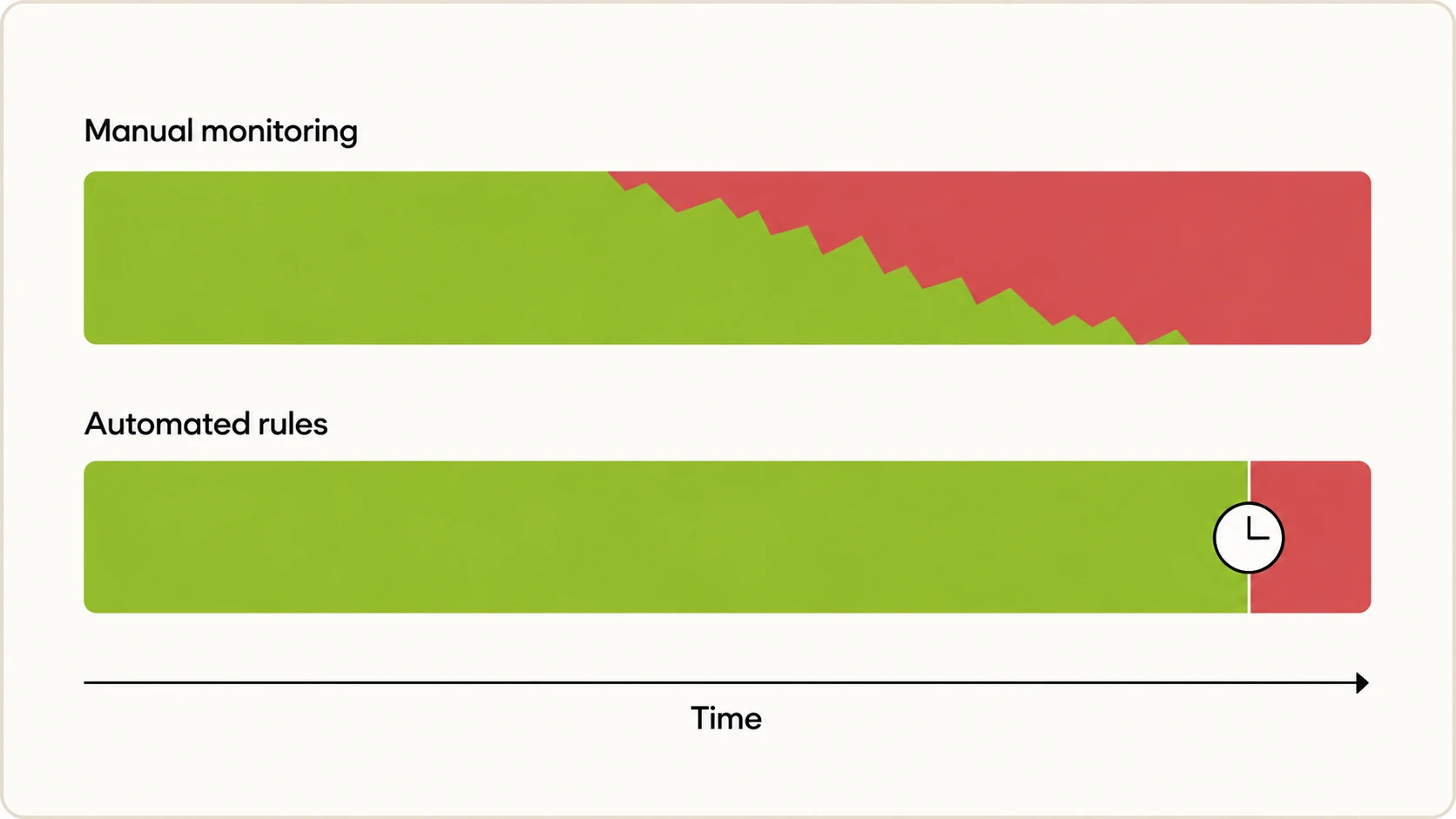
This is also the strongest practical argument for automation in a dropshipping context specifically. Checking performance manually a few times a day works fine when margins are forgiving. When they’re not, the gap between an ad set crossing an unacceptable cost-per-acquisition and someone noticing it can decide whether a week is profitable. FabFunnel’s automation rules engine runs continuously against CPA, ROAS, and frequency conditions, taking logged action without someone watching the dashboard that hour. That’s downside protection, not a growth lever: automation reduces how much a bad ad set can cost before it’s caught, it doesn’t manufacture margin that wasn’t there.
Common Mistakes Dropshippers Make Treating TikTok Like Set-and-Forget
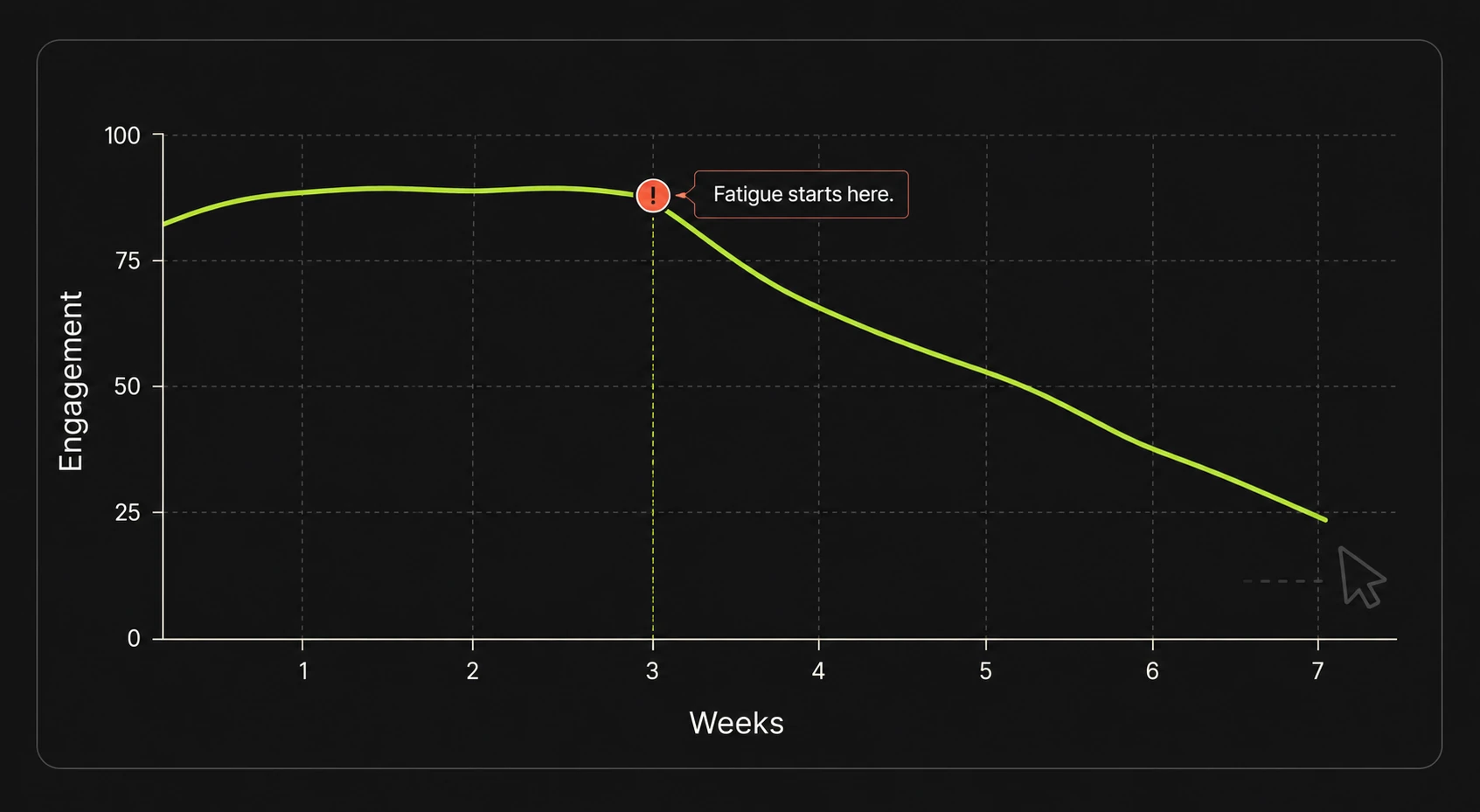
The most common failure isn’t a bad hook or a bad product. It’s launching a handful of ad sets, walking away, and checking back a week later expecting the account to have optimized itself, a pattern that undermines otherwise solid tiktok dropshipping ads performance quickly. TikTok’s algorithm needs a real testing cadence to find a winner, and accounts run like a set-it-once channel keep spend flowing into fatigued creative, because rising frequency and decaying engagement go unnoticed until it’s too late.
A related mistake is testing too narrowly. Three variations of the same hook aren’t a real test, they’re one idea in different outfits. Real testing means genuinely different angles, different pain points, different opening seconds, because the point is finding which underlying idea resonates.
The third pattern is refusing to kill losers fast enough. It’s tempting to let an underperforming ad set run longer in case it turns around, especially after time went into producing the creative. In a thin-margin model, that instinct is usually the expensive one.
Finally, some dropshippers scale a winning ad the moment it shows promise and never revisit it. Creative fatigue on TikTok happens fast, and a winning ad from three weeks ago isn’t guaranteed to still be winning today.
FAQs
1. Is TikTok a good ad platform for a new dropshipping store with no existing audience?
Yes, TikTok’s discovery feed surfaces content to cold audiences based on engagement rather than an existing follower base, which suits a new store without brand recognition. The tradeoff is that success depends on testing volume early, since one or two ads won’t give the algorithm enough signal to find the right audience.
2. How many creative variations should a dropshipper test per product on TikTok?
There’s no fixed universal number, but the goal is genuinely different angles, not just different edits of the same idea, so the algorithm gets a real read on what resonates. Testing a single hook in isolation rarely reveals whether a product has an angle problem or a targeting problem.
3. Does TikTok ads for dropshipping still work now that the platform is more saturated with ads?
Saturation has raised the bar on how fast a hook needs to land, but it hasn’t removed the dynamic that makes TikTok suitable for dropshipping: low-cost creative and an algorithm that rewards engagement over production value. Generic ads get buried faster, which makes fast iteration more important than it used to be.
4. What’s a realistic ad spend approach for a dropshipper testing a new product on TikTok?
FabFunnel doesn’t publish specific spend or ROAS figures for dropshipping, since these vary too widely by product, price point, and margin to generalize responsibly. The safer principle is sizing initial tests small enough that a losing angle doesn’t do lasting damage, with a clear point at which an underperforming ad set gets paused.
5. Can TikTok ads work for dropshipping without UGC-style content?
UGC-style content isn’t mandatory, but it’s the format that keeps testing cost low enough to test at the volume dropshipping needs, which is the core operational reality behind dropshipping with tiktok ads at any real scale. Polished, high-production ads can still perform on TikTok, but producing many variations of them quickly is expensive, which works against the rapid-testing model that fits a low-margin, high-volume business.
6. How is TikTok advertising for dropshipping different from advertising a general ecommerce catalog on TikTok?
A catalog-driven ecommerce advertiser typically runs dynamic ads across a large, stable product range with established margins. A dropshipper is usually testing a narrower, rotating set of unproven products where the weekly question is which product and angle is even viable, putting more weight on fast creative iteration than on catalog feed optimization.
7. What causes TikTok ad performance to drop for a dropshipping product that was previously working?
The most common cause is creative fatigue, where the same audience has seen the winning ad enough times that engagement declines even though the product hasn’t changed. Frequency climbing without a creative refresh is usually the first sign, which is why refreshing a fatiguing ad early tends to protect performance better than waiting for the decline.
8. Does FabFunnel support TikTok ads directly, or only Meta?
FabFunnel supports TikTok, Meta, and NewsBreak. So any TikTok-specific workflow around creative generation, bulk campaign launches, or automated rules applies to TikTok as a first-class supported platform.
TikTok ads for dropshipping reward operators who treat testing as a continuous process rather than a one-time setup. Producing the volume of cheap, testable creative that model needs is part of what FabFunnel’s ad creative automation covers. If fast creative variation, bulk launches across product and angle combinations, and automated downside protection sound like what your account is missing, see it at FabFunnel, or explore the creative side at Fab AI.