Quick Answer: TikTok Shop Ads are ad units that link directly to in-app checkout on TikTok Shop rather than sending viewers to an external website. Ecommerce brands use them to shorten the path from product discovery to purchase by tagging products straight into the ad. Direct sales increase because the buyer never leaves the app to complete the purchase.
Most brands running ads on TikTok are used to a single mechanic: someone sees a video, taps it, and lands on an external product page where they might or might not buy. TikTok Shop Ads work differently, because the purchase happens without ever leaving TikTok. This piece covers what makes the format different, what a brand needs before running it, and how it fits next to the prospecting and retargeting work most ecommerce teams already run.
What Makes TikTok Shop Ads Different From Standard TikTok Ads
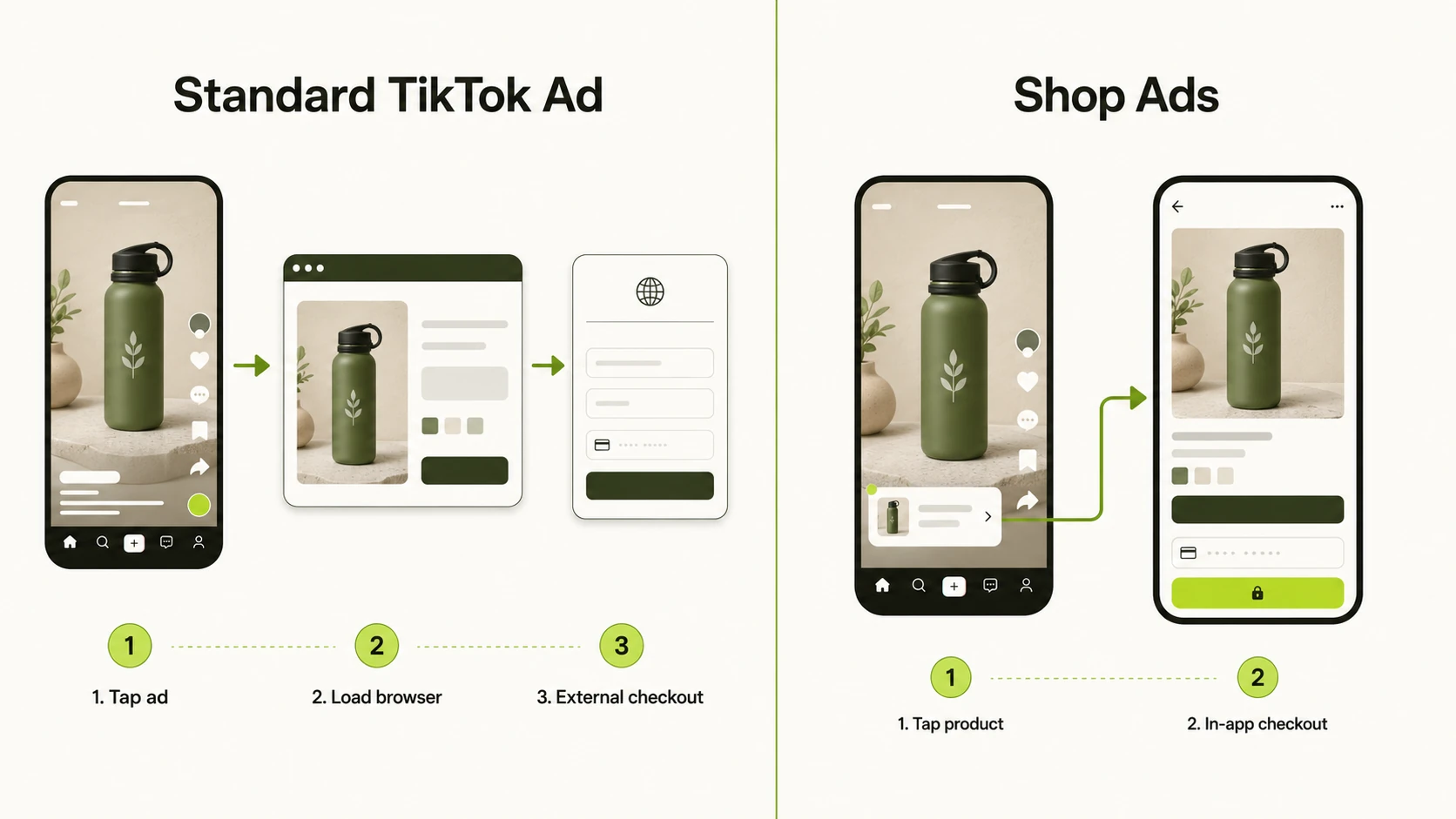
A standard TikTok ad sends a viewer off the platform. The ad drives a click, the click opens a mobile browser or an external landing page, and the buyer has to load a separate checkout before completing the purchase. Every one of those steps is a chance to lose the buyer.
Shop Ads remove most of those steps. The ad itself carries a tagged product, pulled from a connected TikTok Shop catalogue, and tapping the ad opens a product page inside TikTok. Checkout, payment, and order confirmation all happen without the viewer switching apps. That shortened path from view to buy is the core difference, and it is also why this format tends to convert differently than link-out ads: less friction, but a more compressed decision window, since the buyer moves straight from a video into a purchase decision rather than browsing a full website.
Product tagging is what makes this possible. Instead of a single destination URL, a Shop Ad surfaces one or several products directly under the video, letting viewers buy the exact item they just watched. For catalogues with many SKUs, the creative and the product being sold can be tested and swapped independently.
What a Brand Needs Before Running Shop Ads
Shop Ads are catalogue-driven, so the prerequisite work happens before any ad is built. A brand needs a TikTok Shop set up and populated, plus a product catalogue connected to it, with accurate pricing, inventory, and imagery, the step where a brand needs to add product to TikTok Shop before any of it can be tagged in an ad. Ads pull directly from that catalogue, so gaps or errors in it show up immediately in what buyers see.
Beyond the technical setup, brands should have a clear view of which products suit a low-friction, in-app purchase path, a judgment that gets applied once campaigns are configured inside the TikTok Shop Ads Manager. Lower-priced, easily understood products tend to perform better in this format than considered purchases that need more explanation before a buyer commits.
This is also where a catalogue-driven creative tool becomes useful. FabFunnel’s Genie generates ad creative directly from a connected product catalogue, which matters because the ad and the tagged product need to stay in sync as pricing or inventory shifts. This is the same catalogue-to-creative mechanism FabFunnel applies across dynamic product ads generally, not a dedicated TikTok Shop integration.
How Shop Ads Fit Alongside Prospecting and Retargeting
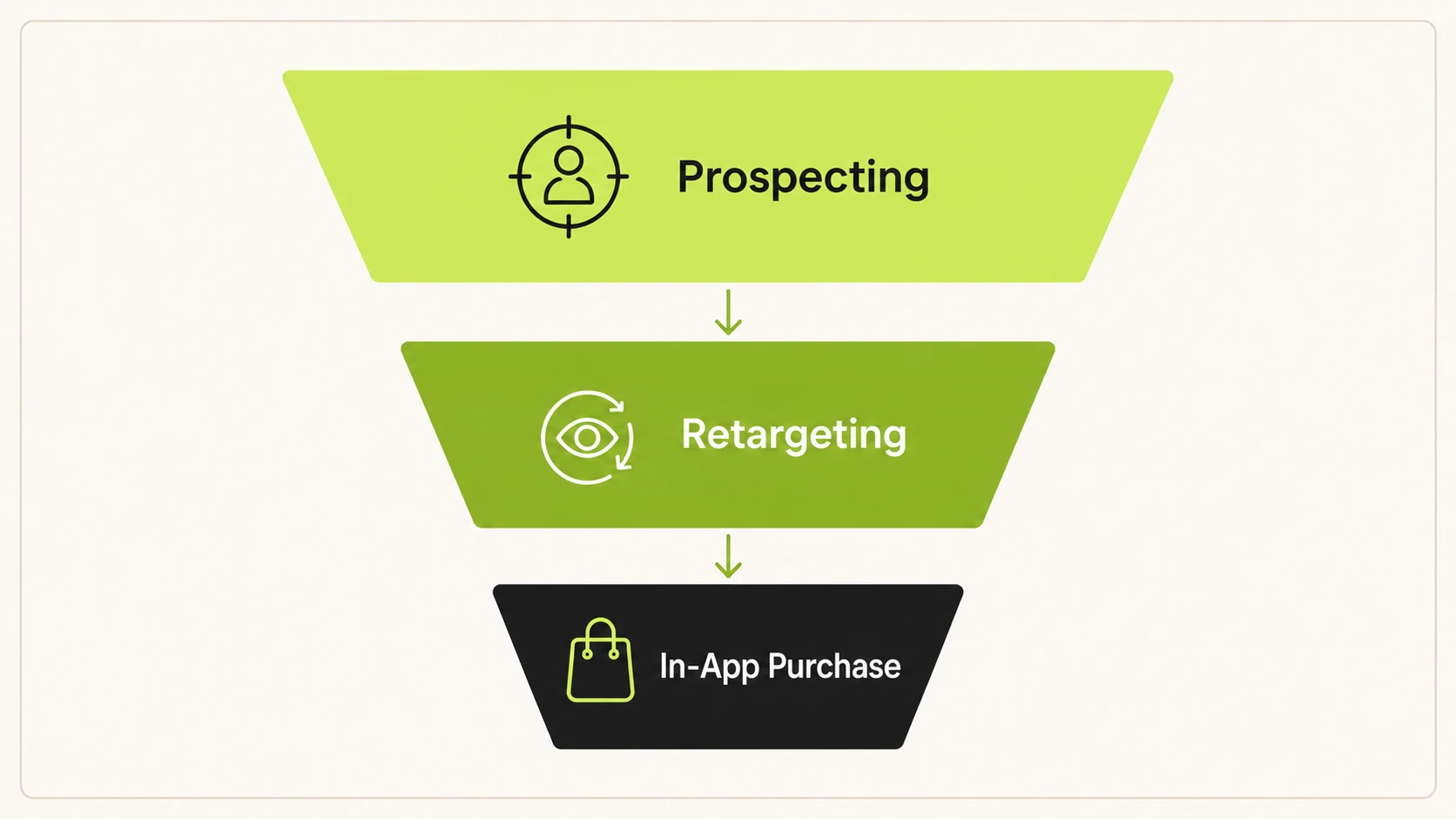
Shop Ads are not a replacement for a full-funnel strategy, they are one more format within it, and a tiktok shop campaign typically runs alongside prospecting and retargeting pushes rather than replacing them. Prospecting still needs to introduce a product to people who have not seen the brand before, and retargeting still needs to bring back people who viewed a product without buying. What changes with this format is the destination at the bottom of that funnel.
A reasonable structure keeps prospecting broad, testing creative angles and audiences to find what earns attention, while retargeting narrows in on people who already engaged. Shop Ads slot into both ends: a cold audience can be shown one if the product is simple enough to sell on sight, and a warm audience that already showed interest is often a stronger fit, since less convincing is needed to close an in-app purchase.
Running dynamic product ads and prospecting campaigns side by side, rather than as separate workstreams, is closer to how most ecommerce accounts actually operate. FabFunnel’s ecommerce workflow is built around that pattern: sync a catalogue once, then run prospecting and catalogue-driven ads like DPA together instead of managing them as disconnected campaigns. The same logic applies once a brand adds this ad format to the mix, since the catalogue connection is the foundation it depends on.
Shop Ads Versus Standard TikTok Ads: Purchase Path Compared
The clearest way to see the practical difference is to compare the purchase path itself.
| Standard TikTok Ad | TikTok Shop Ads | |
|---|---|---|
| Destination | External website or landing page | In-app product page on TikTok Shop |
| Product tagging | Not available, single link out | Product tagged directly on the ad |
| Checkout | Happens off-platform | Happens inside TikTok |
| Best suited for | Considered purchases, brand sites with a strong conversion setup | Lower-friction, catalogue-driven products |
| Catalogue dependency | Optional | Required, the ad pulls from a connected TikTok Shop catalogue |
This table is included because the purchase path is the one variable that changes the format entirely, and a side-by-side view makes it easier for a brand to decide which products belong in which format instead of defaulting to one for everything.
Realistic Expectations for Brands Considering This Format
Shop Ads reduce the steps between view and purchase, but they do not remove the need for an accurate catalogue, imagery that sells the product on its own, and pricing that holds up without a full product page behind it. Brands moving into this format for the first time should expect a setup phase focused on catalogue quality before creative testing, not the other way around.
Not every catalogue is a good match for an in-app checkout path. Products that rely on detailed specs or side-by-side comparison usually still perform better sent to a full website. This format tends to suit simpler, visually obvious products where the video itself does most of the selling.
Launch speed becomes part of the equation once a catalogue is ready and a brand is running Meta and TikTok together. FabFunnel’s Bulk Campaign Launcher can push over 200 campaigns live across Meta, TikTok, and NewsBreak in under two minutes, useful once there are multiple products or creative variants to test.
FAQs
1. What is the difference between TikTok Shop Ads and a regular TikTok ad campaign?
A regular TikTok ad sends viewers off the platform to a website or landing page to complete a purchase. TikTok Shop Ads keep the entire path, from product view to checkout, inside the TikTok app, using a product tag pulled from a connected catalogue.
2. Do I need a TikTok Shop account before I can run this ad format?
Yes. The ad format is built on top of TikTok Shop, so a brand needs an active TikTok Shop with a connected product catalogue before these ads can run. Without that setup, there is no in-app product page for the ad to link to.
3. What kind of products perform best with this ad format?
Lower-priced, easily understood products tend to do well because the shortened path from view to buy does not leave much room for extended explanation. Products that depend on detailed specs, sizing charts, or side-by-side comparison usually still convert better on a full website.
4. How does product tagging work inside this ad format?
A tag pulled from the connected catalogue is attached to the video or image ad, showing the product directly under or alongside the creative. Tapping the tag opens the in-app product page, where the buyer can complete checkout without leaving TikTok.
5. Can these ads run alongside standard link-out TikTok ads?
Yes, and for most catalogues that is the more realistic setup. Standard ads can continue driving traffic to a full site for considered purchases, while catalogue-driven ads handle the simpler, lower-friction products suited to an in-app checkout.
6. Does FabFunnel offer a direct integration with TikTok Shop?
No, FabFunnel does not offer a native TikTok Shop integration, and that is not something to assume. What it does support is catalogue-driven creative generation through Genie and bulk campaign launch across Meta, TikTok, and NewsBreak, the same catalogue-to-creative approach it applies to other dynamic ad formats.
If a product catalogue is already in place and the next step is building and launching creative around it, FabFunnel’s Genie generates catalogue-driven ad creative and the Bulk Campaign Launcher pushes campaigns live across Meta, TikTok, and NewsBreak. Keeping that catalogue-to-creative pipeline in sync as pricing and inventory change is exactly what FabFunnel’s creative automation platform is built to handle. Start here or see the creative tooling at Fab AI.