Quick Answer: Advertising on TikTok means running paid campaigns through TikTok Ads Manager, with cost driven by an auction bidding model, audience competition, and campaign objective rather than a fixed price list. Formats range from in-feed ads to Spark Ads and Top View placements. It tends to suit brands with short-form video assets and a younger to mid-age audience, and the realistic first step is a small test campaign before scaling budget.
How the TikTok Ad Auction Works
TikTok runs on an auction system, the same underlying mechanism as Meta and most other paid social platforms. You set a campaign objective, an audience, a bid or budget strategy, and TikTok’s algorithm competes your ad against others targeting the same audience segment in real time. There is no published rate card because the price you pay shifts constantly based on who else wants that same impression at that same moment, which is exactly why a single fixed tiktok advertising cost figure rarely holds true across accounts.
This is a meaningful mental shift for teams coming from search marketing, where intent signals are explicit and costs are comparatively predictable. Running ads on TikTok is closer to running ads on Meta or Instagram: you’re buying attention inside a feed, not a specific search query, and the ad has to work as content first, pitch second.
What Drives the Cost of Advertising on TikTok
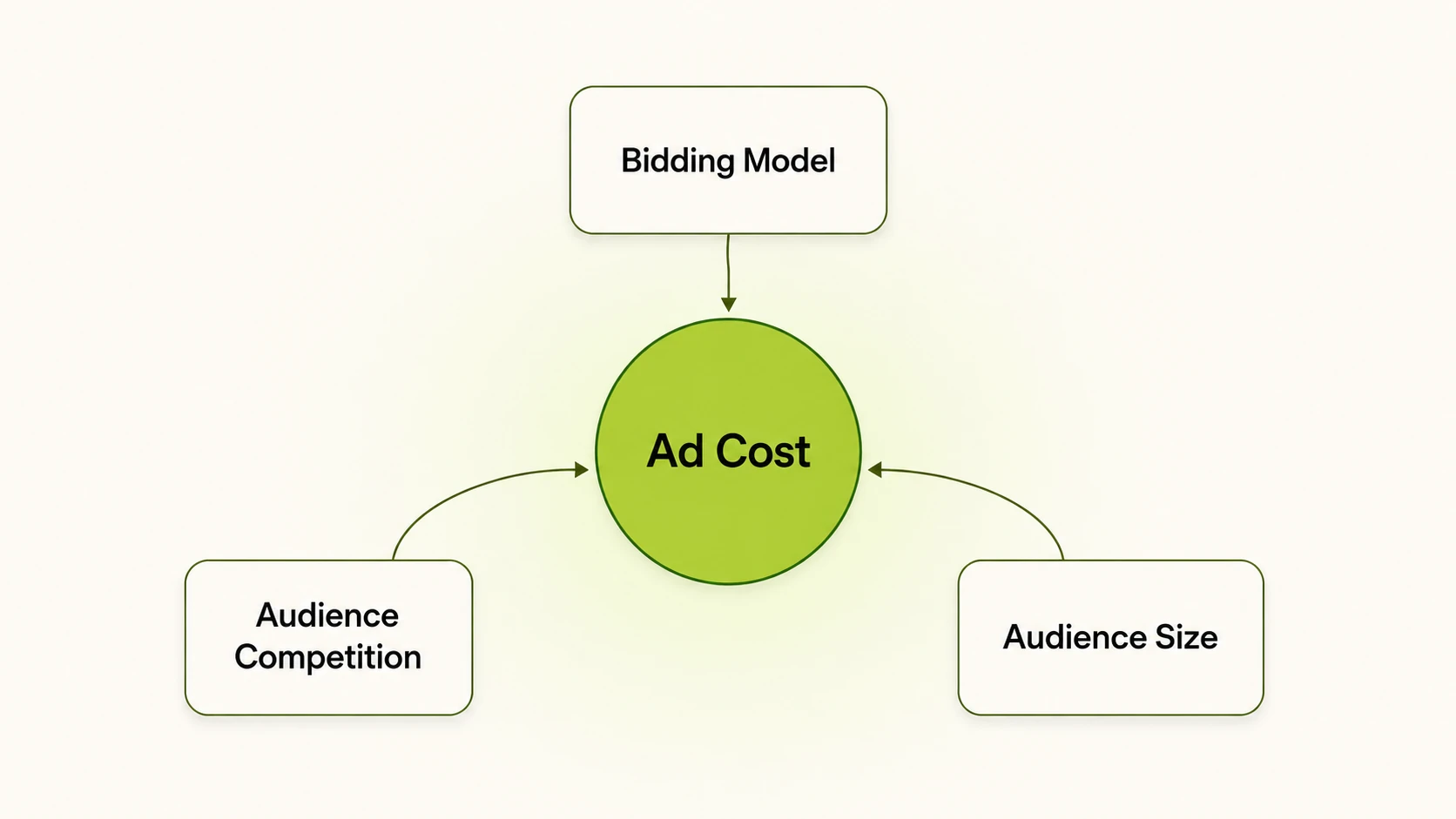
Three factors matter more than any specific number you’ll see quoted online.
Bidding model. TikTok Ads Manager offers cost-per-click, cost-per-mille, and conversion-optimized bidding, and each one changes how your budget gets spent. Bidding toward a specific outcome, such as a purchase or a lead, generally costs more per impression than bidding toward reach, because the algorithm is optimizing for a harder, more valuable action.
Competition for the audience. Costs rise when more advertisers are targeting the same demographic, interest group, or custom audience at the same time. This is seasonal, industries with heavy retail or holiday activity see costs move up during peak shopping periods, and it’s also category-specific, competitive verticals like e-commerce and mobile gaming tend to see tighter auctions than niche B2B segments.
Audience size and specificity. Broad audiences typically deliver lower costs per impression because there’s more inventory to buy against. Narrow, highly specific audiences cost more per impression but can be more efficient overall if the targeting is precise, because you’re paying for relevance rather than volume.
Rather than anchoring to a number you found in a blog post from a different year and market, the more useful exercise is running a modest test budget and letting your own account’s data tell you what your specific audience and creative combination costs to reach.
Main TikTok Ad Formats to Know
TikTok offers several distinct ad formats, and choosing the right one depends on the objective and the budget available.
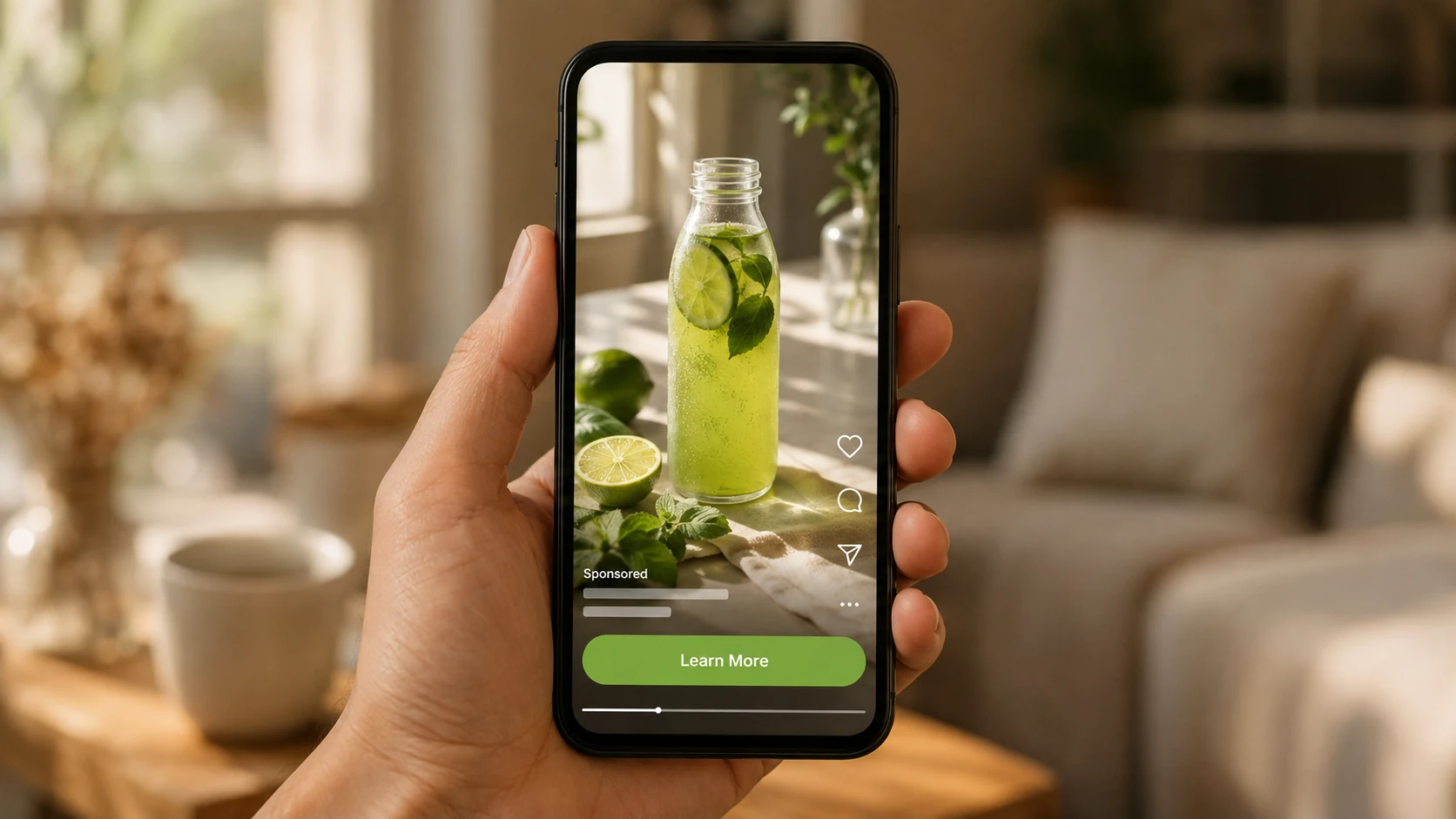
In-feed ads appear in the main For You feed between organic content. They are the most common and most accessible entry point, they run through standard auction bidding, and they work best when the creative looks and feels like native TikTok content rather than a repurposed static banner.
Spark Ads let advertisers boost an existing organic TikTok post, either their own or a creator’s with permission, rather than uploading a separate ad unit. Because the post carries its existing likes, comments, and shares, Spark Ads often read as more credible to viewers than a freshly uploaded ad creative.
TopView places a full-screen ad as the very first thing a user sees when they open the app. It commands the most attention of any TikTok format and is priced and booked accordingly, making it better suited to larger campaign budgets and major moments like a product launch than to ongoing always-on advertising.
Branded effects are custom AR filters, stickers, or effects that users can apply to their own videos. They drive engagement rather than direct response, and they require more creative and production lead time than the other formats.
| Format | Best Use Case |
|---|---|
| In-feed ads | Everyday direct response and awareness campaigns, most accessible starting point |
| Spark Ads | Leveraging existing organic or creator content with built-in social proof |
| TopView | High-visibility launches and major campaign moments with larger budgets |
| Branded effects | Engagement-driven brand campaigns, less suited to direct conversion goals |
A table made sense here because the formats map cleanly to distinct use cases and budget levels, which is easier to scan side by side than to compare across four separate paragraphs.
Who TikTok Ads Tend to Work Well For
TikTok advertising performs best for brands that can produce genuine short-form video at reasonable volume, since the platform’s algorithm and audience both favor native-feeling content over polished traditional ads. Consumer brands selling products that benefit from visual demonstration, apparel, beauty, food, mobile apps, and direct-to-consumer goods generally see the platform respond well, a pattern common among brands advertising on tiktok in visually driven categories.
It is a weaker fit for businesses without any video production capacity, for long, considered B2B sales cycles where the audience skews older and less TikTok-native, and for advertisers expecting search-level purchase intent from a discovery-driven feed. TikTok is closer to a demand-generation and awareness channel than a bottom-funnel intent channel, and campaigns planned with that expectation tend to perform more predictably.
A Realistic First Step to Get Started
The most reliable starting point is not a large budget commitment, it’s a small, structured test. Set up a TikTok Ads Manager account, define one clear objective, prepare a handful of short-form video variants, and run a modest test budget long enough for the algorithm to exit its learning phase before drawing conclusions.
The bottleneck for most teams isn’t strategy, it’s creative volume. TikTok’s algorithm rewards testing multiple creative angles quickly, and manually producing and uploading enough variants to test properly is where a lot of advertising on TikTok efforts stall out. This is where a tool like FabFunnel’s Genie can help, generating UGC-style, reel, and demo-style video variants suited to TikTok’s native feel, so testing isn’t bottlenecked by production capacity. Once a campaign structure is working, FabFunnel’s Bulk Campaign Launcher lets teams push variations live across Meta, TikTok, and NewsBreak from one workflow instead of rebuilding campaigns platform by platform.
FAQs
1. How much should a small business budget to start running TikTok ads?
There’s no verified universal minimum that applies across every account and market, since TikTok’s platform-level minimums and real-world effective spend both vary by region and account setup. The more useful approach is starting with a budget you’re comfortable testing for at least a full learning cycle, then adjusting based on your own account’s early results rather than a number quoted for a different business.
2. Is TikTok advertising cheaper than Facebook or Instagram advertising?
Cost comparisons between platforms shift constantly based on competition, season, and audience overlap, so there is no stable answer that holds true across accounts. The more reliable way to compare is running similar test budgets on each platform for your specific audience and reading your own results.
3. Can TikTok ads work for B2B companies?
It’s possible but harder than for consumer brands, since TikTok’s audience and content norms skew toward consumer discovery rather than considered business purchasing decisions. B2B advertisers who succeed on the platform typically use it for top-of-funnel awareness rather than expecting direct lead conversion at the same rate as more intent-driven channels.
4. What is the difference between Spark Ads and regular in-feed ads?
In-feed ads are uploaded directly as ad creative through Ads Manager and carry no prior engagement history. Spark Ads boost an existing organic post, either the advertiser’s own or a creator’s with permission, so the ad displays the post’s existing likes, comments, and share count alongside the paid promotion.
5. How long does it take to see results from advertising on TikTok?
Campaigns typically need an initial learning period during which the algorithm gathers enough data to optimize delivery, and drawing conclusions before that period completes tends to produce misleading signals. Most advertisers find a clearer read after that phase closes and a meaningful sample of impressions has been served.
6. Do TikTok ads require different creative than other platforms?
Generally yes. Content that performs well on TikTok tends to look and feel native to the platform, informal, fast-paced, sound-on, rather than a repurposed static or traditional video ad, and creative built specifically with TikTok’s format in mind tends to outperform cross-posted assets from other channels.
Advertising on TikTok is a viable channel for brands with the creative capacity to keep up with it. This kind of work is part of what FabFunnel’s ai advertising platform covers. If you’re ready to test it, FabFunnel can help you generate TikTok-native creative and launch campaigns without the manual production bottleneck, or explore Fab AI to see the creative generation workflow in action.