AI UGC ads work because they don’t look like ads. The format is familiar, the delivery feels human, and the content fits natively into the feed without triggering the mental skip response that polished creative does.
The problem isn’t knowing that UGC works. The problem is producing enough of it. A performance team that needs 100 ai ugc ads variations to test across multiple offers, audiences, and platforms can’t source 100 individual creators. The economics don’t work and the timeline is weeks, not hours.
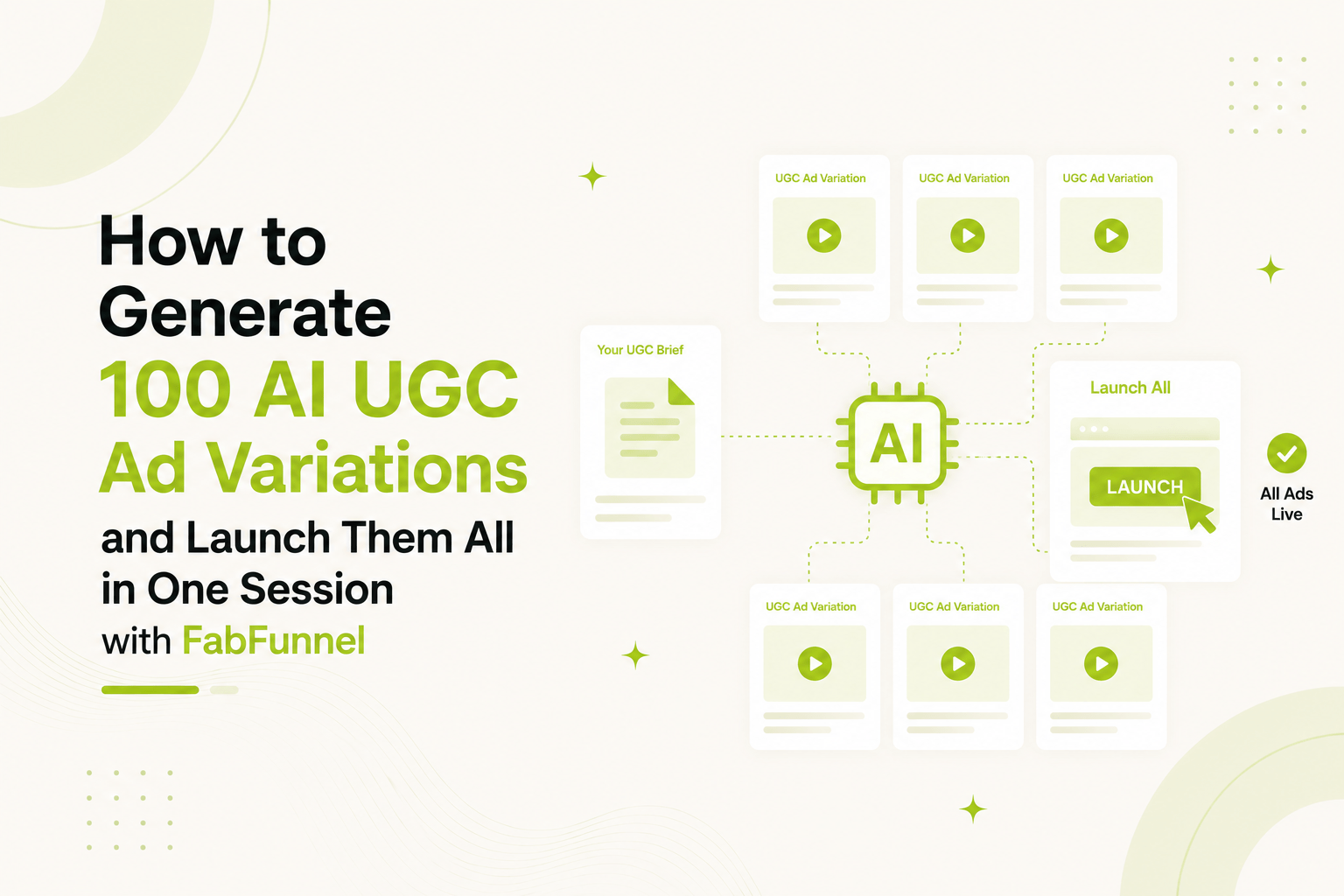
FabFunnel’s workflow solves this at the production layer – generating 100 UGC-style video ad variations and launching them all in a single session. Here’s exactly how that works and what it requires.
Why 100 Variations Is the Right Scale for UGC Testing
UGC creative has a short effective window. On TikTok, creative fatigue can set in within 7-10 days for high-spend campaigns. On Meta, the same creative served repeatedly to the same audience quickly saturates. Teams running AI UGC ads at scale need a continuous pipeline of fresh variations – not one hero creative that runs until it dies.
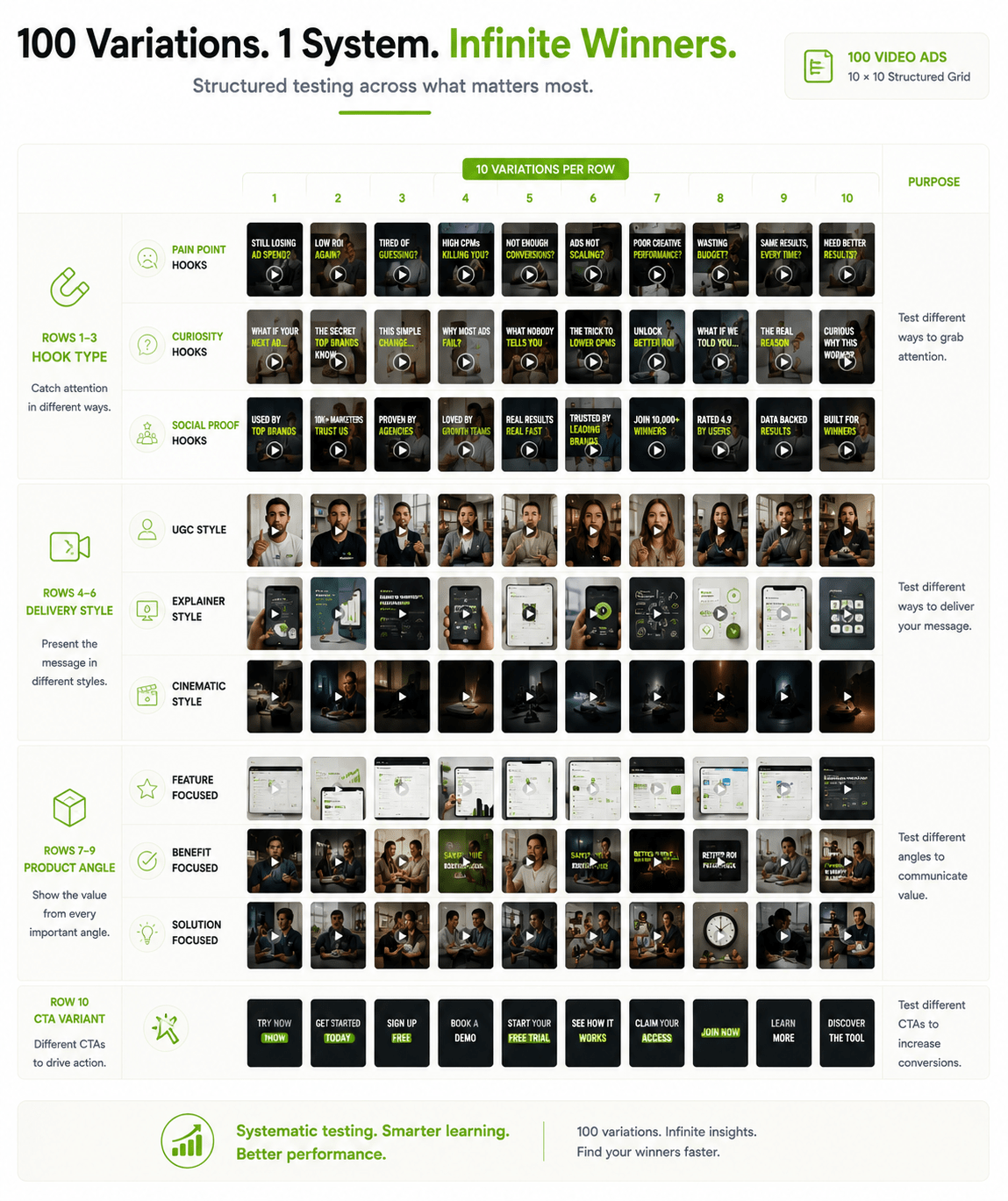
One hundred variations isn’t one hundred different concepts. It’s a structured variation set built around a core offer – different hooks, different delivery styles, different product angles, different CTAs. The diversity in the set is what gives the algorithm signal to work with and what keeps creative fresh as individual variations fatigue.
For affiliate marketers running high-volume offers, ecom brands testing multiple SKUs, and agencies managing several client campaigns simultaneously, 100 variations is a practical production target – not an aspirational one. This is exactly why performance teams increasingly rely on AI UGC ads to hit that volume without blowing the budget or timeline.
What FabFunnel’s Genie Does in This Workflow
Genie is FabFunnel‘s AI creative studio. For UGC-style video, it generates footage from a structured brief – handling the visual production, delivery style, pacing, and format adaptation without requiring a camera, talent, or editing software – the core mechanic behind scalable AI UGC ads.
The five confirmed AI UGC ads video formats Genie produces:
- UGC-style – direct-to-camera delivery, natural pacing, authentic aesthetic
- Product Showcase – product-focused footage with feature highlights
- Testimonial-style – social proof format with review-style delivery
- Offer-driven – direct response format with explicit CTA focus
- Founder-led – brand story format with authoritative delivery
For a 100-variation session, you’re typically using 3-4 of these formats and building variation sets within each. The brief changes per batch – different hook angles, different audience pain points, different offer framings – while the format structure stays consistent.
Step-by-Step: 100 Variations in One Session
Producing 100 AI UGC ads in a single sitting comes down to four repeatable stages: setting up the catalogue, building the brief matrix, running the generation batches, and reviewing before launch.
Setting Up Your Catalogue First
For ecom brands, start with your FabFunnel catalogue. Your products are organized as Brand – Category – Product. Genie pulls product details, imagery, and brand guidelines directly from the catalogue, so you’re not manually inputting product information for each generation run.
For affiliates and media buyers, connect your brand guidelines and upload your offer assets before starting the session. The brief will reference these – having them ready removes setup friction mid-session.
Building the Brief Matrix
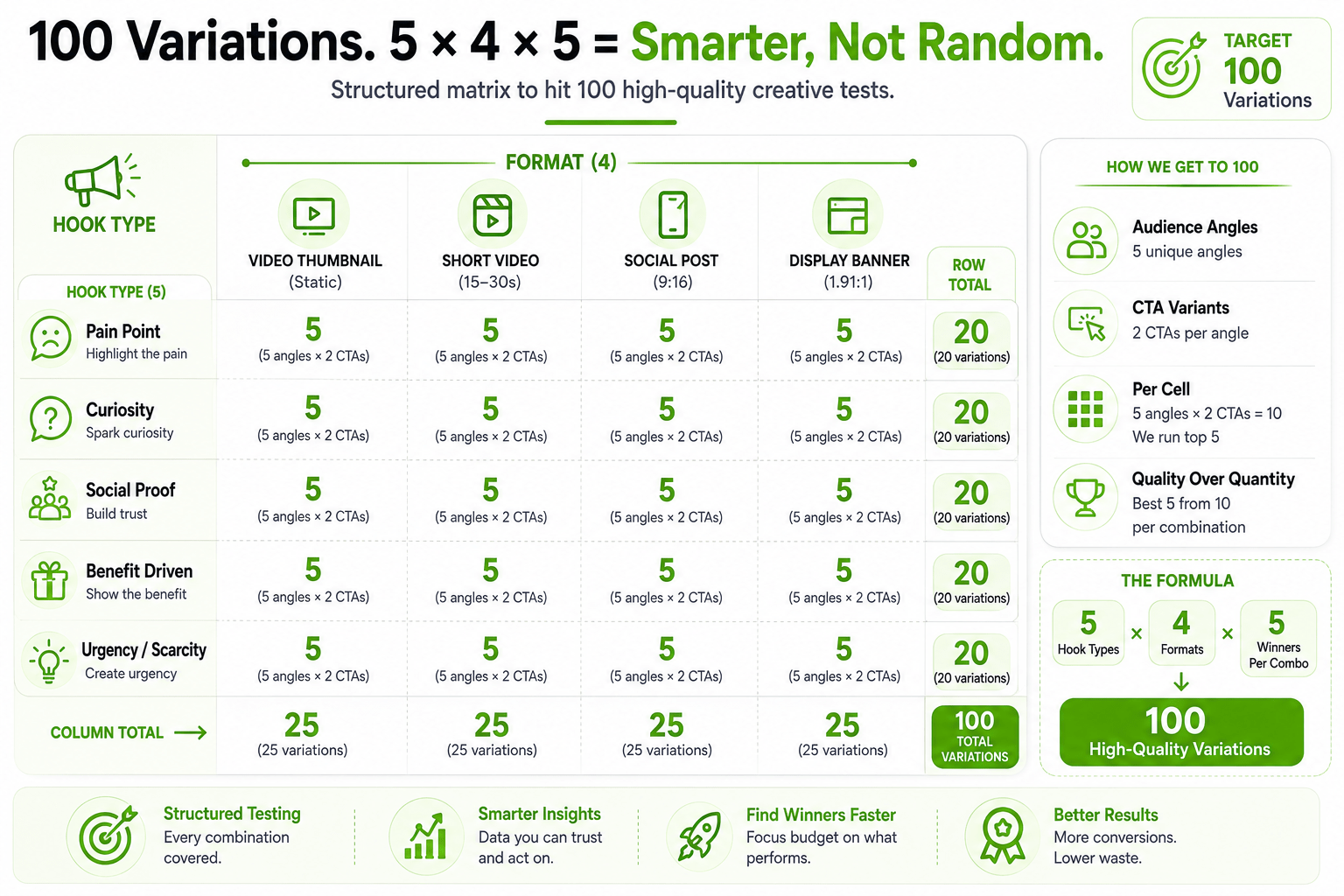
A 100-variation session requires a brief matrix, not a single brief. Define your variables upfront:
- Hook types to test: 4-5 distinct angles (pain point, curiosity, social proof, bold claim, contrast)
- Delivery formats: 3-4 Genie formats (UGC-style, testimonial, offer-driven, product showcase)
- Audience angles: 2-3 different audience pain points or motivations
- CTA variants: 2-3 different asks (learn more, try free, get the deal)
The matrix tells you exactly how many combinations you’re generating and ensures the 100 variations represent systematic hypotheses rather than random output.
Running the Generation Batches
Generate by hook type rather than all at once. Run all pain-point hook variations first, then curiosity hooks, then social proof – organized batches make the review session significantly faster.
For each batch, configure the format, feed the hook direction, and generate. Most batches will produce 15-20 outputs – more than the 10-12 you’ll select per batch, which gives you culling room.
Expect the full generation run to take 3-4 hours for 100+ outputs. This is the production phase – the brief work is done, the review comes after.
Review and Selection
Review each output once against four criteria: does the hook land in 2-3 seconds, is the offer clear, does the visual match the UGC aesthetic (not polished, native-feeling), and does the CTA fit the creative’s energy.
Cut anything that fails. You’re selecting the 100 best AI UGC ads from a larger generated set – not accepting everything that was produced.
Launching from Genie Directly
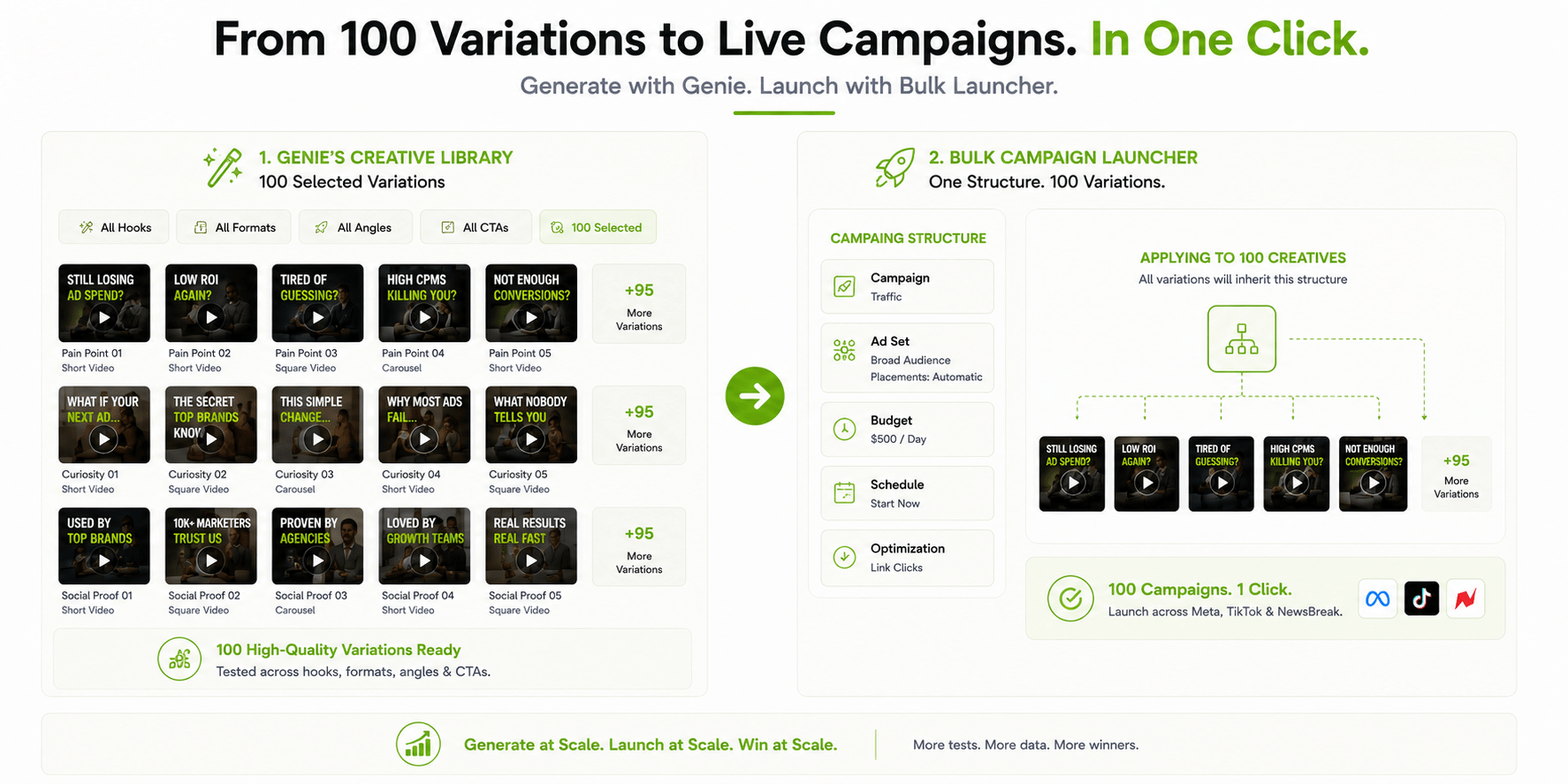
This is where FabFunnel compresses what would otherwise be a multi-step process. Once your 100 variations are selected from the Creative Library, the Bulk Campaign Launcher takes over.
Configure the campaign structure once – objective, audience, budget, platforms (Meta, TikTok, NewsBreak), placements – and apply it across all 100 variations simultaneously. You’re not building 100 individual campaigns. You’re building one campaign structure and executing it in bulk. This means UGC Facebook ads, TikTok campaigns, and NewsBreak placements all launch from the exact same configuration step.
200+ ads can go live in under 2 minutes once the launch configuration is set. For 100 AI UGC ads variations, the actual launch step is measured in minutes, not hours.
What Happens After Launch
One hundred variations live simultaneously gives the algorithm significant signal to work with, turning raw AI UGC ads into a real performance data set. Within 48-72 hours, performance differences start to emerge.
Watch hook rate (percentage watching past 3 seconds) and early CPM first – these tell you which hooks are stopping the scroll before conversion data is meaningful. By day 3-5, cost per result data identifies the top performers.
The top 10-15 creatives from a 100-variation test are your winners – the inputs for the next brief and the creatives to scale. The bottom performers get paused. The middle performers stay in rotation while the data continues to develop.
The analysis from this session – which hook types won, which formats outperformed, which audience angles resonated – directly improves the brief for the next session. The workflow compounds.
The Takeaway: 100 AI UGC Ad Variations in One Session Is Now Operationally Possible
The production economics of UGC in advertising have changed. Sourcing 100 individual creators isn’t necessary when AI generation produces AI UGC ads at this quality and this speed. The creative volume required to keep pace with platform algorithms and audience saturation cycles is now achievable in a single working session.
FabFunnel connects the full workflow – generation via Genie, organization in the Creative Library, and bulk launch via the Campaign Launcher – so the session doesn’t break into disconnected steps across different tools.
For teams where creative production volume has been the limiting factor on testing and scale, that connection is the practical difference between running 10 UGC tests per month and running 100.
Frequently Asked Questions
What are AI UGC ads?
AI UGC ads are video advertisements produced by AI models in the style of user-generated content – direct-to-camera delivery, natural pacing, non-polished aesthetic – without requiring actual creators or filming. The output mimics the format that performs best natively on TikTok and Meta Reels.
How does FabFunnel generate UGC-style video ads?
Through Genie, FabFunnel’s AI creative studio. You provide a brief – product details, brand guidelines, hook direction, and format preference – and Genie generates video in UGC, testimonial, product showcase, offer-driven, or founder-led formats. Output goes directly into the Creative Library for review and launch.
Can I launch 100 ad variations on Meta and TikTok at the same time?
Yes. FabFunnel’s Bulk Campaign Launcher lets you configure a campaign structure once and apply it across all selected creatives simultaneously – across Meta, TikTok, and NewsBreak. The launch itself takes minutes regardless of how many variations you’re pushing live.
How long does it take to generate 100 UGC ad variations?
Brief matrix setup: 1-2 hours. Generation runs: 3-4 hours. Review and selection: 1-2 hours. Campaign setup and launch: 30-60 minutes. Total: a full working day, producing creative volume that would take weeks through traditional production.
Do AI-generated UGC ads perform as well as real creator UGC?
Using AI UGC ads in advertising is now standard for performance-driven teams. In direct response contexts – performance marketing, ecom, affiliate – the performance gap has narrowed significantly. AI-generated UGC performs strongly when the brief is specific and the hook is well-directed. For brand campaigns where the creator’s authentic identity and audience relationship are the asset, authentic creator content still has an edge.
What’s the best way to organize 100 variations for testing?
Group by the variable being tested – one ad set per hook type, separate ad sets for different formats. This structure lets the algorithm distribute budget across variations in the same test group and makes results readable. Mixing all 100 into a single ad set produces noise rather than signal.