Creative testing is how you find winners. But most agencies don’t test enough creative because producing multiple variations at speed is operationally expensive. Writing five headline variants, three copy angles, and two CTAs for every ad set compounds quickly – and that’s before accounting for platform formatting, character limits, and compliance checks.
AI creative generation changes the math on volume. Not by removing creative judgment, but by removing the friction between having an idea and getting it into the testing queue.
This article covers what AI-assisted creative generation actually does, where it fits in an agency’s workflow, and how FabFunnel’s creative generation tool accelerates the iteration cycle.
Why Ad Creative Volume Is the Real Constraint
Most performance marketers understand creative testing in theory. In practice, they test less creative than they should because the production layer slows them down.
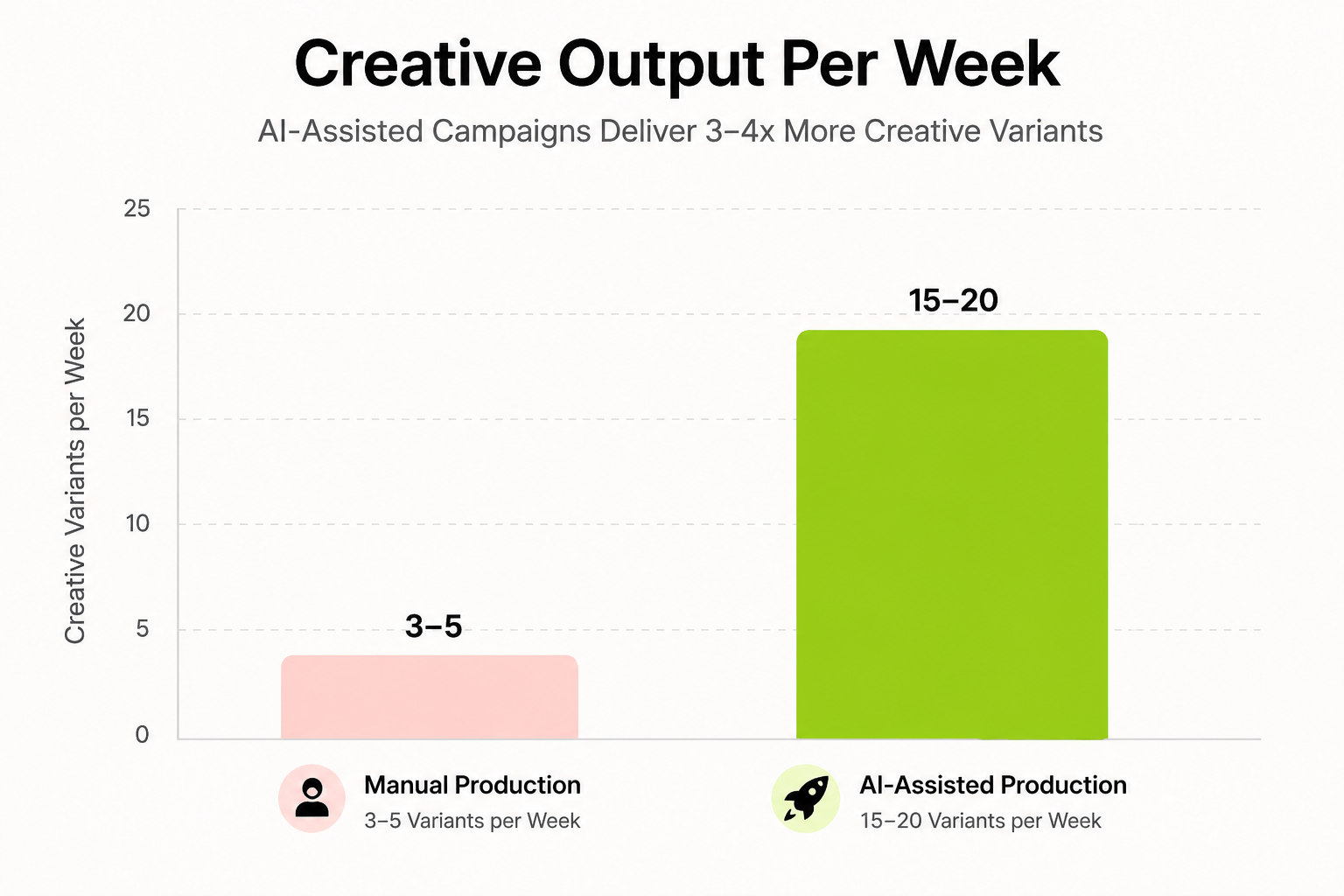
The math is simple: if writing, reviewing, and formatting one ad variation takes 20–30 minutes, producing ten variations takes most of a workday. For an agency running campaigns across ten clients, that’s a creative production bottleneck that limits how aggressively they can test.
The result: teams end up running fewer creative variants than is statistically meaningful. They make optimization decisions on small samples. Winners that could have been identified in week two get discovered in week six, if at all.
An AI ad creative generator addresses the volume problem. The goal isn’t replacing the creative strategist – it’s collapsing the time between brief and testable asset so that the strategist’s time goes to judgment, not production.
What AI Creative Generation Actually Does
AI creative generation, properly understood, operates on copy and concept – not just content rewriting. Effective creative AI produces:
Headline variants. The same core message expressed through different angles: benefit-first, problem-first, curiosity-driven, social proof. One brief, multiple entry points for testing.
Body copy variations. Different lengths, different tones, different levels of detail. Some ad sets respond to concise punchy copy; others to longer explanatory formats. An AI ad copy generator can produce both from the same input parameters, giving teams more creative options to test without increasing production time.
Hook and CTA variants. The opening line and the call to action drive a disproportionate share of performance variance. Generating multiple options for each – rather than defaulting to one – creates real testing surface area.
Platform-formatted versions. Character limits, tone conventions, and engagement patterns differ between Meta, TikTok, and NewsBreak. A creative generation tool that accounts for these differences produces platform-ready copy rather than copy that needs manual reformatting.
What AI creative generation doesn’t replace: the strategic brief, audience targeting decisions, visual creative direction, and the performance analysis that determines which variant won and why. Those remain human judgment calls.
The Creative Iteration Bottleneck
For agencies, the creative bottleneck is usually in one of two places: brief-to-copy, or copy-to-launch.
Brief-to-copy is the production gap. A strategist knows what the ad needs to say. Getting from that intent to tested copy takes time – especially when the team is expected to produce multiple variations of each asset.
Copy-to-launch is the operational gap. Once copy exists, it still needs to be formatted, entered into the ad platform, matched to creative assets, and launched. This is where bulk campaign creation matters: having copy isn’t useful if getting it live requires another hour of manual platform work.
AI creative solutions that address only the first bottleneck still leave the second intact. The leverage comes from connecting creative generation to campaign execution – so the copy that gets produced can be launched at scale without a separate manual build step.
How FabFunnel’s Creative Generation Tool Works in the Workflow
FabFunnel’s creative generation capability sits inside the campaign execution workflow – not as a standalone creative writing tool, but as part of the path from brief to live campaign.
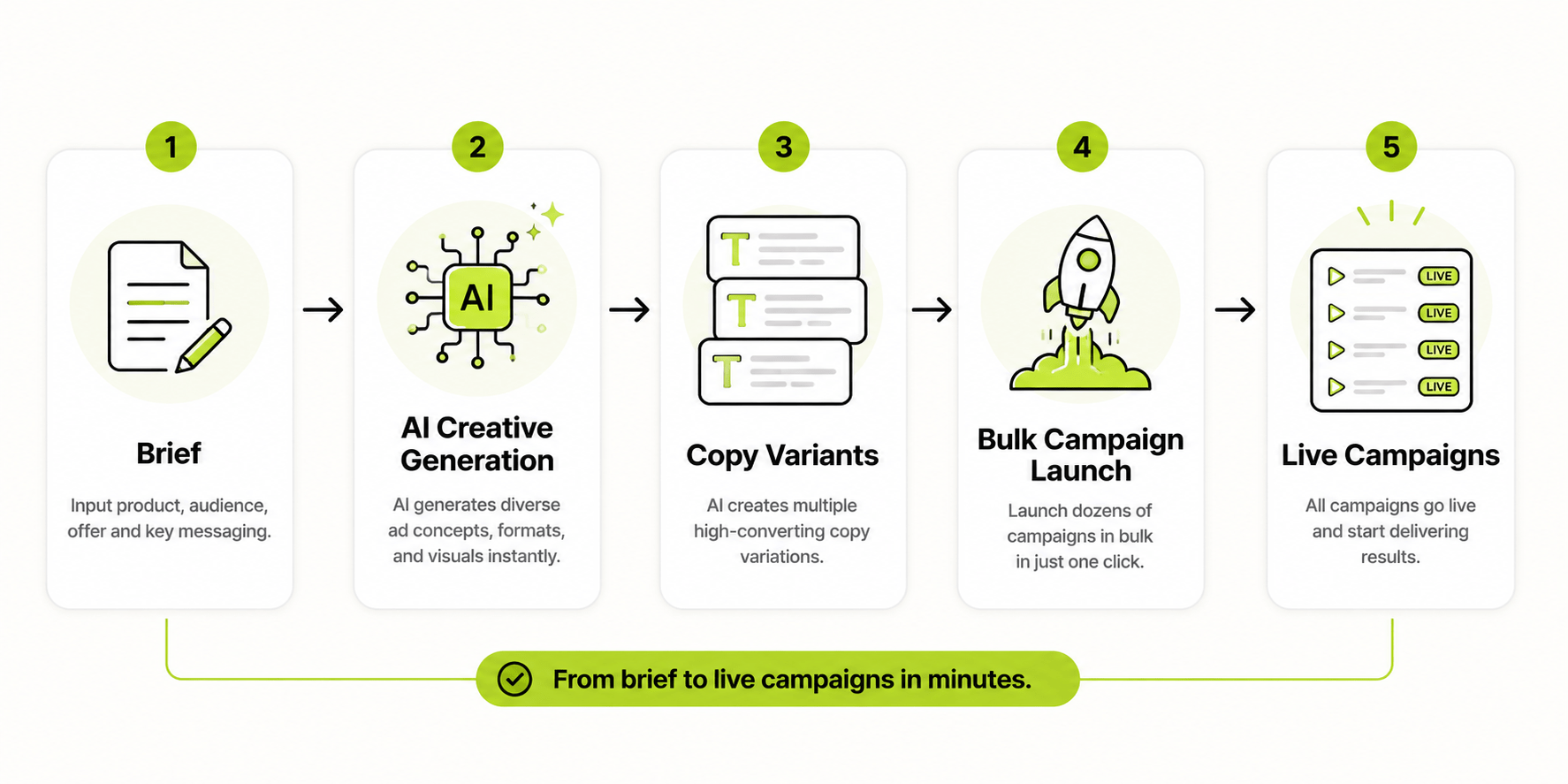
The workflow: input your campaign brief and parameters, generate copy variants across headlines, body, and CTAs, review and select, then push directly into FabFunnel’s bulk launch workflow. The copy flows into the campaign structure without manual re-entry.
This is where the connection between creative generation and bulk launch creates real leverage. If copy generation produces ten variants but each still requires manual platform setup, the time saving is partial. When generation connects to bulk deployment, a ten-variant creative test can go from brief to live across Meta, TikTok, and NewsBreak in a fraction of the time it would take to build manually.
What to Define Before Running AI Creative Generation
The quality of AI-generated copy is a function of the quality of the input. Vague briefs produce vague copy. Specific briefs produce copy that’s closer to testable.
Before running your creative generation tool, define:
- Offer specifics – what you’re selling, at what price, to whom.
- Tone and voice parameters – pick one from direct-response, educational, conversational, or urgency-driven.
- Platform context – which platforms the copy is being created for, since character limits and engagement patterns vary.
- What to test – if you’re testing ideas like benefit-first vs. problem-first, put those into the brief so variants are purposeful, not random.
The creative generation tool applies your parameters. Clean inputs produce copy that’s ready to test. Loose inputs produce copy that still needs significant editing before it’s useful.
Conclusion
Ad creative volume is the testing surface area that determines how quickly you find winners. Manual production caps that volume; AI creative generation expands it.
The leverage isn’t in using AI to write one ad – it’s in producing a full creative matrix from a single brief and pushing it directly into a campaign launch workflow. That’s what transforms creative generation from a copywriting shortcut into an operational advantage.
FabFunnel’s creative generation tool connects to the bulk campaign execution layer – so the creative variations you generate can go live across Meta, TikTok, and NewsBreak without a separate manual build cycle.
Frequently Asked Questions
Q1: What is AI creative generation for ads?
AI creative generation produces multiple copy variants – headlines, body text, hooks, CTAs – from a single brief. The goal is a range of testable variants fast enough that performance testing can identify what resonates. Output should be close to launch-ready, not a rough draft requiring significant editing.
Q2: What does a creative generation tool actually output?
Copy variants across performance-driving components: headlines (multiple angles), body copy (lengths/tones), hooks, CTAs. Higher-quality tools also format for Meta, TikTok, NewsBreak – respecting character limits and tone conventions – so copy deploys without manual reformatting.
Q3: How many creative variants should you test per ad set?
Three to five at minimum – enough to identify directional winners without fragmenting the learning budget. AI creative generation removes the production constraint: if you can produce fifteen variants as fast as you used to produce three, you can run statistically meaningful tests from the start rather than optimizing on thin data.
Q4: Does AI creative generation replace the creative strategist?
No. It handles production – translating a brief into testable copy at volume. The strategist still owns the brief, audience intelligence, and performance analysis. The leverage is removing production overhead so strategists spend time on strategy, not output.
Q5: How does FabFunnel’s creative generation tool connect to campaign launch?
FabFunnel’s creative generation is integrated with its bulk campaign launch workflow. Copy variants generated inside FabFunnel feed directly into the campaign build – no manual re-entry into the ad platform. Generating ten variants is only valuable if you can launch ten without ten separate manual builds. FabFunnel handles both steps across Meta, TikTok, and NewsBreak.
Q6: How does Facebook ad creative AI differ from general AI writing tools?
Facebook ad creative AI is optimized for what matters: direct response. Short-form copy. Headline limits. Conversion-driven language. Platform-specific formatting. And the most effective tools go deeper – they adjust for audience awareness (cold vs warm) and your exact campaign objectives. That’s the difference between fluff and results.